The no-cook orchard bowlTang · caramel · roasted crunch
Dana Vastano · August 2013
Nutty Apple Dip
Dana Vastano’s no-cook apple dip blends softened Neufchâtel, plain Greek yogurt, brown and white sugars, and finely chopped peanuts into a tangy party bowl.
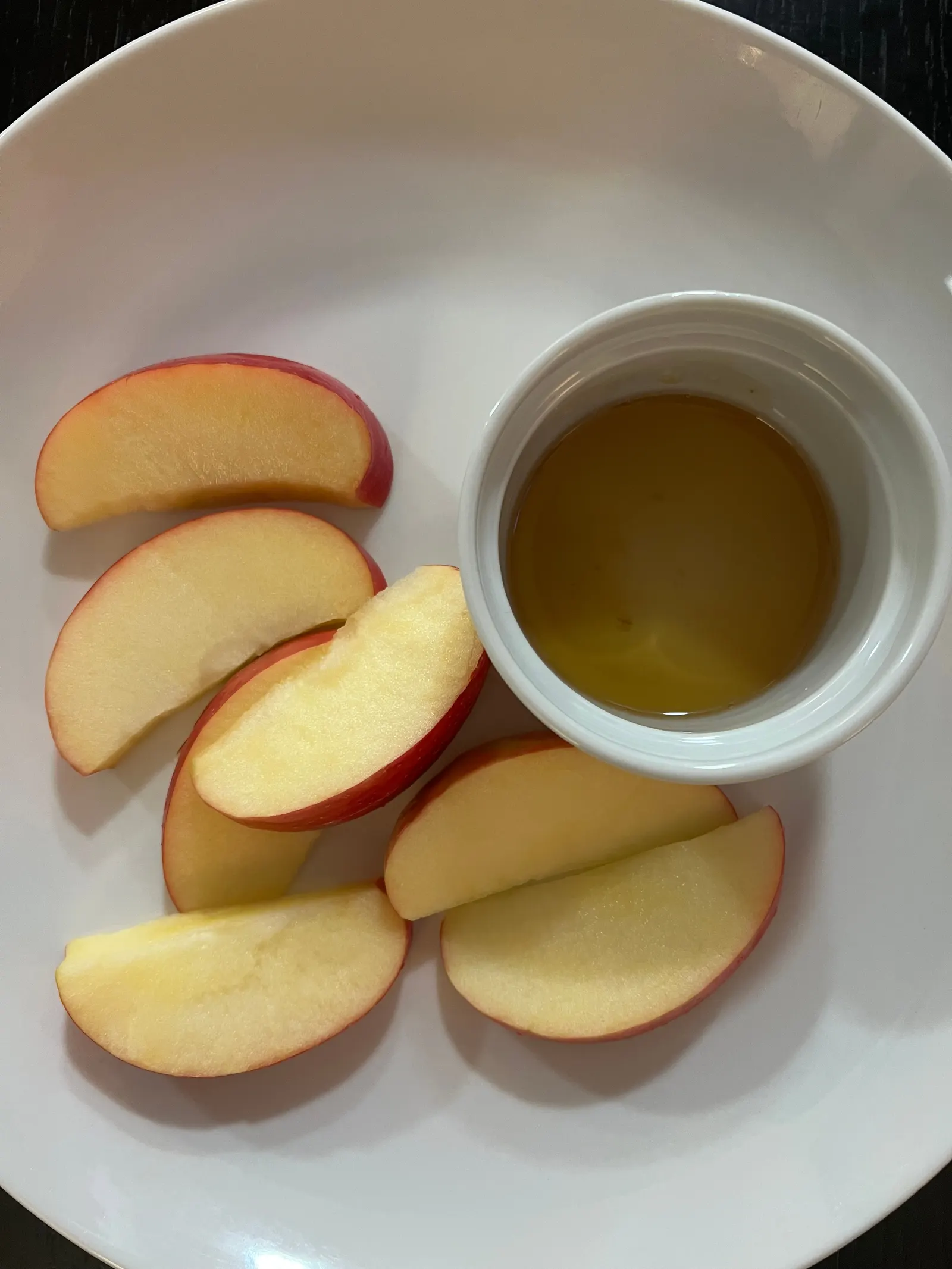
The apple-and-bowl arrangement mirrors how this dip is served. The pictured bowl contains honey, not Dana Vastano’s creamy Neufchâtel-yogurt dip. Source image auto-oriented for display.Photo by Liat Portal (HaJunkiyada) / Wikimedia Commons · CC BY-SA 4.0
Makes
6 servings
Prep
About 15 min
Heat
None
Finish
Peanut crunch
The apples never go into the dip; they are the crisp spoon. Dana Vastano built this bowl after tasting a friend’s cream-cheese, sugar, and peanut version at game night. Her own formula keeps the sweet, nutty idea but swaps in Neufchâtel and adds plain Greek yogurt, giving the dip a brighter tang and a softer pull from wedge to bowl.
Its charm lives in a short sequence. White sugar is beaten into the softened cheese first, yogurt and brown sugar make the second pass, and finely chopped peanuts are folded rather than pulverized. Cinnamon stays optional. Apples remain last-minute and cold. Nothing cooks, but every stage has a texture to protect.
“A delicious recipe for apple dip. It features cream cheese, Greek yogurt, sugar and cinnamon in a refreshing dip for your apples, pears or graham crackers.”
Soften
Neufchâtel needs to yield to a fingertip before mixing; a cold block leaves stubborn white beads in the yogurt.
Beat in two passes
Granulated sugar smooths the cheese first. Greek yogurt and brown sugar join only after that base is uniform.
Fold the crunch
Tiny peanut pieces go in by hand at the end so the creamy base stays creamy and the nuts stay legible.
Slice last
Build the dip before exposing the apples. Less time in air means cleaner, paler wedges on the first platter.
The bowl mapBody · lift · warmth · crackle
Four parts of a caramel-tang crunch
Dana’s proportions stay intact. The useful control is how each ingredient enters the bowl, not a revision to the formula.
The one-third-less-fat cream cheese is the body of Dana’s adaptation: tangy, spreadable, and sturdy enough to hold yogurt.
Soften the measured block just until pliable, then beat it smooth before any yogurt arrives.Read the ingredient story →02
Plain Greek yogurt
Six ounces loosen the cheese and sharpen the dip without erasing its dense, scoopable character.
Use it cold and plain. Add it only after the cheese and white sugar are completely blended.03
Two half-cups of sugar
Granulated sugar sweetens the first mixing stage; brown sugar brings a warmer caramel note to the yogurt stage.
Keep both source measures intact. Their sequence matters more here than any extra flavoring.04
Tiny peanut rubble
One-half cup breaks the smooth base with salty crunch; honey-roasted peanuts are Dana’s sweeter, more aromatic option.
Pulse in brief bursts and stop at small pieces. Peanut meal would thicken the dip and mute the contrast.
Gold + whiteThe crunchy fold and the tangy base
Keep the peanuts distinct and the dairy perfectly smooth
Dana uses one-half cup peanuts and names honey-roasted peanuts as her extra-flavor choice. Chop them into tiny pieces before folding by hand.Photo by Glane23 / Wikimedia Commons · CC BY-SA 4.0
Pulse, look, stop
The best chop is small enough to travel with every scoop and large enough to crack between the teeth.
The photograph is an illustrative yogurt bowl with fruit and almonds. Dana’s dip uses six ounces of plain Greek yogurt and peanuts, with no berries or almonds.Photo by Peter Hershey / Wikimedia Commons · CC0 1.0
The 15-minute laneWash chop beat add fold cut serve
One bowl, two mixing passes, one late slice
The source has no clock; this transparent working estimate keeps the dairy cool and gives the apples the shortest possible wait.
0:00
Wash the fruit, soften the cheese
Rinse and dry whole apples, then keep them uncut. Set out pliable Neufchâtel, cold yogurt, both sugars, and peanuts.
+3
Make tiny peanut pieces
Chop by hand or pulse briefly. Keep distinct golden flecks rather than driving the nuts into meal.
+5
Smooth cheese with white sugar
Beat and scrape until the first base is uniform, with no dense corners left at the bottom of the bowl.
+8
Add yogurt and brown sugar
Mix only until the color is even and the large cheese lumps have disappeared.
+10
Fold, finish, and bowl
Turn in the chopped peanuts by hand. Add the optional cinnamon as a light surface dusting.
+12
Cut sturdy apple wedges
Core and slice just before service, or use a drained vitamin-C treatment when the platter must wait.
15:00
Serve cold and crunchy
Set out apples first, with graham crackers or Dana’s other fruit suggestions alongside if desired.
Four finish cuesSmooth soft flecked pale
Read the bowl before the platter goes out
A no-cook dip has no temperature test. Uniform dairy, visible peanut pieces, and fresh apple faces are the proof.
01
No white cheese beads
The base should be cohesive before the nuts go in. Large pale lumps mean the Neufchâtel started too cold or the bowl needs another scrape.
02
Scoopable, not stiff
Greek yogurt turns the cheese base into a soft dip that holds a spoon trail but releases cleanly onto an apple wedge.
03
Crunch you can see
Peanut flecks should remain scattered across the surface and in every scoop. A uniform sandy paste was processed too far.
04
Apple faces still pale
Freshly cut wedges look moist and ivory. Slice close to service or use a well-drained anti-browning treatment for a delayed table.
Make + holdCover chill slice ice watch
Cold bowl, last-minute apples
The dip can wait under refrigeration; cut fruit cannot wait as gracefully. Separate those clocks and protect the shared bowl.
Build the dip ahead, not the platter
Cover the finished bowl and refrigerate it. Keep apples whole until close to serving so texture and color stay fresh.
Hold at 40°F / 4°C or below
Neufchâtel and yogurt are perishable. For a long gathering, set a small serving bowl over ice and replenish from the refrigerator.
Watch the two-hour clock
Refrigerate or discard the dairy dip after two hours at room temperature, or one hour when the air is above 90°F / 32°C.
Protect the shared bowl
Offer a spoon or individual portions. Discard dip that has been repeatedly double-dipped or contaminated by used utensils.
Nutty Apple Dip
Dana Vastano’s no-cook Neufchâtel and Greek-yogurt dip with two sugars, finely chopped peanuts, and optional cinnamon.
Apple DipNo-CookGreek YogurtNeufchâtelHoney-Roasted PeanutsParty SnackFall
Ingredients
Dip
1/2 cup peanuts, preferably honey-roasted, chopped into tiny pieces
1 (8-ounce) package Neufchâtel cheese, softened
1 (6-ounce) container plain Greek yogurt
1/2 cup granulated sugar
1/2 cup packed brown sugar
Ground cinnamon, optional, to taste; the author suggests about 1 teaspoon
For dipping
Fresh apple slices, the author’s first choice
Pear, strawberry, or pineapple pieces, optional
Graham crackers or other crisp cookies, optional
Directions
If serving fresh fruit, rinse it under cool running water and dry it before cutting. Keep the apples whole for now so their cut faces stay pale while the dip comes together.
Chop the 1/2 cup peanuts into tiny pieces with a knife, or pulse them briefly in a mini food processor. Stop before they turn into meal or paste; the finished dip should retain distinct crunchy flecks.
Put the softened Neufchâtel cheese and granulated sugar in a large bowl. Beat with an electric hand mixer until completely blended and smooth, scraping the bowl as needed.
Add the plain Greek yogurt and packed brown sugar. Continue beating only until the mixture is uniform and no large cream-cheese lumps remain.
Add the finely chopped peanuts and fold them through by hand with a spatula or wooden spoon so their texture stays intact.
Transfer the dip to a serving bowl. If using cinnamon, dust the surface lightly; Dana suggests roughly 1 teaspoon for a more apple-pie-like finish, but leaves the amount optional and to taste.
Core and cut the apples into sturdy wedges immediately before serving. For a delayed platter, use an ascorbic-acid fruit treatment according to its label or briefly dip and drain the wedges in a vitamin-C-rich juice; this is optional appearance guidance, not part of Dana’s formula.
Serve the dip with the apple wedges, graham crackers, or the other source-authorized fruit. Keep the bowl cold when it will be out for an extended gathering.
Source and research references: the exact archived My Recipe Magic card for the queued ID, Dana Vastano attribution, six-serving yield, ingredients, legacy nutrition, date, and original-source link; Dana’s earliest archived Handmade Is Better post for the complete two-stage mixing method, adaptation story, honey-roasted-peanut preference, optional cinnamon amount, and apple, graham-cracker, pear, strawberry, and pineapple serving ideas; Kardea Brown and Food Network’s cream-cheese yogurt fruit dip for independent professional confirmation that room-temperature cream cheese and yogurt can be processed to a smooth fruit-dip base; FDA guidance for washing, separating, cutting, and refrigerating produce safely; Utah State University Extension’s apple guide for enzymatic-browning control with ascorbic acid or vitamin-C-rich juice; FoodSafety.gov guidance for keeping cold dips over ice and observing the two-hour limit; and FDA food-allergen guidance for current package labels and cross-contact. The source ratios and defining method remain unchanged; time, apple-color, cold-service, and allergen guidance are explicitly separated editorial additions.