The fork-and-knife tacoFoil · beef · cheese · cold bar
Six jackets, one build-your-own dinner
Loaded Baked Potato Tacos
Steph Loaiza’s family dinner turns six fluffy russets into taco night with seasoned ground beef, cheese, sour cream, tomatoes, olives, green onions, and bacon.
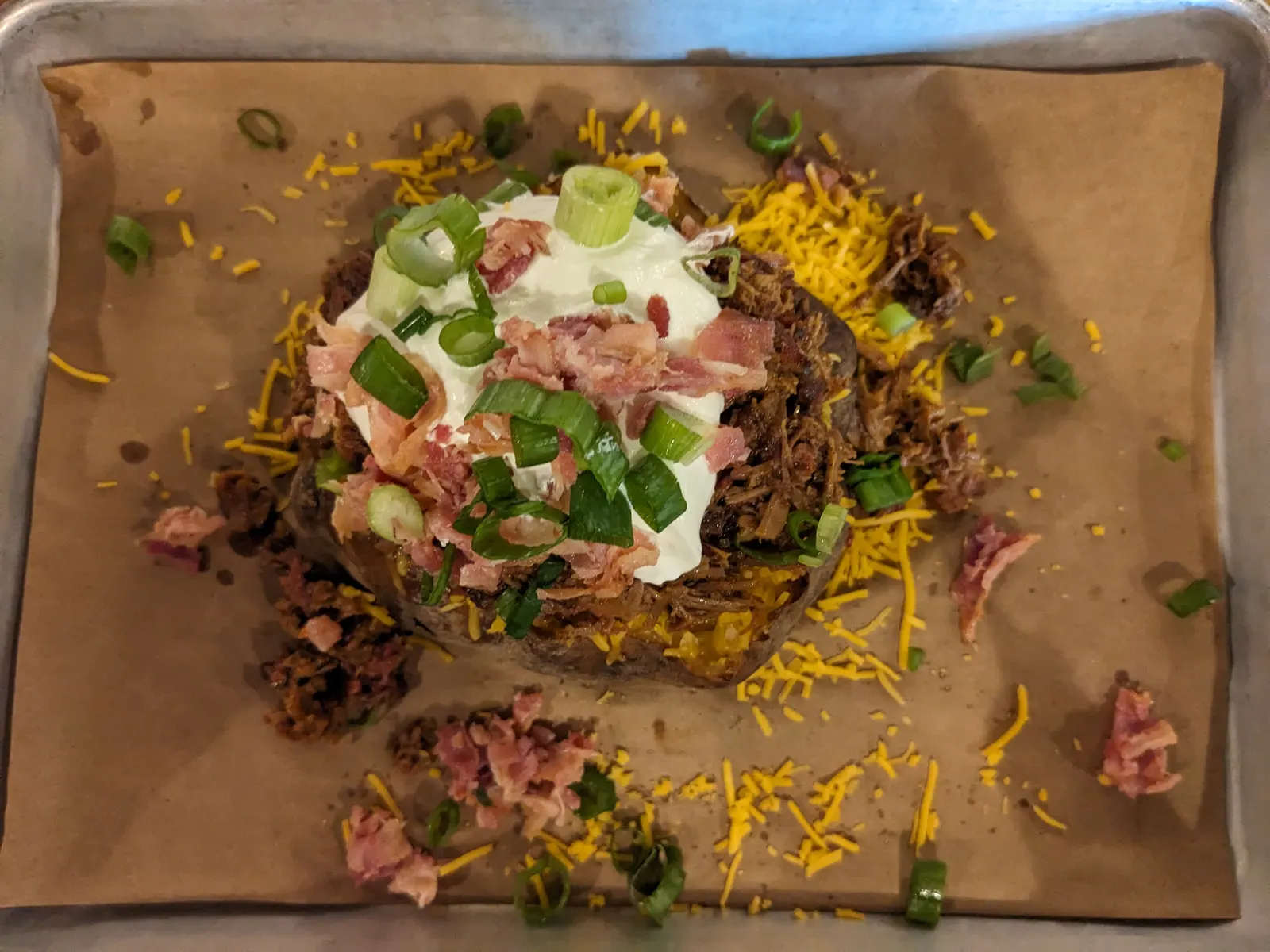
The baked-potato-bar finish is the same—cheddar, sour cream, bacon, and green onion—but this illustrative restaurant potato carries shredded brisket rather than the source recipe’s taco-seasoned ground beef.Photo by Aspensmonster / Wikimedia Commons · CC BY-SA 4.0
Serves
6 loaded potatoes
Prep
10 minutes
Total
1 hour 25 minutes
Core
Russet · taco beef · toppings
The tortilla never arrives, but taco night does. Steph Loaiza’s 2014 dinner opens six foil-baked russets and fills them with packet-seasoned beef, then hands the rest of the work to a baked-potato bar: cheese, sour cream, green onions, tomatoes, olives, and bacon, each optional and each waiting in its own bowl.
The useful trick is not a secret seasoning. It is the order of temperatures. A fluffy hot potato receives the beef first, cheese follows where it can soften, and the cold toppings land last. The result eats like a loaded baked potato and tastes unmistakably like an American family taco night.
“It’s a big deal when you find something your kids love to eat for dinner. Our family loves tacos and a good baked potato bar, so we combined two of our favorites and came up with this delicious meal.”
Keep the jacket
The author wraps every russet in foil. That means a soft steamed skin and a moist center, not a steakhouse-crisp shell.
Follow the packet
The 1.5-ounce seasoning mix controls its own water amount and simmer; the recipe does not pretend every brand is identical.
Build hot to cold
Open the potato, add beef and cheese first, then finish with sour cream and fresh toppings so every temperature stays legible.
The build mapFluffy savory melting cool
One base, four layers of contrast
The source treats every topping as a choice. Keep the core exact, then let each person decide how far to load it.
Six high-starch potatoes replace tortillas and turn the taco filling into a fork-and-knife dinner.
Scrub, dry, pierce, and wrap as written. A fork should slide through the largest potato with almost no resistance.Read the ingredient story →02
Taco-seasoned beef
One pound supplies about one-third cup per potato, enough to season the fluffy center without burying it.
Brown to 160°F, drain, then add the packet and its specified water so seasoning clings rather than floating in grease.03
Hot toppings
Mexican-blend cheese and crumbled bacon lean toward the baked-potato bar and soften against the beef.
Put cheese directly on the hot layer. Keep bacon in a separate bowl until the last moment if crispness matters.04
Cold toppings
Sour cream, tomato, green onion, and olives bring tang, juice, snap, and briny contrast.
Drain juicy diced tomatoes and add these after the hot layer so the potato stays fluffy instead of wet.
The parallel clockBake set brown season open build
The beef enters during the final twenty minutes
The potato owns the long hour; the topping bar and skillet fit inside its final stretch so nothing waits assembled.
0:00
Scrub and pierce
Heat the oven to 350°F, clean six russets, dry them, and vent each potato several times.
0:05
Wrap the jackets
Seal each potato in foil and arrange them with enough space for oven heat to circulate.
0:10
Begin the hour
Bake until the largest potato is yielding and fluffy at the center, not merely hot at the surface.
0:50
Set the bar
Slice green onions and tomatoes, shred cheese if needed, and arrange every optional topping separately.
0:55
Brown the beef
Break one pound into small crumbles, cook to 160°F, and drain the rendered fat.
1:05
Season by the packet
Add the mix and its stated water; simmer for the brand’s directed time until the pan is saucy, not soupy.
1:15
Open and loosen
Unwrap carefully, cut each potato lengthwise while keeping the base connected, and fluff with a fork.
1:20
Layer and serve
Add roughly one-third cup beef, cheese, and then cold toppings. Pass the finished potatoes immediately.
Shell swapTaco vocabulary on a russet base
Keep the filling; trade the crunch for fluff
The source borrows the seasoned beef, cheese, tomato, and sour-cream vocabulary of an American hard-shell taco, then replaces the shell with a foil-baked russet. Lettuce is shown here but is not in the recipe.Photo by Evan Swigart / Wikimedia Commons · CC BY 2.0
The packet keeps its own instructions
Seasoning brands ask for different water amounts. The source wisely delegates that measure to the packet, so this edition does too.
High-starch russets supply the fluffy base. The Six Sisters method wraps them in foil, deliberately producing a soft, steamed skin rather than a dry crisp one.Photo by Steve Caruso / Wikimedia Commons · CC BY-SA 2.5
The doneness readYielding flaky coated hinged distinct
Five proofs from center to topping
The clock begins the check; texture decides whether the largest potato, the beef, and the final build are ready.
01
The skewer finds no hard center
The largest russet yields from skin to middle; an optional thermometer reads about 208–211°F.
02
The flesh lifts in dry flakes
A fork loosens the center without producing gluey mash or finding a translucent underdone core.
03
The beef is crumbled and coated
No pink remains, the fat has been drained, and packet seasoning hugs the meat without a puddle.
04
The potato still has a bottom hinge
The lengthwise cut opens wide but leaves enough skin intact to hold the meat and toppings on the plate.
05
Hot and cold remain distinct
Cheese softens against the beef while sour cream, tomato, green onion, and olive still look fresh.
Every fix adjusts heat, draining, or assembly while preserving the Six Sisters quantities and the seasoning packet’s authority.
If the potatoes are still firm
Extend the bake
Keep them wrapped and check the largest every 10 minutes. Size and oven calibration matter more than forcing the one-hour mark.
If the beef looks greasy
Drain before seasoning
Remove rendered fat safely, then return the skillet to heat before adding packet water and spices.
If the filling is watery
Finish the packet simmer
Let excess water evaporate with stirring. A spoonful should sit on the potato instead of running into the foil.
If the potato collapses
Keep the skin hinge
Cut only the top seam and loosen the flesh in place; do not scoop the center into a separate bowl.
If the toppings slide
Build in temperature order
Beef and cheese form the lower layer. Sour cream can anchor the lighter green onion and olive pieces on top.
The holding planCrumble chop separate chill reheat
Prepare the bar; assemble only at the plate
This dinner is friendly to advance prep, but its contrast depends on keeping the components apart until service.
Cook bacon ahead
Crumble it and refrigerate covered. Recrisp briefly if desired while the beef simmers.
Prep a separated bar
Slice, dice, shred, and portion toppings into their own bowls; keep sour cream cold until the potatoes open.
Do not assemble early
A dressed potato steams, slumps, and wets its toppings. Hold the cooked components separately and build at the table.
Chill leftovers promptly
Within two hours, refrigerate potato, beef, and cold toppings separately when practical; use the hot components within 3–4 days.
Reheat before rebuilding
Bring potato and beef to 165°F, then add fresh cheese and cold toppings. This protects both safety and contrast.
Loaded Baked Potato Tacos
Steph Loaiza’s six-potato family dinner: soft foil-baked russets, packet-seasoned ground beef, and a fully optional cheese, sour-cream, vegetable, olive, and bacon bar.
Baked PotatoesGround BeefTaco NightFamily DinnerRusset PotatoesBaconBuild Your Own
Ingredients
Potatoes and taco beef
6 Russet potatoes
1 pound ground beef
1 (1.5-ounce) packet taco seasoning mix
Water in the amount directed on the taco-seasoning packet
Optional baked-potato-bar toppings
3/4 cup sour cream
1 cup shredded Mexican-blend cheese
3 green onions, sliced
2 tomatoes, diced
6 ounces sliced black olives
6 strips bacon, cooked and crumbled
Directions
Heat the oven to 350°F / 175°C. Scrub the potatoes under running water, dry them, and pierce each several times with a fork or paring knife.
Wrap each potato individually in aluminum foil. Place them on a sheet pan or directly on the center oven rack and bake for about 1 hour, until the largest potato yields easily to a skewer or fork through the foil and its center is fluffy. An optional thermometer check is about 208–211°F / 98–99°C.
During the last 20 minutes of the potato bake, set the toppings out in separate bowls. Keep the sour cream cold until service.
Brown the ground beef in a large skillet over medium to medium-high heat, breaking it into small crumbles. Cook until no pink remains and the center of the meat reaches 160°F / 71°C. Drain the rendered grease safely.
Return the skillet to the heat. Add the taco-seasoning packet and the amount of water printed on that packet. Simmer for the packet’s stated time, stirring, until the seasoning coats the beef and the liquid is absorbed rather than soupy.
Carefully unwrap each hot potato. Cut it lengthwise without slicing all the way through the bottom skin, open it into one connected base, and loosen the flesh lightly with a fork.
Spoon about 1/3 cup seasoned ground beef over each opened potato. Add sour cream, Mexican-blend cheese, green onions, tomatoes, olives, and crumbled bacon as desired.
Serve immediately while the potato and beef are hot, the cheese can soften, and the cold toppings remain distinct.