The spring crowd cakeCarrot spice · warm caramel · cold cream

Ashton · February 2013 · twelve squares

Carrot Cake Poke Cake

Ashton’s carrot cake poke cake sends warm salted caramel into every wooden-spoon pocket, then finishes the cold slab with whipped cream cheese topping and nuts.

Soak the cake
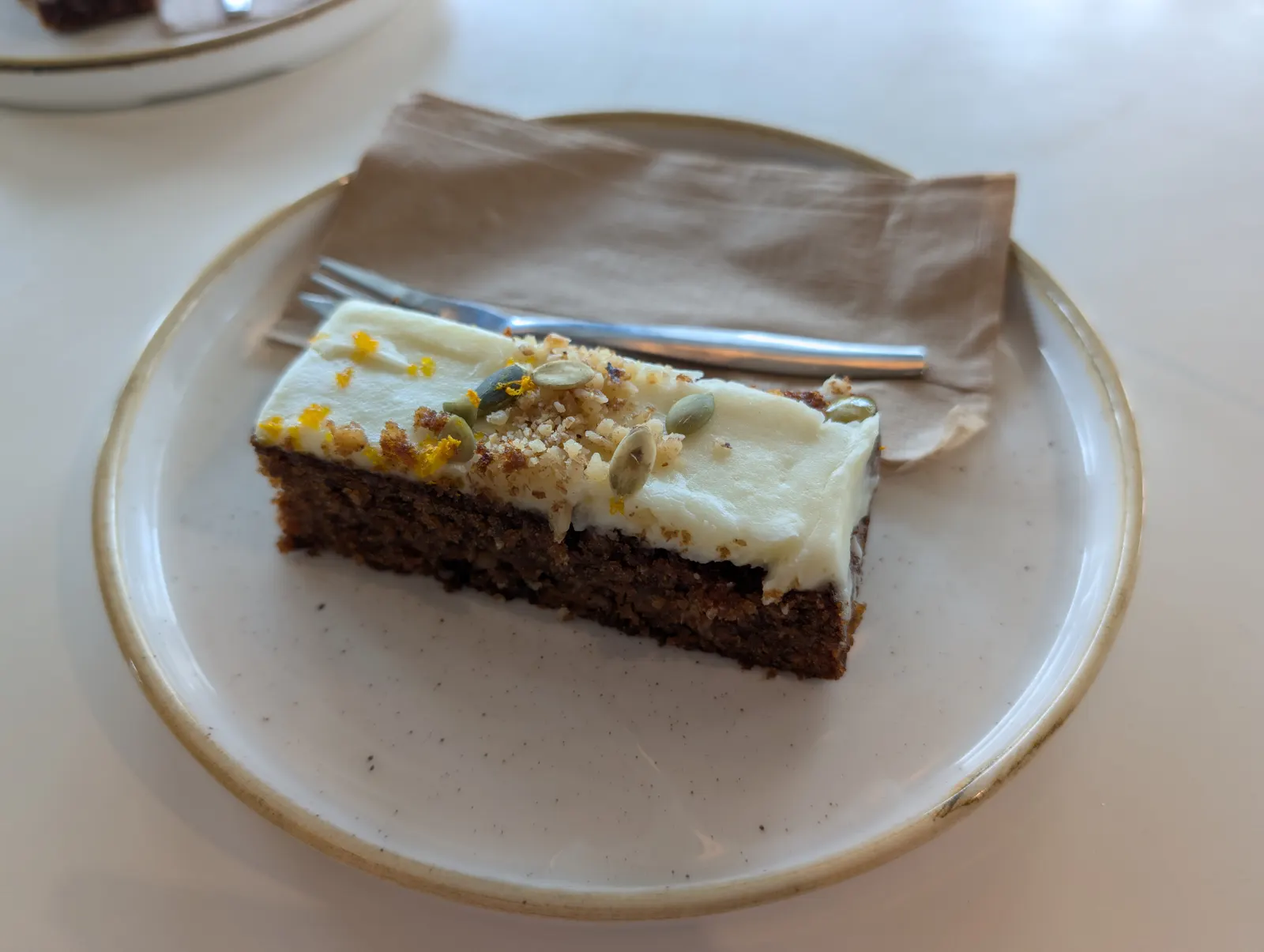
A square slice of dark carrot cake with white frosting, chopped nuts, seeds, and orange zest on a ceramic plate.
An illustrative single-layer carrot cake shows the dark spice crumb and pale topping; the published poke cake is finished instead with caramel, whipped cream cheese, and pecans.Photo by Andy Li / Wikimedia Commons · CC0 1.0
Makes
9 × 13 in
Serves
12
Chill
3 hr+
Best
Overnight

This cake is designed around the holes. Carrot spice gives the base its dark, familiar warmth; a wooden spoon opens a grid through the cooled crumb; salted caramel then travels down instead of merely shining on top. What appears to be a frosted sheet cake becomes a cold, soaked dessert all the way through.

Ashton’s 2013 original was even more maximalist, combining condensed milk with two different Cool Whip products and whipped cream cheese. Her maintained recipe keeps the defining carrot-caramel-cream-cheese-nut architecture while using ingredients that still appear in the current aisle: one pourable caramel, one soft cheese, and one tub of whipped topping. That author-led simplification is the version in the ledger below.

“A 9-by-13-inch carrot cake becomes a crowd dessert when caramel fills the crumb and a cream cheese whipped topping settles over the pan.”

Cool before poking

The cake stays in its baking dish, but its crumb must be fully cool before a spoon handle opens the channels.

Pour while fluid

Warm—not scorching—caramel finds the holes before it thickens; save only a small spoonful for the visible finish.

Soften completely

Room-temperature cream cheese beats smooth before the airy topping arrives, preventing white lumps without overmixing.

Set in the cold

Three hours is the minimum. An overnight rest gives the caramel time to settle and the topping time to slice cleanly.

The soak mapCake · caramel · cloud · crunch

Four layers turn one sheet cake into a cold-set dessert

The formula is flexible only where the source is flexible. Choose the carrot cake base and the nut; keep the maintained caramel and cream cheese proportions intact.

01

One 9-by-13-inch carrot cake

The source deliberately leaves the base open: a trusted scratch recipe or a cake mix can carry the caramel and cream cheese topping.

Bake by that chosen recipe, keep the cake in its dish, and cool it completely. This article does not invent a second base formula.
02

A full batch of salted caramel

Most of the sauce moves below the surface, putting buttery bitterness inside the spice crumb instead of leaving a decorative top-only drizzle.

Use a deep pan and pour cream slowly. The hot sugar will foam hard even though the ingredient list is short.
04

Walnuts or pecans

A quarter-cup is enough to break the cold cream with a dry, toasted crunch without turning the top into a nut layer.

Crush coarsely and add after the final caramel drizzle; omit only when serving a nut-free table.

Amber + pecanThe pour and the finish

Caramel works below; nuts announce themselves above

A glass jar of glossy caramel sauce with a spoon on a flour-dusted wooden worktop.
The linked source caramel melts dry sugar first, then adds butter and cream. A deep pan and slow additions control the vigorous bubbling.Photo by Rebecca Siegel / Wikimedia Commons · CC BY 2.0
The warm-to-cold handoff

Fluid caramel belongs on a completely cool cake. The temperature contrast opens the path without collapsing the crumb or melting the final cream.

Shelled pecan halves arranged in curves among whole pecans in their shells.
A restrained quarter-cup of crushed pecans or walnuts gives the cold, creamy top a dry toasted counterpoint.Photo by Scott Bauer, USDA Agricultural Research Service · Public domain (USDA ARS)

The poke-cake clockBake · cool · melt · soak · whip · chill

Build the cake in one warm pass and one cold pass

The printed one-hour total ends too early. The actual schedule includes a full three-hour cold set after the active work, plus whatever time the chosen cake needs to cool.

  1. Earlier

    Bake the base

    Prepare one 9-by-13-inch carrot cake by its own trusted recipe or package directions, then cool it completely in the dish.

  2. 0:00

    Melt the sugar

    Cook one even layer over medium heat until every clump becomes amber syrup, staying beside the pan.

  3. +7

    Finish the caramel

    Off heat, whisk in butter and then cream slowly; boil the smooth sauce only 30 seconds and add salt.

  4. +10

    Open the crumb

    Poke one-inch-spaced channels through the cool cake with the rounded end of a wooden spoon.

  5. +12

    Aim for the holes

    Reserve a spoonful of sauce, then pour the rest warm and slowly so the channels fill instead of one edge flooding.

  6. +17

    Whip the cloud

    Beat soft cream cheese with sugar until smooth; add thawed whipped topping on low only until even.

  7. +22

    Cover and finish

    Spread edge to edge, stripe with the reserved caramel, and scatter the crushed nuts.

  8. 3:22+

    Cut from cold

    After at least three hours—or preferably overnight—divide the chilled slab into twelve generous squares.

Read the layersBaked · amber · open · fluffy · set

Five reads protect the soak without losing the slice

The same cake can fail dry, grainy, broken, lumpy, or loose. Each checkpoint catches one of those outcomes before the next layer hides it.

01

Tester with crumbs, never batter

The chosen carrot cake base is baked through before any soaking begins; its center springs back and no glossy batter marks the tester.

02

Amber syrup with no dry islands

Every sugar clump has melted before butter enters, so the finished sauce is glossy rather than seeded with crystals.

03

Channels, not a crater field

The holes are broad enough for caramel but spaced far enough apart that a cold square still lifts in one piece.

04

A smooth white cloud

No cream cheese flecks remain, and the whipped topping still holds soft ridges instead of looking loose from overmixing.

05

A cold, settled slice

The caramel has disappeared into the crumb, the topping stays in place, and a cleaned knife leaves a defined edge.

The gathering planAssemble early · garnish late · keep cold

This is an overnight cake disguised as a quick one

A long refrigerator rest improves the clean cut and makes the dessert useful for a crowd—provided the dairy topping stays cold.

One day ahead

Bake and cool the carrot cake, poke and soak it, add the cream cheese cloud, then refrigerate covered overnight.

For the cleanest finish

Hold back the final caramel drizzle and nuts until shortly before service if you want the sharpest lines and driest crunch.

At the table

Serve from the baking dish and return the dairy-topped cake to refrigeration within two hours, sooner in hot weather.

After the gathering

Cover and refrigerate at 40°F or below for 3–4 days. Freezing is safe but not recommended for the best whipped texture.

Carrot Cake Poke Cake

Ashton’s maintained 9-by-13-inch carrot cake, filled with homemade salted caramel and finished with a cool cream cheese topping and crushed nuts.

Carrot CakePoke CakeSheet CakeSalted CaramelCream CheesePecansSpring Dessert

Ingredients

Carrot cake base

  • 1 baked 9-by-13-inch carrot cake, made from scratch or from a cake mix according to its own recipe or package, cooled completely in its baking dish

Ashton’s salted caramel sauce

  • 1 cup granulated sugar
  • 1/2 cup salted butter, cut into pieces
  • 1/2 cup heavy cream
  • 1 pinch fine salt

Cream cheese cloud

  • 6 ounces block cream cheese, completely softened to room temperature
  • 2 tablespoons granulated sugar
  • 8 ounces frozen whipped topping, such as Cool Whip, thawed in the refrigerator
  • 1/4 cup crushed walnuts or pecans

Directions

  1. Bake a 9-by-13-inch carrot cake in its baking dish according to the chosen scratch recipe or cake-mix package. A center tester should come out clean or with a few moist crumbs. Set the dish on a rack and cool the cake completely before poking or topping it.
  2. For the caramel, spread the sugar in an even layer in a deep, heavy-bottomed saucepan. Cook over medium heat, stirring and gently moving the sugar until the clumps melt into a clear amber syrup, about 5–7 minutes. Stay at the stove; color changes quickly near the end.
  3. Remove the pan from the heat. Wearing oven mitts and keeping your face back, whisk in the butter a few pieces at a time. The caramel will bubble vigorously.
  4. Slowly drizzle in the cream while whisking. Return the pan to low heat only if firm caramel needs help dissolving, then bring the smooth sauce to a brief boil for 30 seconds. Remove from the heat, stir in the salt, and let it stand just until warm and pourable. Do not taste hot caramel.
  5. Use the rounded end of a wooden spoon to poke holes all over the fully cooled cake, spacing them roughly 1 inch apart and stopping just short of the bottom of the dish.
  6. Reserve a small spoonful of caramel for the finish. Pour the remaining warm sauce slowly over the cake, aiming into the holes and sweeping any puddles across the surface so the crumb absorbs the sauce evenly.
  7. In a large bowl, beat the fully softened cream cheese with the 2 tablespoons sugar until completely smooth, stopping to scrape the bottom and sides. Add the thawed whipped topping and mix on low only until evenly combined and fluffy.
  8. Spread the cream cheese mixture over the caramel-soaked cake in an even layer, carrying it all the way to the edges of the dish.
  9. Drizzle the reserved caramel over the top and scatter with the crushed walnuts or pecans.
  10. Cover without touching the topping and refrigerate for at least 3 hours before cutting. For the cleanest 12 squares, chill overnight and wipe the knife between cuts.

Source and research references: the queued legacy path, the surviving 2013 Something Swanky transcription and comments, Ashton’s maintained Carrot Cake Poke Cake, and her linked salted caramel sauce for recipe identity, dates, proportions, method, and the three-hour minimum chill; the current Kraft Heinz U.S. Cool Whip catalog for present product availability; King Arthur Baking for sheet-cake doneness and complete cooling; the King Arthur Baking School’s caramel technique and burn-safety guidance; the University of Minnesota Extension’s cream-cheese water-activity guidance; and FoodSafety.gov for the two-hour service limit, cold holding, and 3–4-day leftover window. The maintained recipe replaces an obsolete branded frosting but otherwise keeps the source’s carrot cake, caramel, cream cheese, whipped topping, and nut identity.

Image credits

Photography is used under open licenses with attribution: Andy Li / Wikimedia Commons, Rebecca Siegel / Wikimedia Commons, and Scott Bauer, USDA Agricultural Research Service.