The quiet dairy-free spreadAlmond · cultured tang · citrus

No cooking after the kettle

Vegan Almond Ricotta Cheese

Elizabeth Shah’s almond ricotta turns soaked slivered almonds, plant yogurt, lemon, and vinegar into a light, tangy, dairy-free spread.

Blend the ricotta
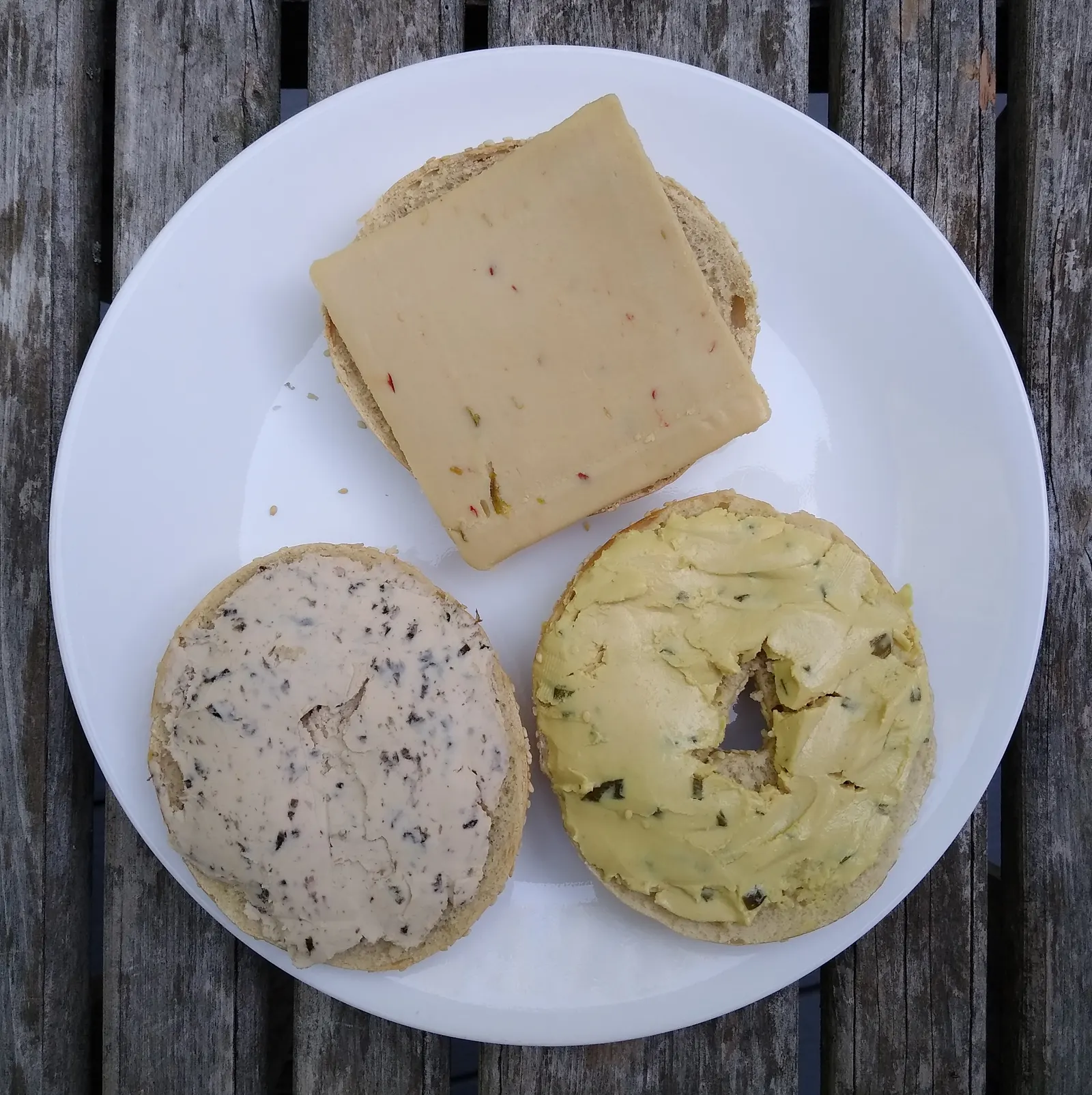
Three different plant-based cheeses spread or sliced over halved bagels on a white plate.
An open-license plate of commercial plant-based cheeses illustrates the creamy spreadable family. The pictured products are not Elizabeth Shah’s almond ricotta and include herbs and a sliced variety not used in this recipe.Photo by Mx. Granger / Wikimedia Commons · CC0 1.0
Active
10 min
Soak
Overnight
Cook
None
Yield
10 servings

Almond ricotta is a lesson in controlled softness. The nuts spend the night taking on water, then meet three kinds of brightness: cultured yogurt, clean white vinegar, and fresh lemon. A high-speed blender turns those six measured ingredients into something pale, spoonable, and gently grainy enough to feel at home in lasagna or on toast.

Elizabeth Shah’s source formula is spare, so the order carries real weight. Liquids go in first. Almonds follow in thirds. The machine stops whenever the paste stops circulating. That pause-and-scrape rhythm protects the texture from two opposite mistakes: a dry, stubborn mass and a loose dip diluted before it had a chance to become creamy.

“Ricotta texture without curds, heat, or dairy”

Cold soak

Cover with boiling water, then refrigerate overnight once the steam subsides.

Liquid first

Water, yogurt, vinegar, lemon, and salt give the first almond batch somewhere to move.

Slow control

Stop, scrape, and restart low before increasing speed; thickness is managed, not forced.

The blend mapBody culture acid seasoning

Six ingredients, four jobs

The source proportions remain intact. Each part either builds body, supplies tang, keeps the blades moving, or sets the savory finish.

01

Blanched slivered almonds

Two cups supply the pale color, fat, and fine body that let this blend stand in for fresh ricotta.

Use skinless slivers from a regular retail channel. Whole skin-on almonds make a darker, coarser result and are not the preserved source choice.
02

Plain plant yogurt

A quarter cup softens the nut paste and brings a cultured tang that water alone cannot provide.

Choose unsweetened yogurt with noticeable acidity. Vanilla, fruit, or heavily sweetened yogurt changes the dish.
03

White vinegar + lemon

One and a half tablespoons vinegar build a clean dairy-like sharpness; two tablespoons lemon add fresher citrus lift.

Keep both in the first blend. Taste only after the almonds are fully incorporated, then adjust in small additions.
04

Water + salt

Three quarters cup water creates circulation while one teaspoon salt makes the mild almond base read as savory.

Do not front-load extra water. Scrape first, then thin by teaspoons only when the blades still cannot turn the mixture.

The cold clockSoak drain base thicken taste chill

An overnight wait, then a ten-minute blend

Most of the elapsed time is unattended refrigeration. The active work is a short sequence of blending and scraping.

  1. Night before

    Cover and chill

    Pour boiling water over the almonds; once steaming eases, cover and refrigerate overnight.

  2. 0:00

    Drain and rinse

    Remove the soak water completely and rinse the softened slivers under cool water.

  3. 1:30

    Build the tangy base

    Blend water, yogurt, vinegar, lemon juice, and salt for a few seconds.

  4. 2:00

    Add almonds in thirds

    Stop between batches, scrape the sides, and restart low before raising the speed.

  5. 8:00

    Tune the texture

    Blend until creamy and lightly textured; thin only by teaspoons if circulation stops.

  6. 10:00

    Taste and chill

    Make one small acid or salt adjustment, transfer, cover, and refrigerate.

Body + brightnessThe nut underneath and the acid at the edge

Almonds make the structure; lemon makes it lift

A clear bowl filled with whole brown-skinned almonds on a dark stone surface.
Almonds give the ricotta its body. The photograph shows whole skin-on nuts; the source formula uses pale slivered almonds, and the maintained recipe clarifies that they should be blanched and skinless.Photo by Tochiprecious / Wikimedia Commons · CC BY-SA 4.0
The stopping point

Blend past visible pieces but stop before the surface turns slick. Ricotta should keep a whisper of grain.

Three lemons on a wooden table rendered in grayscale except for the yellow flesh of the cut lemon.
Two tablespoons of fresh lemon juice work with white vinegar and tangy plant yogurt to sharpen the mild almond base. The selective-color treatment belongs to the original CC0 photograph.Photo by ulleo / Pixabay via Wikimedia Commons · CC0 1.0

The spoon testPale fine mounded bright

Four signs the blender can stop

This no-cook recipe has no temperature cue. Color, movement, body, and flavor tell you when the blend is ready.

01

Pale and even

Blanched slivers disappear into an ivory base without large almond shards or brown skin flecks.

02

Fine, not flat

A spoonful looks creamy but retains the faint grain that distinguishes ricotta from a glossy sauce.

03

A soft mound

Fresh from the blender it settles slowly; after an hour cold, it holds a gentle scoop without becoming stiff.

04

Clean tang

Lemon, vinegar, and yogurt register as brightness around the almond, not as one harsh acidic note.

The keeping planOne hour · four days · three months

Cold from soak to storage

Hydrated nuts and plant yogurt make a perishable spread. Keep the overnight soak cold and the finished ricotta covered.

First hour

Chill in a clean covered container so the blend firms and the acid settles into the almond base.

Next 3–4 days

Keep refrigerated at 40°F / 4°C or below. Spoon out only what you will serve and return the rest promptly.

Up to 3 months

Freeze airtight in small portions. Thaw in the refrigerator and stir any separated liquid back in before judging texture.

Vegan Almond Ricotta Cheese

The preserved Elizabeth Shah formula: softened slivered almonds blended with water, plain plant yogurt, white vinegar, lemon, and salt.

Vegan RicottaAlmond CheeseDairy-FreeGluten-FreeNo-CookSpread

Ingredients

The preserved almond ricotta formula

  • 2 cups blanched slivered almonds without skins
  • 3/4 cup water, plus only small amounts if needed for blending
  • 1/4 cup plain unsweetened plant-based yogurt, preferably a tangy variety such as cashew yogurt
  • 1 1/2 tablespoons white vinegar
  • 2 tablespoons fresh lemon juice
  • 1 teaspoon salt, plus more only after tasting

Directions

  1. Put the slivered almonds in a clean heat-safe container and cover them generously with boiling water. Let the steam subside, cover, and refrigerate overnight. This keeps the source’s long softening step while avoiding an ambient overnight soak.
  2. Drain the soaked almonds in a fine-mesh sieve and rinse them well under cool running water. Let the excess water drain while you build the liquid base.
  3. Add the 3/4 cup water, plant yogurt, white vinegar, lemon juice, and salt to a high-speed blender. Blend for a few seconds to combine.
  4. With the blender stopped between additions, add the drained almonds in three batches. Begin each thicker stage on low, stop to scrape and stir as needed, then gradually increase the speed as the mixture starts moving freely.
  5. Blend until the ricotta is pale, creamy, and lightly textured rather than oily. If the blades cannot circulate the mixture after scraping, add water or yogurt only 1 teaspoon at a time; the ricotta will firm as it chills.
  6. Taste and adjust with a small amount of salt, vinegar, or lemon only if needed. Blend briefly after each adjustment.
  7. Transfer promptly to a clean airtight container and refrigerate. For a firmer spoonable texture, chill for at least 1 hour before serving.

Source and technique references: the May 24, 2019 My Recipe Magic legacy card for ID 2637909262, its title, Healthy Midwestern Girl byline, original description, 10-serving yield, six-part formula, nutrition card, and destination link; Elizabeth Shah’s Healthy Midwestern Girl almond ricotta and its preserved July 2019 card for the missing 2-tablespoon lemon measure, original overnight soak, liquid-first three-step method, 10-minute active clock, roughly 2 1/2-cup yield, and source nutrition; Oregon State University Extension’s cold-soak food-safety research for refrigerating an overnight almond soak rather than leaving it at ambient temperature; UC Cooperative Extension’s consumer nut-safety guide for clean handling and commercially treated retail almonds; and FoodSafety.gov for the two-hour room-temperature limit on perishable food. The source ratios remain unchanged; cold soaking, blender handling, thinning control, texture cues, and storage language are explicit safety or execution guidance.

Image credits

Photography is used under open licenses with attribution: Mx. Granger / Wikimedia Commons, Tochiprecious / Wikimedia Commons, and ulleo / Pixabay via Wikimedia Commons.