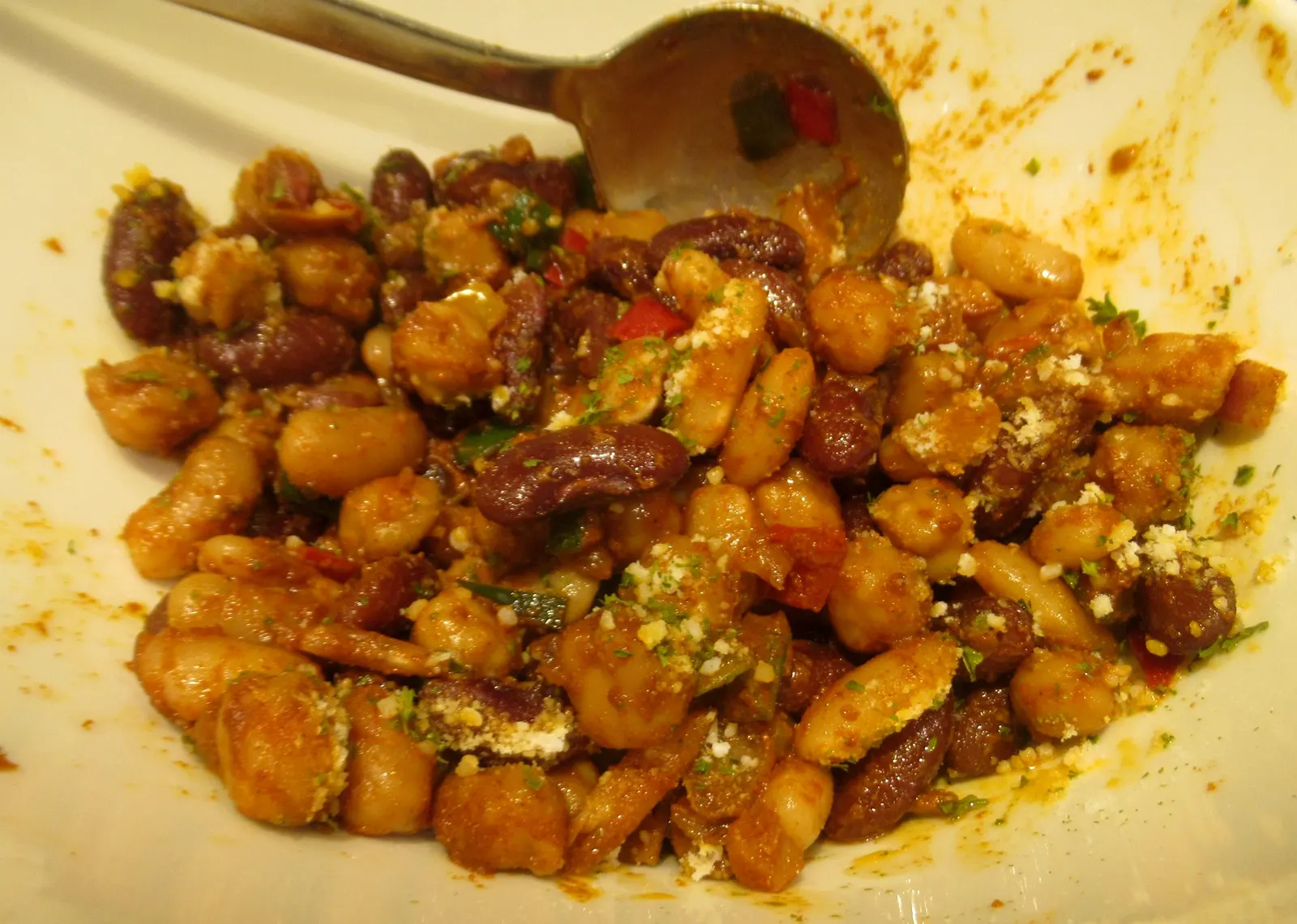
Trish Rosenquist’s six-serving legacy salad folds cooled wild rice with kidney beans, black beans, chickpeas, red onion, cilantro, and jalapeño under a sweet red-wine vinaigrette.
This open-license three-bean salad is a visual reference for whole-bean texture and sweet-sour dressing; it is not the queued wild-rice batch and uses a different bean mix.Photo by CNEcija12345 / Wikimedia Commons · CC BY-SA 4.0
Active
About 10 min
Heat
None, with rice ready
Rest
Up to 1 hr
Yield
6 servings
A pantry salad can still have a precise finish. Trish Rosenquist’s queued card begins with two cold cups of wild-rice blend and three cans of beans, then sharpens that generous base with red onion, cilantro, and one diced jalapeño. Nothing needs cooking once the rice is ready; the work is keeping every component clean, dry, and distinct.
The vinaigrette is the surprise. Red-wine vinegar and olive oil carry a full quarter-cup of sugar, making this an intentionally sweet cookout salad rather than a lean, acidic grain bowl. A tight-lidded jar distributes that balance; an optional cold hour lets it settle into the rice without asking the beans to lose their shape.
“A light hot-weather dinner and an easy side for barbecues, parties, and cookouts.”
Cold grains
The rice enters cooked and fully cooled, so it stays separate instead of steaming the herbs and onion.
Dry beans
Three cans bring most of the bowl’s volume. Rinse well, then remove surface water before dressing.
One jar
Sugar, vinegar, oil, salt, and pepper need a vigorous shake before they can coat the salad evenly.
The bowl mapChewy creamy sharp green sweet-sour
One grain, three beans, three fresh cuts
Every layer stays visible. The refinement comes from cooling and draining well, not from adding ingredients the legacy card never named.
01
Wild-rice blend
Two cooled cups give the salad chew and a dark, nutty-looking grain base without requiring the assembly bowl to see heat.
Cook the blend by its own package, then measure the cooked amount. Different wild-rice blends absorb water at different rates.02
Kidney + black + garbanzo
Three fifteen-ounce cans supply contrasting colors, shapes, and textures while keeping the salad squarely in pantry territory.
Rinse in one colander, drain thoroughly, and blot gently. Wet beans turn the concentrated vinaigrette thin and cloudy.03
Red onion + cilantro + jalapeño
A small fresh trio breaks through the starch and beans: onion for bite, cilantro for lift, and a whole jalapeño for green heat.
Dice consistently so no single bite receives a raw-onion slab or an oversized piece of jalapeño.04
Vinegar + oil + sugar
The source is deliberately sweet-sour, using twice as much sugar as oil and more sugar than vinegar by volume.
Shake until the sugar is suspended, then toss the whole batch before judging the balance.
The assembly clockCool rinse dry dice shake fold
Ten minutes on the cold line
The source assumes cooked rice is waiting. With that one dependency handled, the rest is a six-stop no-cook rhythm.
Ahead
Cook and cool the grain
Follow the blend’s package, measure 2 cooked cups, and chill them in a shallow layer.
0:00
Rinse all three beans
Empty the cans into one colander, rinse under cold water, drain, and blot away surface moisture.
0:03
Make the fresh cut
Dice the red onion and jalapeño small, then chop the washed and dried cilantro.
0:06
Build the big bowl
Combine cold rice, beans, onion, cilantro, and jalapeño without crushing the soft legumes.
0:08
Shake the sweet-sour jar
Disperse vinegar, oil, sugar, salt, and pepper until no dry sugar layer remains.
0:10
Fold now, rest if wanted
Coat the bowl evenly, then serve immediately or chill covered for the source-preferred hour.
Grain + greenThe two quiet structures beneath the beans
Long rice for chew, cilantro for lift
The source asks for a cooked wild-rice blend, fully cooled before assembly. The pictured plain rice shows the long-grain texture before beans and vinaigrette arrive.Photo by ElinorD / Wikimedia Commons · CC BY-SA 3.0
Two cups means cooked
The queue card measures the rice after cooking. Treating two cups as a dry measure would overwhelm both the beans and the vinaigrette.
Half a cup of chopped cilantro is not garnish here; it is the fresh aromatic running through the rice and three cans of beans.Photo by ZooFari / Wikimedia Commons · Public domain
The cold evidenceLoose clean suspended glossy
Four signs the bowl will stay bright
This salad has no stove-side doneness moment. Its success reads in moisture control, intact shapes, and an even coat.
01
Separate rice grains
The blend looks cold and loose, not clumped by residual steam or wet enough to smear.
02
Clean bean skins
Kidney beans, black beans, and chickpeas keep their shapes with no thick packing liquid clinging between them.
03
Dressing in suspension
A shake turns the jar evenly cloudy; sugar is no longer stranded in a pale layer on the bottom.
04
Gloss without a puddle
The finished salad is lightly shiny from top to bottom, and the bowl floor holds no watery moat.
The picnic planAhead covered chilled portioned
Give the bowl an hour, then keep it cold
The source’s optional rest improves flavor; safe cold holding protects the rice, cut produce, and dressed leftovers after that.
Make the rice first
Cook and cool the blend ahead. Keep it covered and cold so the ten-minute assembly remains honest.
Use the source’s hour
The salad may be served immediately, but one covered refrigerator hour gives the sweet vinaigrette time to move through the bowl.
Store for 3–4 days
Refrigerate airtight at 40°F or below. Fold before serving and expect the cilantro and onion to soften over time.
Serve a small cold bowl
At a picnic, hold the reserve in a cooler and replenish a bowl over ice; apply the two-hour rule, or one hour above 90°F.
Three Bean Wild Rice Salad
The exact six-serving legacy formula: cooled wild-rice blend, kidney beans, black beans, chickpeas, red onion, cilantro, jalapeño, and sweet red-wine vinaigrette.
1 (15-ounce) can garbanzo beans (chickpeas), rinsed and drained
1/2 red onion, diced
1/2 cup chopped cilantro
1 jalapeño, diced
Sweet red-wine vinaigrette
3 tablespoons red-wine vinegar
2 tablespoons extra-virgin olive oil
4 tablespoons granulated sugar
1/2 teaspoon fine salt
1/2 teaspoon freshly ground black pepper
Directions
If the wild-rice blend is not already cooked, prepare it according to its package directions without adding seasoning that would compete with the vinaigrette. Measure 2 cups cooked rice, spread it in a shallow layer, and refrigerate promptly until fully cold. The source’s ten-minute assembly assumes this rice is ready.
Drain the kidney beans, black beans, and chickpeas into a colander. Rinse them thoroughly under cold running water, then let them drain well. Blot or spin gently until the surfaces are no longer wet so rinse water does not dilute the dressing.
Wash the red onion, cilantro, and jalapeño under running water before cutting. Dice the onion and jalapeño into small, even pieces and chop the cilantro. Put the cold rice, all three beans, onion, cilantro, and jalapeño in a large bowl.
Measure the red-wine vinegar, olive oil, sugar, salt, and black pepper into a small jar. Close it tightly and shake until the oil is dispersed and the sugar no longer sits in a dry layer at the bottom.
Pour the vinaigrette over the salad. Fold from the bottom with a large spoon or spatula until the rice grains and beans are evenly glossy without crushing the beans.
Serve immediately, as the source allows, or cover and refrigerate for 1 hour for its preferred flavor. Fold once more before serving cold or cool; keep the bowl at 40°F (4°C) or below until it goes to the table.
Source and technique references: the April 2, 2018 My Recipe Magic legacy card for ID 2501764730, title, byline, six-serving yield, exact queued ingredient list, compact method, and conflicting nutrition panel; Trish Rosenquist’s maintained Mom On Timeout article for the June 2015 original-publication month, ten-minute active time, rinsing emphasis, one-hour flavor rest, optional jalapeño adjustment, and the documented later eight-serving red-pepper edition; Iowa State University Extension’s canned-bean guide for cold-water rinsing, colander draining, covered 3–4 day storage, and the package-specific approach to prepared beans; the FDA’s fresh-produce guidance for clean hands, running-water washing, drying, and 40°F refrigeration; and FoodSafety.gov’s cold-serving guidance for covered storage, the two-hour room-temperature limit, and the one-hour limit above 90°F. The queued ratios and ingredient list are unchanged; cooling, drying, dressing, storage, and service cues are explicitly researched clarification.