Buenos Aires by the dozenBeef · onion · pimentón · lard

Carina Duclos · September 2014

Tasty Authentic Empanadas

Carina Duclos’s fried Argentine empanadas pair a deeply oniony, sweet-paprika beef filling with thin homemade lard pastry and a crisp bubbled finish.

Fold all twenty-four
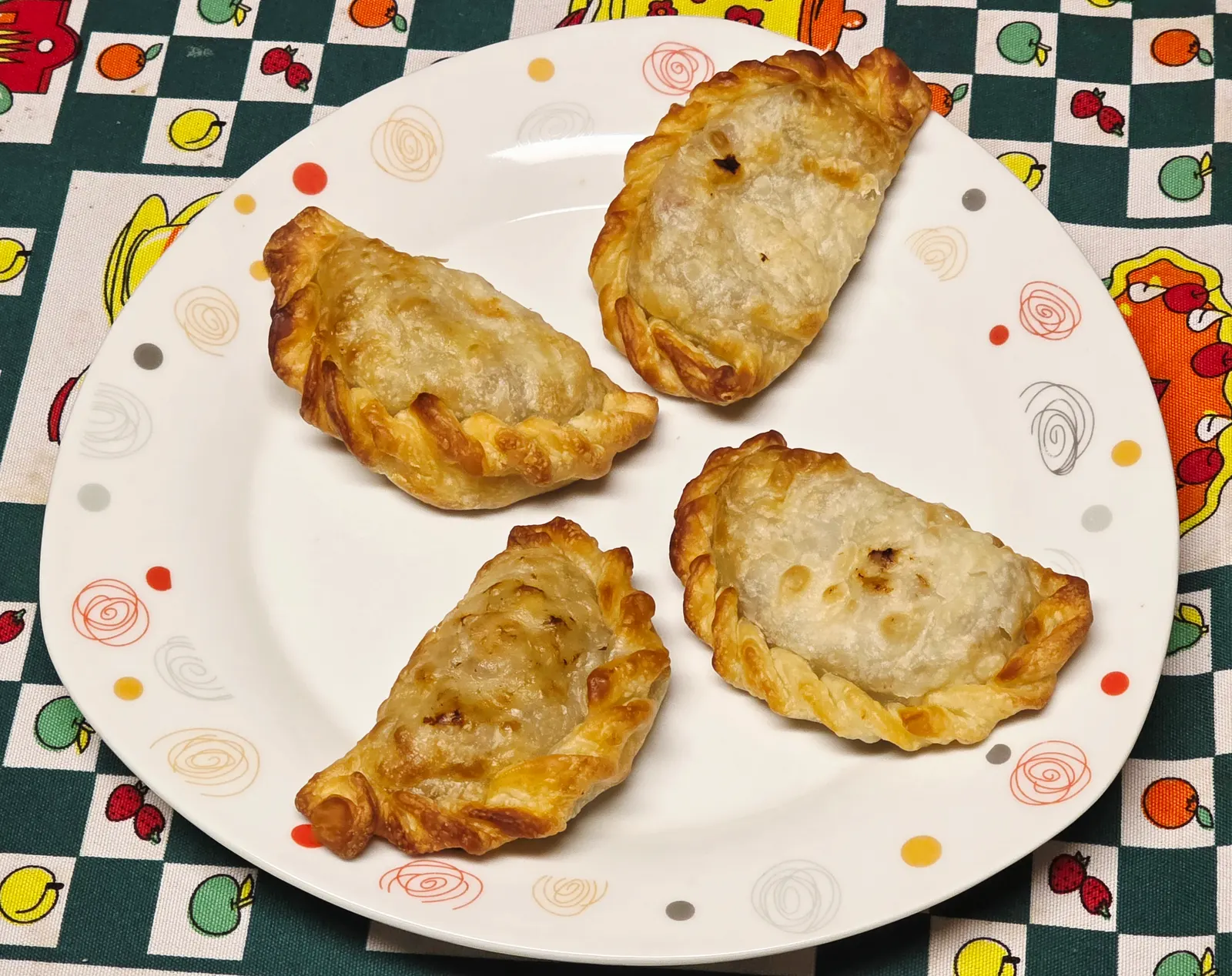
Four golden Argentine beef empanadas with braided edges arranged on a round plate.
Fried Argentine beef empanadas show the golden shell and braided repulgue this recipe is aiming for; Carina’s version uses a thin homemade lard dough.Photo by Horacio Cambeiro / Wikimedia Commons · CC BY-SA 3.0
Makes
24 empanadas
Roll
3–4 mm
Chill
6–8 hr
Fry
5–7 min

This is an empanada recipe that begins by refusing to hurry. Carina Duclos cooks more onion than beef with garlic, red pepper, sweet paprika, cumin, and nutmeg, then gives the filling six to eight cold hours before it meets the dough. That pause is the hinge: the pan juices settle, the spices deepen, and the lard pastry stays cool enough to seal cleanly.

The rest is a small production line with a clear rhythm. Roll the flour-and-lard dough thin, cut four-inch rounds, protect them from the air, and fill without greed. A fork can close each crescent, though the braided repulgue turns the edge into both a lock and a signature. Then hot oil gives the surface its fine bubbles and its decisive crunch.

“These tasty empanadas are homemade Argentinian street-food snacks made of crispy homemade pastry filled with beef—easy, popular party food.”

Use the gram column

The source’s pound conversions conflict. Keep Carina’s 600 grams beef and 800 grams onion as the controlling ratio.

Cool all the way

A six-to-eight-hour chill is part of the recipe, not optional downtime; the filling should feel refrigerator-cold before shaping.

Keep the rim clean

A small mound, a bare border, a film of water, and expelled air make a stronger seal than extra filling.

Let the oil recover

The source’s 400°F set point drops when a batch goes in. Fry few enough at once that the crust bubbles and browns evenly.

The Argentine ratioSweet · warm · cold · crisp

The filling is onion-led and the pastry is built for the fryer

Four decisions make this particular batch recognizable: more onion than beef, a full measure of sweet paprika, lard in the dough, and a long chill before shaping.

01

Eight hundred grams onion

More onion than beef gives the filling its sweet, juicy body and explains the long low simmer.

Mix yellow onion with green onion as Carina suggests, chop both finely, and soften them before adding the meat.
02

One-third cup pimentón dulce

The generous dose paints the filling brick red and brings warm pepper fragrance without chile heat.

Choose sweet paprika. Hot paprika or cayenne at this volume would turn a defining aromatic into a different recipe.
03

Three hundred grams lard

Room-temperature lard shortens six cups of flour into a sturdy, crisp shell that can survive deep-frying.

Distribute it evenly before the warm water goes in, then stop mixing once the dough is cohesive.
04

A truly cold filling

The overnight rest firms the fat, settles the seasoning, and keeps heat and steam away from the raw pastry.

Cool in shallow containers and refrigerate within two hours; never try to speed the step by filling warm dough rounds.

The edge tells the storyRound · mound · fold · repulgue

Leave enough bare dough to turn a fold into a seal

Rows of uncooked Argentine empanadas closed with several braided edge patterns.
A tray of formed empanadas makes the sealing lesson visible. These photographed shells are commercial discs; Carina rolls her flour-and-lard dough to 3–4 millimeters before cutting.Photo by Jorge Gobbi / Wikimedia Commons · CC BY 2.0
The red cabinet

Sweet paprika does the heavy aromatic work. Cumin and nutmeg stay underneath it, giving the beef warmth without pushing the filling toward chile heat.

A kitchen spice rack with sweet paprika, nutmeg, garlic, black pepper, and other seasonings.
Sweet paprika, cumin, nutmeg, garlic, salt, and black pepper give the filling its warm register. The broader photographed rack also contains seasonings not used here.Photo by Anna Massini / Wikimedia Commons · CC BY 4.0

The overnight clockSoften · simmer · chill · roll · seal · fry

Build the batch around the cold middle

The source card’s short headline time hides its own long simmer and six-to-eight-hour rest. The honest schedule starts the filling the day before and treats frying as a final batch job.

  1. 0:00

    Soften the aromatics

    Finely chop onion, garlic, and half a red pepper, then cook until soft and translucent without hard browning.

  2. 0:12

    Brown the beef

    Break the meat into small pieces and cook to 160°F before adding the paprika, cumin, nutmeg, salt, and pepper.

  3. +40 MIN

    Concentrate the filling

    Simmer low, stirring occasionally, until the onion-rich mixture is cohesive rather than wet.

  4. 6–8 HR

    Chill completely

    Spread into shallow containers, cover, and refrigerate. Overnight is Carina’s preferred pause.

  5. ROLL

    Make 4-inch rounds

    Work lard into salted flour, add warm water, divide in three, and roll each piece to 3–4 millimeters.

  6. SEAL

    Make the half-moons

    Mound cold filling, wet the clean rim, press out trapped air, and finish with a fork or braided repulgue.

  7. 400°F

    Start the oil hot

    Use a deep stable pot and thermometer. Add a small batch only after the source set point is reached.

  8. 5–7 MIN

    Fry to bubbles and gold

    Turn as needed, check the hot center, drain well, and let the oil recover before the next round.

Read the hand pieCohesive · relaxed · sealed · bubbled · hot

Five reads from the skillet to the first safe bite

A clock cannot tell whether the filling is too wet, the edge is contaminated, or the oil has collapsed under a crowded batch. These physical cues can.

01

Filling cohesive, not soupy

The onion has melted into the beef and the pan shows no loose watery pool after the low simmer.

02

Dough smooth, not elastic

The round rolls without splitting but does not snap back aggressively; visible dry flour means it needs a little more mixing.

03

A clean crescent margin

No filling or grease interrupts the pressed rim. The half-moon sits flat without a taut, overstuffed belly.

04

Fine bubbles across the crust

The surface blisters into a crisp shell while the color moves from pale wheat to an even amber gold.

05

Hot center, settled steam

A test empanada reaches 165°F inside; a short rest keeps the first bite from releasing dangerously hot steam.

Make ahead + keepChill shallow · cover rounds · freeze formed

Do tomorrow’s work before the oil is hot

The recipe rewards advance work in the filling and the shaped crescents. Once fried, the crust is at its best immediately, so store and reheat with that trade-off in mind.

Make the filling first

Cook it the day before, spread it shallow, and refrigerate. The long cold pause is already built into the source method.

Stage rounds under cover

Separate cut dough with parchment and keep the stack beneath a clean towel so every edge remains flexible enough to seal.

Freeze before frying

For the best crust later, freeze formed empanadas in one layer until firm, then pack airtight. The source prefers this to reheating cooked pastry.

Keep cooked for 3–4 days

Refrigerate within two hours in a shallow covered container and reheat to 165°F, preferably in an oven for a drier shell.

Tasty Authentic Empanadas

Twenty-four fried Argentine hand pies with a paprika-rich ground-beef and onion filling inside thin homemade lard pastry.

EmpanadasArgentinaBeefHand PiesDeep-FriedParty FoodMake Ahead

Ingredients

Paprika beef filling

  • 600 g ground beef (about 1 lb 5 oz; see source-unit note)
  • 800 g onions (about 1 lb 12 oz), preferably a mix of yellow onion and green onion
  • 2 garlic cloves
  • 1/2 red bell pepper
  • 1/3 cup pimentón dulce or sweet paprika
  • 1/2 teaspoon ground cumin
  • 1/2 teaspoon ground nutmeg
  • Salt and black pepper, to taste
  • Butter or neutral oil, as needed for the skillet

Homemade lard pastry

  • 750 g (6 cups) all-purpose flour
  • 300 g (1 1/3 cups) lard, at room temperature
  • 1 teaspoon fine salt
  • 1 cup warm water

For frying

  • Neutral high-heat oil, enough for safe deep-frying

Directions

  1. Finely chop the onions, garlic, and red pepper. Heat a little butter or neutral oil in a large heavy skillet over medium heat. Cook the vegetables, stirring often, until the onions are soft and translucent rather than browned.
  2. Add the ground beef and break it into small pieces. Cook until no pink remains and the meat reaches 160°F / 71°C. Stir in the sweet paprika, cumin, and nutmeg; reduce the heat and simmer gently for 30–40 minutes, stirring now and then. Season with salt and black pepper.
  3. Spread the filling in shallow containers so it cools quickly, cover, and refrigerate within 2 hours. Chill for 6–8 hours or, preferably, overnight. The filling must be cold before it touches the pastry.
  4. For the dough, combine the flour and salt. Work in the room-temperature lard with your hands or a mixer until it is evenly distributed, then add the warm water and mix just until a cohesive dough forms.
  5. Divide the dough into 3 pieces. Roll one piece at a time to 3–4 mm thick and cut 4-inch rounds with a saucer or cutter. Stack the rounds between sheets of parchment and keep them covered with a clean towel while you finish rolling; the source yields about 24.
  6. Set one dough round on the work surface and place a modest mound of cold filling in the center, leaving a clean rim. Lightly wet the edge, fold into a half-moon, press out trapped air, and seal firmly. Crimp with a fork or make a braided repulgue. Repeat without overfilling.
  7. Pour frying oil into a deep, stable pot, leaving ample headroom, and attach a thermometer. Heat to the source’s 400°F / 204°C set point. Keep the pot handle turned inward, keep water away from the oil, and never leave the pot unattended.
  8. Lower in a small batch without crowding. Fry for 5–7 minutes, turning as needed, until the pastry is evenly golden and covered with fine bubbles. Let the oil recover toward its set point before adding the next batch.
  9. Because the empanadas are reheating a chilled cooked-beef filling, check that the center reaches 165°F / 74°C. Lift out with a spider or slotted spoon and drain on a rack or paper towels. Serve warm after the steam inside has settled for a few minutes.
  10. Cool leftovers promptly and refrigerate in a shallow covered container within 2 hours. Reheat to 165°F / 74°C and use within 3–4 days; for the best make-ahead texture, freeze the formed empanadas before frying.

Source and research references: the queued legacy path; the surviving Pinterest rich pin for the exact legacy title, September 30, 2014 date, 24-piece yield, ingredient data, image identity, and Carina’s quoted Argentine context; Lovefoodies’ maintained recipe for Carina Duclos’s byline, complete method, source measurements, reader-confirmed paprika amount, and nutrition estimate; the early Just A Pinch mirror for independent confirmation of the January 2014 formula; Goya’s Argentinian-style method and King Arthur Baking for independent agreement on cooling filling and sealing a clean rim; Oklahoma State Extension for frying ranges, thermometer control, batch temperature drop, and oil recovery; and USDA FSIS for the 160°F ground-beef minimum, two-hour cooling rule, 165°F reheating target, and 3–4-day refrigerated window. The source formula and fried identity are unchanged; corrected unit conversions, explicit elapsed time, temperature checks, cooling, and storage are editorial safeguards.

Image credits

Photography is used under open licenses with attribution: Horacio Cambeiro / Wikimedia Commons, Jorge Gobbi / Wikimedia Commons, and Anna Massini / Wikimedia Commons.