The fifteen-minute skilletSalmon · mustard · horseradish · parsley
Three fillets · one cold sharp sauce
Savory Salmon with Tangy Horseradish Sauce
Six Sisters’ Stuff pairs quick skillet salmon with a cold mayonnaise sauce sharpened by prepared horseradish, Dijon mustard, parsley, and black pepper.
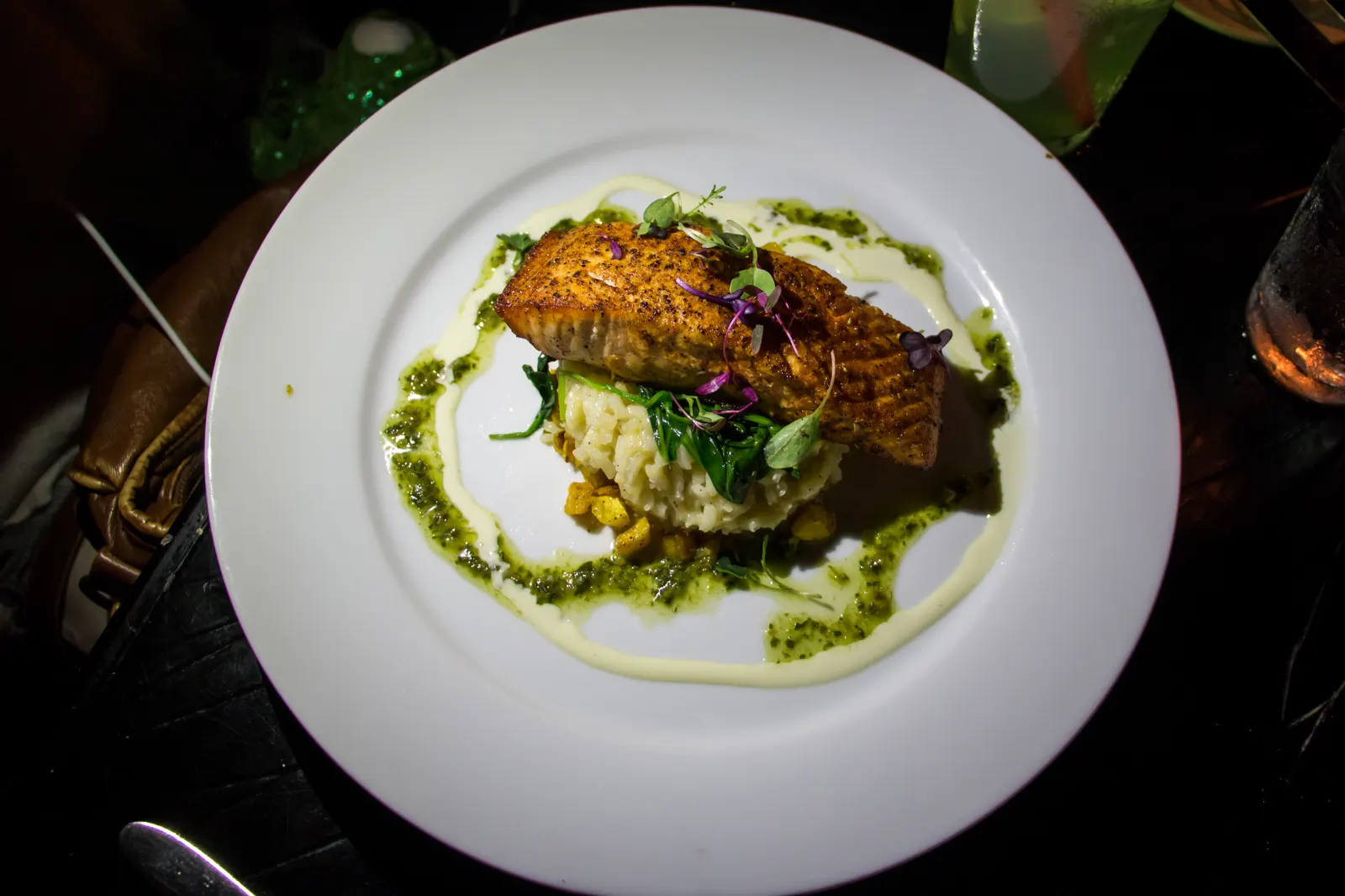
The open-license plate supplies the skillet-seared silhouette. Its Cajun seasoning, risotto, greens, citrus mousseline, and salsa verde are illustrative and are not part of the Six Sisters’ Stuff formula.Photo by HarshLight / Wikimedia Commons · CC BY 2.0
Serves
3
Prep
5 min
Skillet
10 min
Finish
Cold sauce
The sauce never sees the skillet. That is the quiet intelligence in this brief Six Sisters’ Stuff supper. Salmon gets dry seasoning and hot oil; mayonnaise gets Dijon, horseradish, parsley, and pepper. They meet only after the fish is safely cooked.
The separation keeps every contrast legible: browned fish against cool cream, rich mayonnaise against nasal horseradish, and mustard tang against the salmon’s savory depth. Three small fillets make it weeknight-fast, but the clean-bowl discipline is what makes it dependable.
“This skillet salmon recipe with tangy horseradish sauce can be made in 15 minutes with simple, fresh ingredients for a wonderful weeknight meal.”
One cold bowl
Mayonnaise, horseradish sauce, Dijon, parsley, and pepper become a ready-to-eat finish before raw fish reaches the skillet.
One measured crust
A tablespoon of fish seasoning covers all three small fillets; the recipe needs flavor, not an opaque salty coat.
Two covered turns
Five minutes on the first side and five after the flip preserve the source’s unusually simple covered-skillet rhythm.
One clean handoff
The cooked fish leaves for a clean plate, rests briefly, and meets the refrigerated sauce only at service.
The ingredient mapHot fish cold sauce
Eight ingredients split into two clear jobs
Nothing needs to migrate between skillet and sauce bowl. Preserve the measured divide and both texture and food handling get simpler.
01
Three 3-ounce salmon fillets
Small, evenly sized portions make the source’s ten-minute covered clock plausible.
Choose pieces of similar thickness and check the thickest one; a tapered tail may finish first.02
Mayonnaise + Dijon
A creamy third-cup base takes on mustard acidity without becoming a warm pan sauce.
Mix in a clean bowl and keep it cold while the fish cooks.03
Horseradish sauce
One tablespoon brings the cool nasal heat promised by the title.
Use bottled horseradish sauce as written; fresh grated root is stronger and would change the balance.04
Parsley + fish seasoning
Fresh green lift stays in the sauce while the dry blend seasons the salmon itself.
Old Bay is the source’s named example, but keep any blend within the measured tablespoon.
The short clockFive minutes + five minutes
Mix, dry, cover, flip, check, finish
The source’s covered method is unusually compact. Similar fillets and a temperature check keep its simple timing honest.
0:00
Mix the cold finish
Stir mayonnaise, parsley, horseradish sauce, Dijon, and pepper; cover and refrigerate.
0:03
Dry and season three fillets
Pat every surface dry and divide one tablespoon fish seasoning over both sides.
0:05
Heat the oil
Warm a large skillet over medium-high until the tablespoon of olive oil moves freely.
0:06
Cover the first side
Lay in the salmon without crowding, fit the lid, and leave it for five minutes.
0:11
Flip and cover again
Turn carefully, replace the lid, and give the second side about five minutes.
0:16
Check, rest, and sauce
Confirm 145°F at the thickest point, move to a clean plate, rest briefly, and spoon over the cold sauce.
Root + leafThe sauce’s sharp and green poles
Horseradish supplies the spark; parsley keeps it fresh
Fresh horseradish shows the root behind the sauce’s heat. The recipe itself calls for one tablespoon bottled horseradish sauce, not freshly grated root.Photo by Leslie Seaton / Wikimedia Commons · CC BY 2.0
Do not warm the finish
Mayonnaise sauce belongs in the refrigerator, not the pan. Spoon it over only when the salmon has reached the clean serving plate.
One tablespoon chopped fresh parsley keeps the mayonnaise sauce green-flecked and fresh. The pictured leaves are shown in their grocery display.Photo by Jeffery Martin / Wikimedia Commons · CC0 1.0
Four finish cuesGlide release flake contrast
Read the oil, release, center, and sauce
Five minutes per side is the schedule. These physical cues tell you whether your pan and fillets are following it.
01
The oil moves freely
The pan is ready when the olive oil glides in a thin sheet; a cool oily puddle encourages sticking and pale steaming.
02
The fillet releases
A browned surface lets go more readily. Ease a flexible spatula underneath instead of tearing at resistant fish.
03
145°F in the thickest piece
FDA’s safe endpoint pairs with opaque flesh that separates easily with a fork. The outside color alone cannot answer for the center.
04
The sauce stays distinct
Cold, peppery cream over hot salmon preserves contrast; adding it to the skillet would split the mayonnaise and mute the parsley.
The holding planChill separate reheat finish
Keep the cold bowl clean and the cooked fish brief
A ready-to-eat sauce and raw seafood need distinct tools, surfaces, and containers from the first minute through leftovers.
Sauce first
Mix it with clean tools, cover, and refrigerate while every raw-fish task happens elsewhere.
Frozen fillets
Thaw overnight in the refrigerator, or use a sealed cold-water thaw only when cooking immediately afterward.
Serve promptly
Rest only a few minutes, then add the cold sauce. Keep both components inside the two-hour room-temperature limit.
Store separately
Chill fish and sauce in covered containers for 3–4 days; gently reheat only the salmon and finish with cold sauce.
Savory Salmon with Tangy Horseradish Sauce
Three skillet-cooked salmon fillets finished with a cold mayonnaise, Dijon, horseradish, parsley, and black-pepper sauce.
3 fresh salmon fillets, 3 ounces each, skinless in the source demonstration
1 tablespoon fish seasoning, such as salmon seasoning or Old Bay
Directions
If the salmon was frozen, thaw it completely in the refrigerator. Pat the three fillets dry. Keep the raw fish and its utensils away from the small bowl and spoon that will hold the ready-to-eat sauce.
Combine the mayonnaise, chopped parsley, horseradish sauce, Dijon mustard, and black pepper in a small bowl. Stir until uniform, cover, and refrigerate while the salmon cooks.
Rub or sprinkle the measured fish seasoning over the front and back of all three fillets. Keep the one-tablespoon total rather than building a thick salty crust.
Heat the olive oil in a large skillet over medium-high heat. When the oil is hot and moves freely across the pan, add the salmon in one layer without crowding.
Cover the skillet and cook the first side for 5 minutes. Lift the lid away from your face, turn the fillets carefully, replace the lid, and cook the second side for about 5 minutes.
Check the thickest fillet. It is safely done at 145°F / 63°C, when the flesh is opaque and separates easily with a fork. If needed, continue over lower heat in short covered intervals so the outside does not scorch.
Move the salmon to a clean plate and let it stand for a few minutes. Spoon the cold horseradish-mustard sauce over the hot fillets immediately before serving.
Source and technique references: the queued legacy path and independent recipe indexes for the exact “Savory Salmon with Tangy Horseradish Sauce” identity, Kristen attribution, eight ingredients, three-serving yield, and five-step method; Steph Loaiza’s maintained Six Sisters’ Stuff card for the matching formula, 5/10/15-minute clock, covered five-minutes-per-side skillet method, fish-seasoning options, current author attribution, and maintained nutrition estimate; Food Network Kitchen’s tested pan-fried salmon and salmon technique guide for evenly thick portions, a dry surface, hot oil, a flexible spatula, and release/browning cues; the FDA’s seafood safety guide for clean separation, refrigerated or sealed-cold-water thawing, 145°F doneness, fork separation, and the two-hour service limit; and USDA FSIS for the 3–4-day refrigerated window for cooked fish. No source ratio or defining covered-skillet step was changed.