The double-peanut cereal barCookie · crisp rice · marshmallow
Twenty thick no-bake squares
Nutter Butter Rice Krispie Bars
Julie Evink’s no-bake cereal bars fold a full package of Nutter Butter cookies into a low-heat peanut-butter marshmallow base for 20 thick, chewy squares.
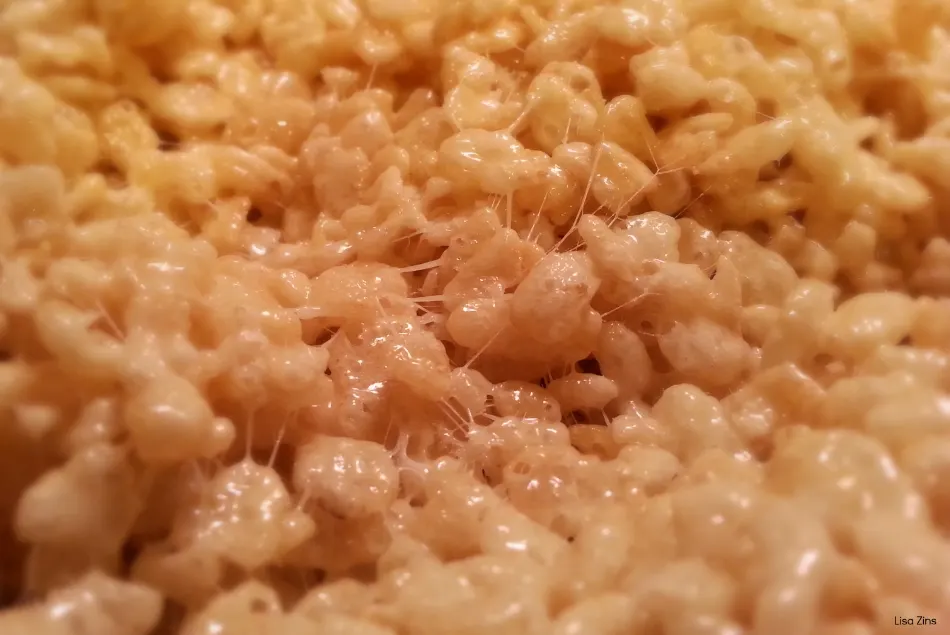
The close-up shows the glossy web that binds a classic crisp-rice treat. Julie Evink’s version adds creamy peanut butter and chopped Nutter Butter cookies to this marshmallow structure.Photo by Lisa Zins / Wikimedia Commons · CC BY 2.0
Makes
20 bars
Pan
9 × 13 in
Heat
Low only
Cool
20–30 min
This is a cereal treat with its volume turned up, not its technique rewritten. Julie Evink keeps the familiar crisp-rice and marshmallow frame, then asks it to carry a whole package of chopped peanut-butter sandwich cookies. Half a cup of creamy peanut butter disappears into the binder, so every space between the cereal tastes as deliberate as the cookie pieces themselves.
The ingredient list is forgiving; the heat and pressure are not. Warm the binder slowly, leave the stove the moment it turns smooth, and press the slab with a light hand. That restraint is what separates a thick, yielding square from a compressed brick. The reward cools in half an hour and needs no oven, glaze, or extra flourish.
“Quick, no-bake Rice Krispies bars loaded with Nutter Butter cookies for the perfect peanut butter overload.”
Melt
Butter and peanut butter become one smooth fat phase before the marshmallows arrive.
Stop
The instant the last marshmallow lumps disappear, take the pan off heat; more cooking trades stretch for hardness.
Fold
Cereal and cookie rubble need full coverage, not crushing. Turn from the bottom until the glossy binder reaches every piece.
Level
Press only enough to fill the corners. The small voids you leave behind are what keep a thick bar pleasantly chewy.
The mix mapCrag · scaffold · richness · stretch
Five ingredients, four structural jobs
The source proportions stay exactly where Julie Evink put them. Texture comes from sequencing and handling, not from adjusting the formula.
01
One full cookie package
Sixteen ounces of chopped peanut-butter sandwich cookies interrupt the cereal with tender wafers, creme, and craggy edges.
Keep the chop irregular: crumbs season the binder while larger pieces remain recognizable in the cut bar.02
Six cups crisp rice cereal
The airy grains provide the light scaffold that keeps a marshmallow-and-cookie slab from eating like candy.
Measure before heating. Once the binder is smooth, every minute in the saucepan costs softness.03
Butter + creamy peanut butter
Equal half-cup measures make the base richer than a classic cereal treat and carry peanut flavor through every gap.
Melt them together over low heat until no oily streaks remain before adding marshmallows.04
Twenty-one ounces marshmallows
Two bags create the generous elastic binder that can hold both cereal and a full package of cookies.
Fresh miniature marshmallows expose more surface area and melt quickly; stop heating as soon as they are smooth.
The no-bake clockStage melt fold level cool cut
From prepared pan to clean-cut slab
Once the marshmallows begin melting, the recipe moves quickly. Complete the quiet prep first and keep the hot passage short.
0:00
Prepare the pan and pressing tool
Line the 9-by-13-inch dish, leave a lifting sling, and grease the surfaces that will touch the sticky mixture.
0:04
Chop, measure, and stage
Break the cookies into mixed-size rubble and place all six cups of cereal within arm’s reach.
0:08
Unify butter and peanut butter
Use low heat and steady stirring until the mixture is fluid and free of streaks.
0:11
Melt the marshmallows only just enough
Keep the flame low; stir until smooth, then remove the saucepan from heat immediately.
0:16
Fold in crunch off heat
Turn cereal and cookie pieces through the glossy binder before it begins to set.
0:20
Level without compacting
Ease the mixture into the corners with a greased tool and preserve its airy interior.
+20–30
Cool, lift, and cut
Wait until the slab holds cleanly, then portion it into twenty room-temperature bars.
Cookie + cloudThe chunky part and the elastic part
Peanut-shaped rubble suspended in a white marshmallow web
This photograph shows Nutter Butter Bites; the source formula calls for one 16-ounce package of standard Nutter Butter cookies, chopped before folding.Photo by Famartin / Wikimedia Commons · CC BY-SA 4.0
Keep two scales of cookie
Small crumbs spread peanut-cookie flavor through the binder. Larger chopped pieces survive as tender interruptions against the crisp rice.
Two 10.5-ounce bags create a deliberately generous binder. Fresh miniature marshmallows melt most evenly over low heat.Photo by John Morgan / Wikimedia Commons · CC BY 2.0
The tactile proofGlossy craggy airy pliable
Four signs the bar will stay soft
There is no doneness temperature here. Watch the binder, the cookie edges, the packed surface, and finally the bend of a cooled square.
01
Glossy, not bubbling
The binder is smooth and pourable with no marshmallow lumps. A simmer or toasted edge means the heat has gone beyond the source’s low lane.
02
Cookie pieces still have edges
Fine crumbs tint the binder, but larger peanut-shaped fragments survive the fold and create contrast in each square.
03
The surface is level, not ironed flat
A correct slab reaches the corners while retaining visible pockets between grains. A glassy compressed top predicts a dense bite.
04
The cooled bar bends before it snaps
After 20–30 minutes, the square releases cleanly yet stays pliable. Crumbling signals poor coating; a hard snap points to excess heat or pressure.
Make + keepCool seal layer label
Protect the air and the crackle
Room temperature is the right home for this bar. The enemies are trapped steam, open air, and an unmarked allergen table.
Best on the first day
The cereal is crispest and the marshmallow most supple within hours of cutting, in line with WK Kellogg’s classic-treat guidance.
Cool before closing
Seal only after the slab is completely room temperature; condensation inside an airtight box steals the cereal’s crackle.
Keep airtight for 3 days
Julie’s source gives a three-day room-temperature window. Put parchment or wax paper between stacked layers.
Read every package label
Peanut, milk, wheat, and soy are central concerns here, and brand formulas or cross-contact statements can change.
Nutter Butter Rice Krispie Bars
Julie Evink’s five-ingredient formula: chopped Nutter Butter cookies and crisp rice folded into a low-heat butter, peanut-butter, and marshmallow binder.
Line a 9-by-13-inch baking dish with foil or parchment, leaving enough overhang to lift the slab later. Coat the lining lightly with nonstick spray. Lightly grease the pressing spatula or set out a sheet of wax paper.
Chop the full 16-ounce package of Nutter Butter cookies into uneven bite-size pieces. Measure the 6 cups crisp rice cereal and keep both ready beside the stove; the mixture firms quickly once it leaves the heat.
Put the butter and peanut butter in a large heavy saucepan. Set the pan over low heat and stir until both are melted and completely combined.
Keep the heat low, add both bags of miniature marshmallows, and stir gently but steadily until the marshmallows are just melted and the mixture is smooth. Do not let it boil or continue cooking after the last lumps disappear.
Remove the saucepan from the heat. Immediately fold in the crisp rice cereal and chopped Nutter Butter cookies until the pieces are evenly coated. If the pan feels crowded, pour the hot marshmallow mixture over the cereal and cookies in a lightly greased large bowl, then fold there.
Transfer the mixture to the prepared dish while warm. Use the greased spatula or wax paper to ease it into the corners and make an even layer; press only firmly enough to level it, without compacting away the air pockets.
Leave the pan uncovered at room temperature for 20–30 minutes, until the slab is cool and holds its shape when lifted at an edge.
Lift out the slab and cut it into 20 bars with a sharp knife. Serve at room temperature or store airtight once completely cool.
Source and research references: the archived May 3, 2016 My Recipe Magic card for the exact queued identity, author, five ingredients, 20-bar yield, legacy nutrition, and Julie’s Eats & Treats link; Julie Evink’s maintained source recipe for the complete low-heat method, 20-minute source clock, 20–30 minute cooling direction, three-day airtight storage, and attribution; Shelly Jaronsky’s credited Cookies & Cups base recipe for the 9-by-13-inch lined-pan preparation that resolves the source’s undefined “prepared pan”; WK Kellogg’s official original-treat method for independent confirmation of low heat, prompt removal from heat, a greased pressing tool, fresh marshmallows, and same-day best texture; professional chocolatier Beth Klosterboer’s tested Nutter Butter bar guide for the approximately 10-minute melt, overheat warning, off-heat finishing, gentle pressing, and room-temperature storage; the current Nutter Butter product label for peanut, wheat, and soy declarations; and the FDA’s food-allergen guidance for package-label and cross-contact cautions. The queued recipe’s ingredients, ratios, yield, and defining method remain unchanged; pan setup, texture cues, practical stovetop estimate, and allergen context are clearly separated guidance.