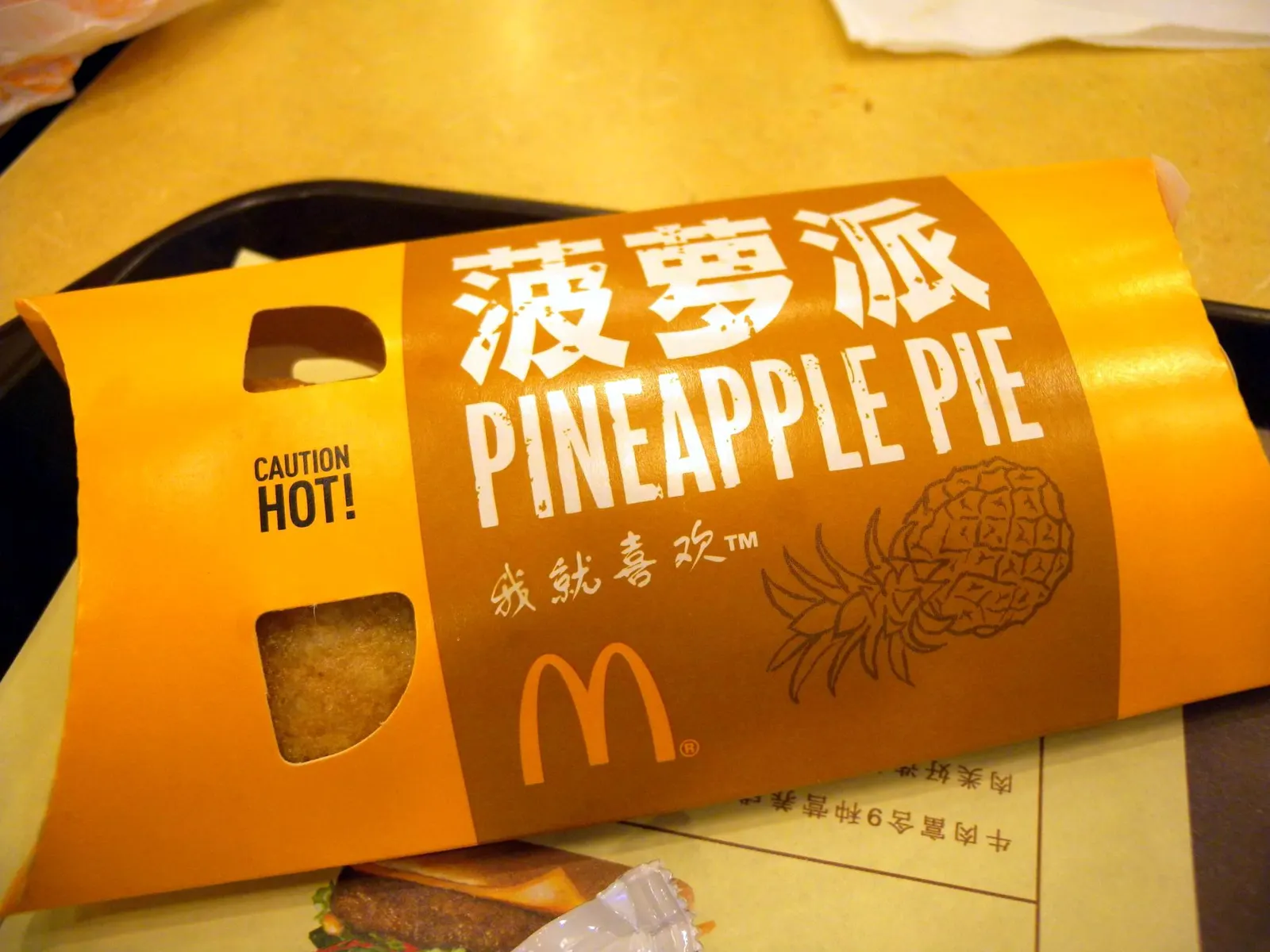
Ryan McFarland’s fried pineapple pie is an illustrative close-up, not The Hungry Hoarder’s batch; it shows the crisp shell and fruit-filled center this method seeks.Photo by Ryan McFarland / Wikimedia Commons · CC BY 2.0
Makes
10 mini pies
Crusts
Two 9-inch
Filling
2 2/3 cups fruit
Fry
About 350°F
The whole recipe begins with a family filling. Crushed pineapple and its juice meet a generous measure of sugar and just three tablespoons of flour. Over medium heat, the loose fruit turns glossy and spoonable—the kind of center that can belong to a pie without running out at the first bite.
The Hungry Hoarder’s move was scale: trade one large shell for ten little ones and give each a turn in hot oil. Ready-made crust keeps the focus on contrast. The outside shatters and flakes; the middle stays soft, bright, and unmistakably pineapple; powdered sugar catches on every blister.
“The Hungry Hoarder turned Aunt Paula’s pineapple pie filling into a trial-size fried pie: sweet crushed pineapple inside pastry, finished with powdered sugar.”
The family center
Aunt Paula’s crushed-pineapple filling is thickened simply with granulated sugar and flour.
The miniature turn
Two ready-made pie crusts divide into ten hand pies: enough pastry to frame the fruit without making a full pie.
The researched bridge
The saved source ends after thickening the filling; established test-kitchen hand-pie practice supplies the transparent cooling, sealing, and frying cues.
Fryer logicCool dry clear measured
Build the landing before the oil is hot
Fried pies move quickly once they enter the pot. A cold filling, clear worktop, thermometer, and ready rack keep that short window calm.
Six handoffsThicken cool cut seal fry dust
From loose fruit to a crisp half-moon
The source owns the filling and yield; test-kitchen hand-pie practice makes the missing assembly legible without changing either.
THICKEN
Cook until the spoon leaves a trail
Sugar, flour, pineapple, and juice become glossy and cohesive over medium heat.
COOL
Lose every trace of warmth
A shallow bowl speeds the handoff from hot filling to pastry-safe filling.
CUT
Make ten small rounds
Cut five from each crust, rerolling only the scraps required to preserve the source yield.
SEAL
Modest filling, clean border
Press out air, fold into half-moons, and crimp firmly enough to contain hot fruit.
350°F
Fry in small batches
One or two pies leave room for the oil to recover and for each pastry to turn freely.
5M
Drain, rest, then dust
The rack sheds oil; the short rest protects the first bite; powdered sugar finishes the warm crust.
Gold + acid yellowA hot crust around soft fruit
The pineapple stays plush; the pastry does the crackling
A second illustrative fried pineapple pie. The source recipe makes ten small pies from two round crusts rather than this commercial shape.Photo by Dman081 / Wikimedia Commons · CC BY-SA 4.0
Leave a clean border
A little empty pastry is structural, not stingy. It gives the fork somewhere dry to crimp and keeps hot pineapple away from the oil.
Vegetable oil, enough for about 1 inch in the frying pot
1/2 cup powdered sugar
Directions
Whisk the granulated sugar and flour together in a medium saucepan until the flour is evenly dispersed and no dry lumps remain.
Add the crushed pineapple with all of its juice and stir to combine. Cook over medium heat, stirring frequently and scraping the bottom, until the mixture is glossy, thick, and holds a trail for a moment when the spoon passes through it.
Remove the filling from the heat. Transfer it to a shallow heatproof bowl and cool completely before it touches the pastry; warm filling can soften the crust and weaken the seals.
Unroll the two pie crusts on a lightly floured surface. Cut five approximately 4-inch rounds from each, gathering and rerolling scraps only as needed to make 10 rounds. Keep the pieces cool and covered while you work.
Place a modest spoonful of cold filling slightly off-center on each round, leaving a clean border. Do not try to use every bit of filling if that would overfill the pies. Moisten the edge lightly with water, fold the dough over into a half-moon, press out trapped air, and crimp firmly with a fork.
Set the sealed pies on a lined tray and chill them while the oil heats. Pour about 1 inch vegetable oil into a dry, heavy pot and bring it to 350°F over medium heat.
Fry one or two pies at a time without crowding, turning once, until both sides are evenly golden and the pastry is crisp. Maintain the oil near 350°F between batches; exact frying time was not preserved in the source, so color is the reliable cue.
Lift the pies to the wire rack and let excess oil drain. Cool for at least 5 minutes—the fruit filling will be much hotter than the crust—then dust generously with the powdered sugar and serve warm.
Source and technique references: the queued My Recipe Magic card for legacy ID 2500547604, The Hungry Hoarder byline, 10-pie yield, Aunt Paula provenance, exact six-item formula, and preserved filling instruction; the card’s now-unavailable October 28, 2011 primary URL for original publication dating; King Arthur Baking’s test-kitchen fried-pie recipe for cooling filling, fork-sealing, chilling shaped pies, one-inch oil depth, a 350–365°F frying range, small batches, rack draining, and warm service; King Arthur’s frying guide for neutral high-smoke-point oil, a heavy pot, thermometer control, and temperature recovery; and Food Network’s fried hand pies for avoiding overfill, crimping every edge, draining on a rack, and a 5-minute cooling rest. The source proportions and 10-pie identity are unchanged; the assembly and frying bridge is labeled as researched completion.