The cold-slice issueLemon · custard · sour cream

Cooked until glossy · chilled until clean

Lemon Sour Cream Pie

Lauren Allen’s bright stovetop lemon custard cools into a baked pastry shell, then gains sour cream for silkiness and a softly sweet whipped-cream crown.

Cook the custard
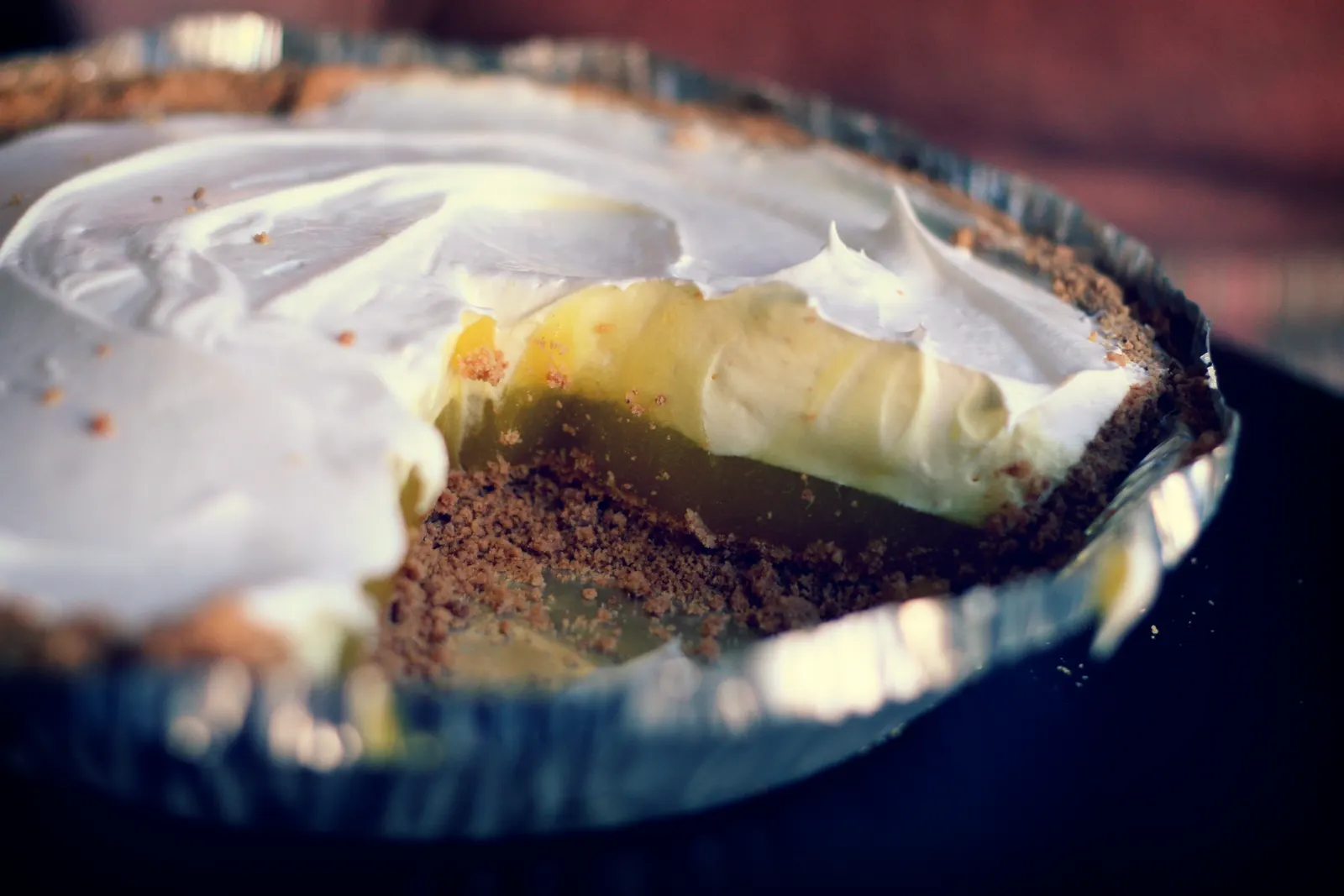
A chilled lemon pie with a white whipped topping and one slice removed.
This illustrative lemon pie uses instant pudding and a crumb crust; Allen’s recipe builds a cooked lemon–sour cream custard in a baked pastry shell and tops it with fresh whipped cream.Photo by Ginny · CC BY-SA 2.0
Active
30 min active
Stovetop
About 10 min
Chill
At least 3 hr
Serves
8

This is lemon pie without the meringue argument. Lauren Allen’s 2014 formula cooks juice, milk, sugar, starch, and yolks into a bright stovetop custard, then lets sour cream take the sharp corners off. A plain pastry shell and a white whipped crown make the filling’s pale yellow line the whole point.

The method rewards calm attention at the saucepan. Cornstarch has to bubble long enough to lose its raw chalkiness, yolks need a gradual introduction to heat, and sour cream waits until the base is no longer hot. After that, the refrigerator does the structural work: three cold hours turn the glossy filling into a clean, creamy slice.

“Tried and tested to be the best lemon sour cream pie: a balanced mix of lemon tartness and creaminess, and a family favorite.”

The sharp line

Half a cup of fresh juice cooks into the milk custard; zest waits off heat so its perfume stays present.

The soft line

A full cup of sour cream enters only after the lemon base cools, rounding the tartness without muting it.

The clean line

A three-hour chill sets the starch-thickened custard; fresh whipped cream goes on after the filling is cold.

The filling mapAcid structure richness tang

Four ingredients set the custard’s balance

Nothing in the original ratio changes. The useful work is knowing when each ingredient enters and what finish it should leave behind.

01

Fresh lemon juice

Half a cup supplies the clean acid that distinguishes the filling from a vanilla pastry cream.

Squeeze before cooking and strain out seeds. The source expects roughly two to three lemons.
02

Cornstarch

Three tablespoons plus one and a half teaspoons build a custard firm enough to cut after chilling.

Whisk it with the sugar first, then keep the pan corners moving until bubbles break across the center.
03

Egg yolks

Three yolks add color, richness, and custard depth without turning the filling into lemon curd.

Warm them with several spoonfuls of hot base before they return to the pan; verify 160°F before stopping.
04

Sour cream

One cup softens the lemon edge and gives the cooled filling a dense, satin finish.

Fold it into warm—not piping-hot—custard and stop when every white streak disappears.

The custard preflightBake strain stage chill

Clear the cold shelf before the saucepan bubbles

Once starch thickens, the recipe moves continuously through tempering and finishing. Put every landing place in position first.

Yellow into whiteZest first · sour cream later

Fragrance stays bright when heat knows when to stop

Fresh yellow lemon zest gathered in a small white bowl.
The zest goes in after the custard leaves the heat, keeping its fragrant oil in the finished filling rather than boiling it away.Photo by Rebecca Siegel · CC BY 2.0
The quiet sequence

Cook juice into the starch base, temper the yolks, melt in butter and zest off heat, then wait until warm before folding in sour cream.

Thick sour cream spooned into a white bowl on a wooden table.
One cup of sour cream is stirred into the cooled lemon base. It mellows the edge and gives the filling its plush, sliceable body.Photo by jules · CC BY 2.0

The pan sequenceCold bubble temper heat warm chill

The custard crosses six thresholds

The clock helps, but temperature and texture decide when the filling can move to its next ingredient.

  1. Cold

    Start with the finished shell

    A baked, fully cooled pastry shell is the container; no further oven time will rescue a pale bottom.

  2. Bubble

    Cook the starch completely

    Whisk sugar, cornstarch, milk, and juice until thick and glossy, then hold a gentle bubble for two minutes.

  3. Temper

    Warm the yolks in steps

    Several spoonfuls of hot custard bring the yolks up gently before the bowl returns to the saucepan.

  4. 160°F

    Finish the egg custard

    Stir through another gentle two-minute bubble and verify the egg mixture reaches the USDA safety mark.

  5. Warm

    Add richness in order

    Butter and zest melt in off heat; sour cream follows only after the base has cooled from hot to warm.

  6. 3 hr

    Set before crowning

    Chill with wrap touching the surface. Whip and spread the cream once the filling is completely cold.

The four texture checksGloss smooth ribbon stand

Read the filling before cutting the pie

A fully cooked starch, gently handled yolks, completely blended sour cream, and a real cold set make the slice.

01

Glossy center bubbles

The custard should be thick enough that bubbles rise and break through the center, not merely collect at the edge.

02

Smooth tempered yolks

The warmed yolk mixture pours without cooked flecks. If small flecks appear later, sieve before the sour cream goes in.

03

No white ribbons

Sour cream is fully incorporated when the filling is uniformly pale yellow and falls from the spatula in a heavy ribbon.

04

A slice that stands

After at least three cold hours, the cut face should hold while remaining creamy rather than rubbery or gelatinous.

The cold planFill cover whip hold

Chill first; crown close to serving

The custard welcomes a head start. Fresh whipped cream looks best when it joins the pie after the long chill.

One day ahead

Cook, fill, cover, and chill the pie. Add whipped cream on serving day for the cleanest surface.

At the table

Serve cold and return the pie to refrigeration before it has spent two hours at room temperature.

Three to four days

Keep leftovers covered at 40°F or colder, following USDA guidance for custard pies.

Do not freeze

USDA’s storage chart does not recommend freezing custard pies; thawing can split the filling and soften the crust.

Lemon Sour Cream Pie

Lauren Allen’s cooked lemon custard folded with sour cream in a baked pastry shell, finished with lightly sweetened whipped cream.

LemonPieCustardSour CreamWhipped CreamMake-Ahead Dessert

Ingredients

Lemon sour cream filling

  • 1 baked and fully cooled 9-inch pastry pie shell
  • 1 cup (198 grams) granulated sugar
  • 3 tablespoons plus 1 1/2 teaspoons (about 29 grams) cornstarch
  • 1 cup (240 milliliters) milk
  • 1/2 cup (120 milliliters) freshly squeezed lemon juice, from about 2–3 lemons
  • 3 large egg yolks, lightly beaten
  • 1/4 cup (57 grams) unsalted butter, softened
  • Finely grated zest of 1 lemon, about 1/2 tablespoon
  • 1 cup (240 grams) sour cream

Whipped cream topping

  • 1 cup (240 milliliters) cold heavy whipping cream
  • 2 tablespoons (25 grams) granulated sugar

Directions

  1. Set the baked pastry shell on a rack and make sure it is completely cool. Lightly beat the egg yolks in a small heatproof bowl and set them beside the stove.
  2. In a medium heavy-bottomed saucepan, whisk the sugar and cornstarch until no dry lumps remain. Gradually whisk in the milk, then the fresh lemon juice.
  3. Cook over medium heat, whisking and scraping the corners constantly, until the mixture is thick, glossy, and bubbling through the center. Reduce the heat to low and cook for 2 minutes, continuing to whisk.
  4. Temper the yolks: whisk one spoonful of the hot lemon mixture into the yolks, then repeat with 2–3 more spoonfuls. Slowly whisk the warmed yolks back into the saucepan.
  5. Bring the custard to a gentle bubble while stirring constantly and cook for 2 minutes more. The mixture should reach at least 160°F (71°C). Remove from the heat. If any cooked-egg flecks remain, press the custard through a fine-mesh sieve.
  6. Stir in the softened butter and lemon zest until completely smooth. Let the custard cool until warm rather than hot, stirring occasionally, then fold in the sour cream until no white streaks remain.
  7. Spread the filling in the cooled pie shell. Press plastic wrap or parchment directly onto the surface and refrigerate for at least 3 hours, until thoroughly cold and firm enough to slice.
  8. Near serving time, beat the cold heavy cream while gradually adding the 2 tablespoons sugar. Stop at stiff peaks that hold their shape without looking grainy. Remove the covering from the pie and spread the whipped cream over the chilled filling.
  9. Slice with a sharp knife, wiping it clean between cuts. Keep the pie refrigerated and return it to the refrigerator within 2 hours of serving.

Source and technique references: the archived My Recipe Magic card for legacy ID 2501402510 for the title, author, date, description, eight-serving yield, ingredients, and primary link; Lauren Allen’s earliest primary snapshot for the complete original method and adaptation trail; Allen’s maintained Lemon Sour Cream Pie for the 30-minute active estimate, 10-minute cook, three-hour chill, surface covering, and current revision context; the King Arthur Baking test kitchen on cornstarch-custard bubbling, constant whisking, sieving, and direct surface covering; Crisco’s closely matching sour cream lemon pie for cooling the cooked custard before sour cream and a four-hour chill; and USDA FSIS on 160°F egg mixtures and 3–4 day refrigerated custard-pie storage. The 2014 proportions and stovetop identity are preserved; added guidance clarifies temperature, texture, cooling, chilling, and safe holding.

Image credits

Photography is used under open licenses with attribution: Ginny, Rebecca Siegel, and jules.