The 20-minute bowlBeef · sesame · rice

One skillet · ten source lines

Korean Beef and Rice

Sweet-savory ground beef with garlic, sesame oil, soy sauce, ginger, chile, steamed rice, and green onions.

Cook the rice bowl
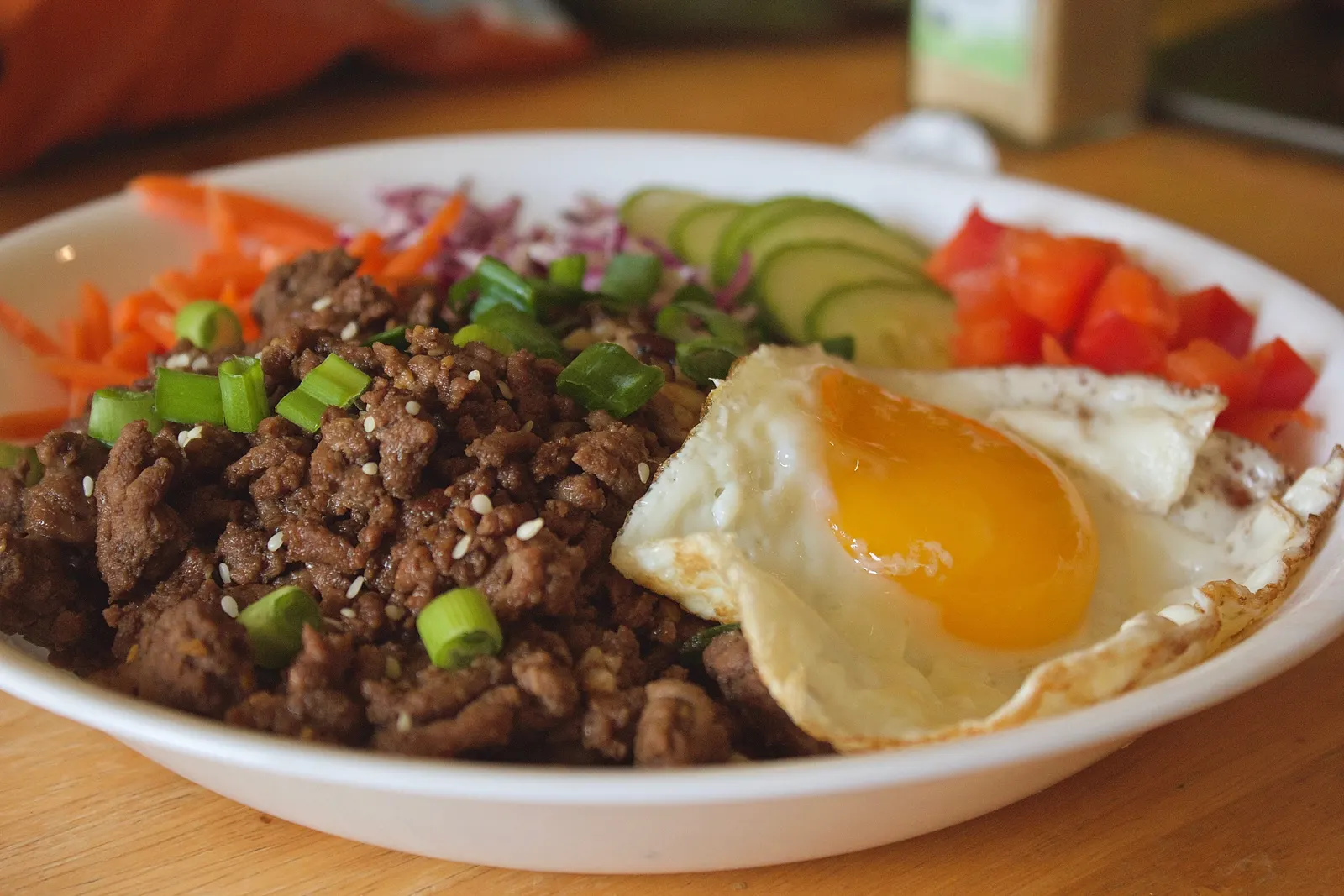
Crumbled glazed beef with green onions and sesame beside rice, vegetables, avocado, and a fried egg.
An illustrative Korean beef rice bowl: the crumbled beef, rice, scallions, and sesame echo the source, while the egg, avocado, cabbage, carrot, cucumber, and pepper are not part of its ten-line formula.Photo by A Healthier Michigan · CC BY-SA 2.0
Makes
4 servings
Total
20 min
Method
1 skillet
Beef
160°F

This is the weeknight shortcut that knows exactly what it is. Ground beef takes the place of thinly sliced marinated steak; a pantry sauce takes minutes rather than hours. Brown sugar, soy sauce, sesame oil, garlic, ginger, and chile make a bold glaze that lands on rice with almost no runway.

Six Sisters’ Stuff explicitly calls the dish Korean-inspired rather than authentic bulgogi. That distinction matters. The pleasure here is not in pretending the shortcut is a traditional preparation, but in making its own proportions work cleanly: safely browned beef, most of the fat removed, a short glossy simmer, and cold-cut green onion over the hot bowl.

“Six Sisters’ Stuff’s quick Korean-inspired supper browns one pound of beef with garlic in sesame oil, simmers it briefly with a brown-sugar soy sauce, and spoons it over rice.”

Rice first

The source does not measure its cooked rice. Prepare enough for four bowls before the skillet begins so the beef does not wait and dry out.

Drain, then season

Remove most rendered fat after the beef reaches 160°F; the brown sugar and soy should glaze meat, not float on grease.

Short simmer

A few minutes is enough to dissolve the sugar and make the sauce glossy. Leave moisture in the pan for the rice.

The bowl mapCrumble glaze grain green

Four moves inside a ten-line supper

Every measure has a job: beef carries the sauce, rice receives it, and the fresh onion cuts across the sweetness at the end.

01

Lean ground beef

One pound turns a bulgogi-adjacent flavor idea into a fast, economical skillet supper with no marinade clock.

Break it small enough to coat evenly, then verify 160°F before the dark sauce makes visual doneness harder to read.
02

Brown sugar + soy sauce

A two-to-one volume ratio creates the source’s unapologetically sweet-savory glaze.

Pack the sugar and measure the soy; reduce briefly, then taste before adding any optional salt.
03

Sesame oil + ginger

One tablespoon sesame oil and a quarter-teaspoon ground ginger give the short sauce its roasted, aromatic depth.

Keep the burner at medium while the beef browns so the sesame oil and minced garlic do not scorch.
04

Rice + green onions

Hot rice catches the glaze; an entire bunch of diced green onions provides the fresh, sharp finish the sweet beef needs.

Hold the onions until serving. Their cool snap is a deliberate contrast, not another skillet ingredient.

Fast, not rushedHot brown drain gloss bowl

A twenty-minute handoff from rice to skillet

The saved card gives a 20-minute total without dividing prep from cooking. Use temperature and sauce texture—not invented sub-times—to keep that short clock honest.

  1. READY

    Start with hot cooked rice

    The legacy card gives no rice quantity or separate cooking clock; prepare enough for four bowls before the skillet begins.

  2. BROWN

    Cook beef, garlic, and sesame

    Work over medium heat, breaking the pound of beef into small crumbles without burning the garlic.

  3. 160°F

    Verify doneness, then drain

    Check several thick crumbles, then spoon away most rendered fat while leaving the beef in the pan.

  4. SEASON

    Add the sweet-savory measure

    Stir in brown sugar, soy, ginger, pepper, 1/2–1 teaspoon chile, and only a restrained amount of salt.

  5. 2–3 MIN

    Stop at gloss, not dryness

    Simmer only until the sugar dissolves and the sauce clings while remaining spoonable.

  6. BOWL

    Serve while everything is hot

    Spoon beef and sauce over rice and scatter the fresh diced green onions across the top.

Cut + toastThe fresh edge and the roasted note

Garlic goes into the heat; green onion waits for the bowl

Finely sliced green onions and chopped garlic in a white bowl on a cutting board.
Garlic cooks with the beef; green onions stay fresh for the finish. Keeping those moments separate preserves both depth and a sharp green contrast.Photo by HungryHuy · CC BY 2.0
Sesame appears twice, differently

The measured oil cooks with the beef. Toasted seeds are optional, unmeasured, and best treated as a finishing cue rather than part of the preserved formula.

Toasted white sesame seeds in a wooden bowl with a wooden spoon.
Toasted sesame seeds are an optional visual and serving cue from the current source article, not a measured ingredient in its printable recipe card.Photo by dabok2014 · CC0 1.0

Skillet signalsGreasy bitter salty dry

Four corrections before the glaze gets away

A fast sauce magnifies small errors. These fixes keep the original balance without redesigning the recipe.

If the pan looks greasy

Drain after the temperature check

Tilt the skillet and spoon away most fat. Do not rinse the beef or discard the garlic with it.

If the garlic darkens too fast

Lower the burner one step

Keep stirring and finish the beef at gentler heat; bitter garlic cannot be repaired by extra sugar.

If the sauce tastes sharply salty

Do not add the optional salt

Serve with plain rice. The legacy source specifies regular soy sauce, so taste only after the glaze reduces.

If the glaze turns dry

Add one teaspoon of water

Loosen over low heat only until it coats again. A long simmer concentrates both sugar and salt.

Supper to leftoversSeparate cool cover reheat

Keep the rice fluffy and the beef glossy

The two parts share a bowl, not a storage strategy. Cooling and reheating them separately protects both texture and safety.

Cook the rice before the beef

The skillet finishes quickly. Freshly hot rice is better than holding the glazed beef while a dry-rice cycle catches up.

Store rice and beef separately

Separate shallow containers cool faster and let each element reheat without the rice drinking all the sauce.

Keep 3–4 days

Refrigerate within two hours at 40°F or below; the USDA window applies to both the cooked beef and the complete bowl.

Reheat to 165°F

Add a teaspoon of water to tight beef, cover, and stir so the center heats evenly before rebuilding the bowl.

Korean beef and rice

Sweet-savory crumbled beef with garlic, sesame, soy, ginger, chile, hot rice, and diced green onions.

Ground BeefRice BowlKorean-InspiredSkillet20-Minute DinnerWeeknight Dinner

Ingredients

Beef and sauce

  • 1 pound lean ground beef
  • 3 garlic cloves, minced
  • 1 tablespoon sesame oil
  • 1/2 cup packed brown sugar
  • 1/4 cup soy sauce
  • 1/4 teaspoon ground ginger
  • Salt and black pepper, to taste
  • 1/2–1 teaspoon crushed red pepper flakes, depending on desired heat

For serving

  • Cooked rice, kept hot, amount not specified
  • 1 bunch green onions, diced

Directions

  1. Have cooked rice hot and ready before the beef finishes; the source lists rice as cooked but gives no amount or dry-rice method. Mince the garlic and dice the green onions, keeping the green onions aside for serving.
  2. Set a large skillet over medium heat. Add the sesame oil, ground beef, and minced garlic. Break the meat into small crumbles and cook, stirring and turning it, until no raw portion remains.
  3. Check the center of several larger crumbles with an instant-read thermometer. Continue cooking until the ground beef reaches 160°F (71°C), then remove most of the rendered fat with a spoon or baster, leaving the meat in the skillet.
  4. Reduce the heat to medium-low. Add the packed brown sugar, soy sauce, ground ginger, a modest pinch each of salt and black pepper, and 1/2–1 teaspoon crushed red pepper flakes according to desired heat.
  5. Stir until the sugar has dissolved and every crumble is coated. Simmer for 2–3 minutes, stirring once or twice, until the sauce looks glossy and lightly thickened but still moist enough to season the rice.
  6. Taste a cooled spoonful. Adjust only the pepper or salt if needed; soy sauce already carries substantial salt, so make this decision after the sauce has reduced.
  7. Divide the hot cooked rice among four bowls, spoon the beef and its sauce over the top, and finish with the diced green onions. Serve immediately.

Source and research references: the saved legacy Six Sisters’ Stuff card for Camille’s exact ten-line formula, four-serving yield, and 20-minute total; the current Six Sisters’ Stuff page for the skillet order, the recipe’s long-running provenance, modern metadata differences, and its explicit Korean-inspired—not traditional bulgogi—identity; Nif’s Easy Korean Beef and Rice and Taste of Home’s Korean Beef and Rice as independent convergence on ground beef, garlic, soy, sugar, sesame, ginger, chile, rice, and green onion; and USDA FSIS guidance on 160°F ground beef, two-hour chilling, 3–4 day refrigeration, and 165°F reheating. No legacy proportion was changed.

Image credits

Photography is used under open licenses with attribution: A Healthier Michigan, HungryHuy, and dabok2014.