
.jpg)
Read the ingredient list: butter near the top is the whole game. A box that lists only flour, butter, water, and salt is the one to carry home.
The Pantry — a field guide to the larderPlate No. 04
Puff pastry
Laminated doughSteam-leavenedFreezer aisle
Hundreds of alternating sheets of dough and butter, folded thin enough that a hot oven can blow them apart like pages of a book. The freezer aisle sells the labor; the only jobs left are keeping it cold and cutting it clean.
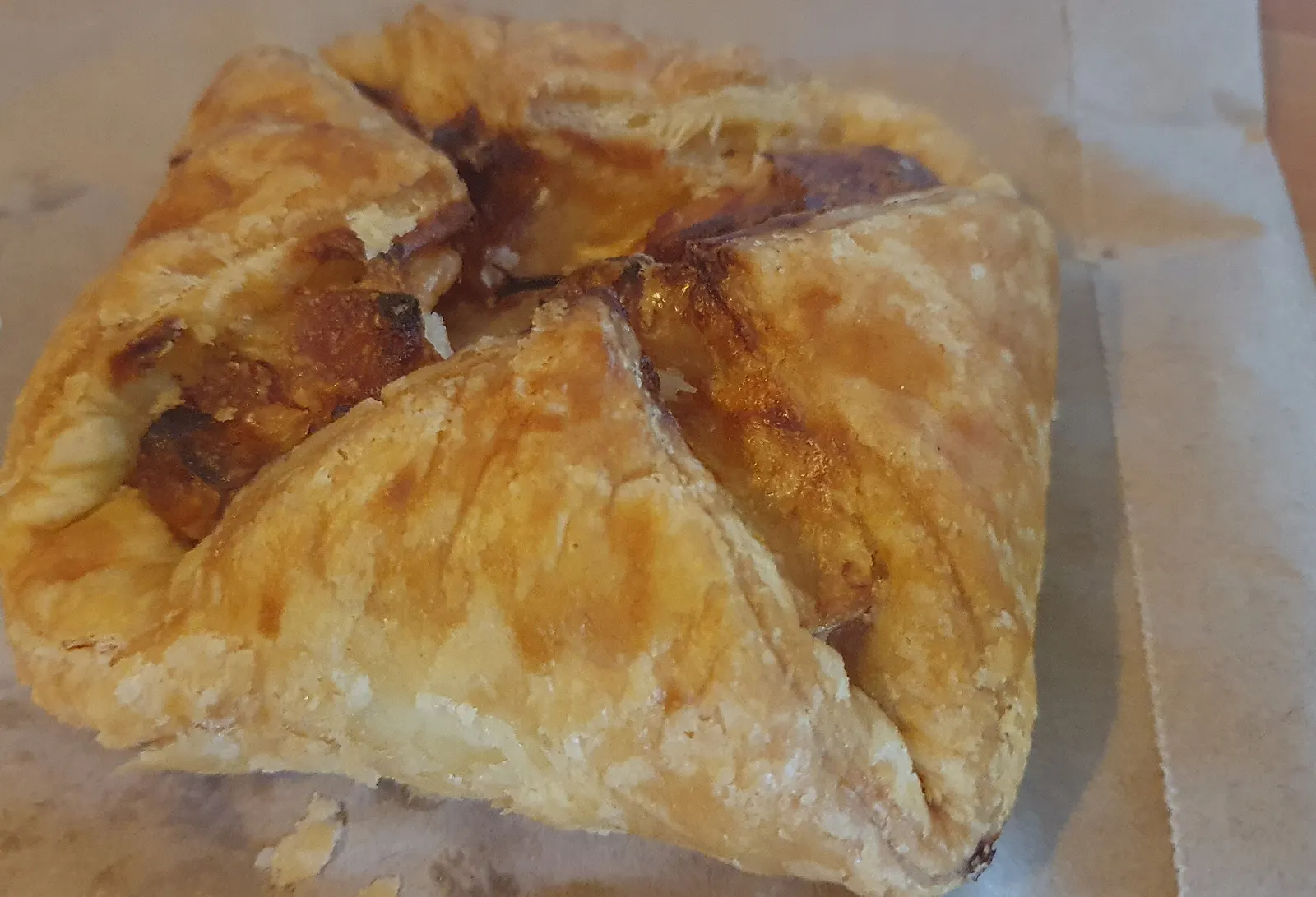
1The risen layers
Each visible leaf is a sheet of dough pried up by butter turning to steam beneath it.
2The sealed seam
Pressed edges weld the layers shut so the filling stays in while the rest of the pastry climbs.
3The deep gold
Color is structure: a pale pastry is still wet inside; dark gold means the layers have set crisp.
Photo by Legoless · CC BY-SA 4.0
- Family
- Laminated dough
- Layers
- 729, classically
- Leavening
- Steam only
- Keeps
- Months frozen
- Signature
- Pockets, tarts, vol-au-vents
Arithmetic you can eat
OriginsWrap a slab of butter in dough, roll it out, fold it in three, and repeat. Six folds later the classic count lands at 729 layers of butter, each thinner than paper, each waiting to boil. French pâtissiers have argued for four centuries about who managed it first; the oven has never cared.
What matters is the mechanism. Every one of those butter sheets is a quarter water, and at oven temperature that water becomes steam with nowhere to go but up. The dough between the layers sets around the escaping gas, and the pastry rises to eight times its height with no yeast, no powder, no help. It is the only leavening in the kitchen you can watch happen layer by layer through the oven door.
The frozen sheet democratized all of it. A dough that once marked the difference between a house cook and a pastry kitchen now waits flat in a box, asking only to be kept cold, cut sharp, and baked hot.
In the oven
Field notesSteam does the lifting
There is no yeast and no baking powder in the sheet. At oven heat, the water in each butter layer flashes to steam and pries the dough layers apart; the puff is butter boiling in place.
Cold is structural
If the butter softens before baking, it soaks into the dough and the layers fuse. Warm pastry bakes into a dense biscuit; cold pastry into a stack of leaves. Chill anything that has gone slack.
Cut edges decide
A sharp knife leaves the layers open to puff; a dragged or crimped edge welds them shut. Seal the seams you want closed and leave clean every edge you want to rise.
From freezer to shatter
Protocol- Overnight
Thaw in the fridge
Move the box from freezer to fridge the night before. Counter-thawing works in about forty minutes, but the window between frozen and too soft is narrow.
- 0:00
Unfold cold
The sheet should bend like cardboard, not drape like fabric. If it cracks at the fold, wait five minutes; if it flops, chill it.
- 0:05
Cut sharp, fill light
One clean pass with a sharp knife or pizza wheel. Wet fillings and overstuffed pockets are the two classic ways to sabotage the puff.
- 0:15
Bake hot
400°F is the neighborhood. High heat sets the outside before the butter can leak, and the steam does the rest. Dark golden beats pale blond every time.
The batch, delivered
Figure i
Boxes, projects, and impostors
Trade ledger| In its place | How it behaves | Verdict |
|---|---|---|
| All-butter sheets | Standard supermarket puff is made with vegetable shortening; it puffs well but tastes of little. All-butter brands cost more and repay every cent. | Worth it |
| Rough puff, homemade | Grated frozen butter, a few folds, an hour of chilling. Eighty percent of the lift for a tenth of the ceremony of classic lamination. | Weekend project |
| Phyllo, buttered and stacked | Brushed sheets bake crisp and delicate over a pot pie or a tart. Beautiful crunch, no puff; keep it away from anything that must rise. | One trick |
| Crescent-roll dough | Yeast-leavened and bready, not flaky. It will wrap a filling agreeably, but nothing about it shatters. | Last resort |
Choose it, keep it
Keeper’s notesSheets keep for months frozen flat. Once thawed, use within a day or two; refreezing works once in a pinch but each cycle costs loft.
Work on one sheet and leave the other in the fridge. A warm kitchen beats puff pastry quickly; ten minutes of chilling resets everything.
Stack offcuts flat and re-roll once; twisted with cheese or cinnamon sugar, they bake into the cook’s reward. Balled-up scraps lose their layers for good.
Image credits
Photography is used under open licenses with attribution: Legoless and Sentimentalna.
