The coffee-tin cutoutButter · brown sugar · five warm spices
Thirty-six crisp cookies
Homemade Biscoff Cookies
Gina Kleinworth’s 2015 Biscoff-style cutouts roll a deeply spiced butter dough one-quarter inch thick and bake it until the cookies crisp as they cool.
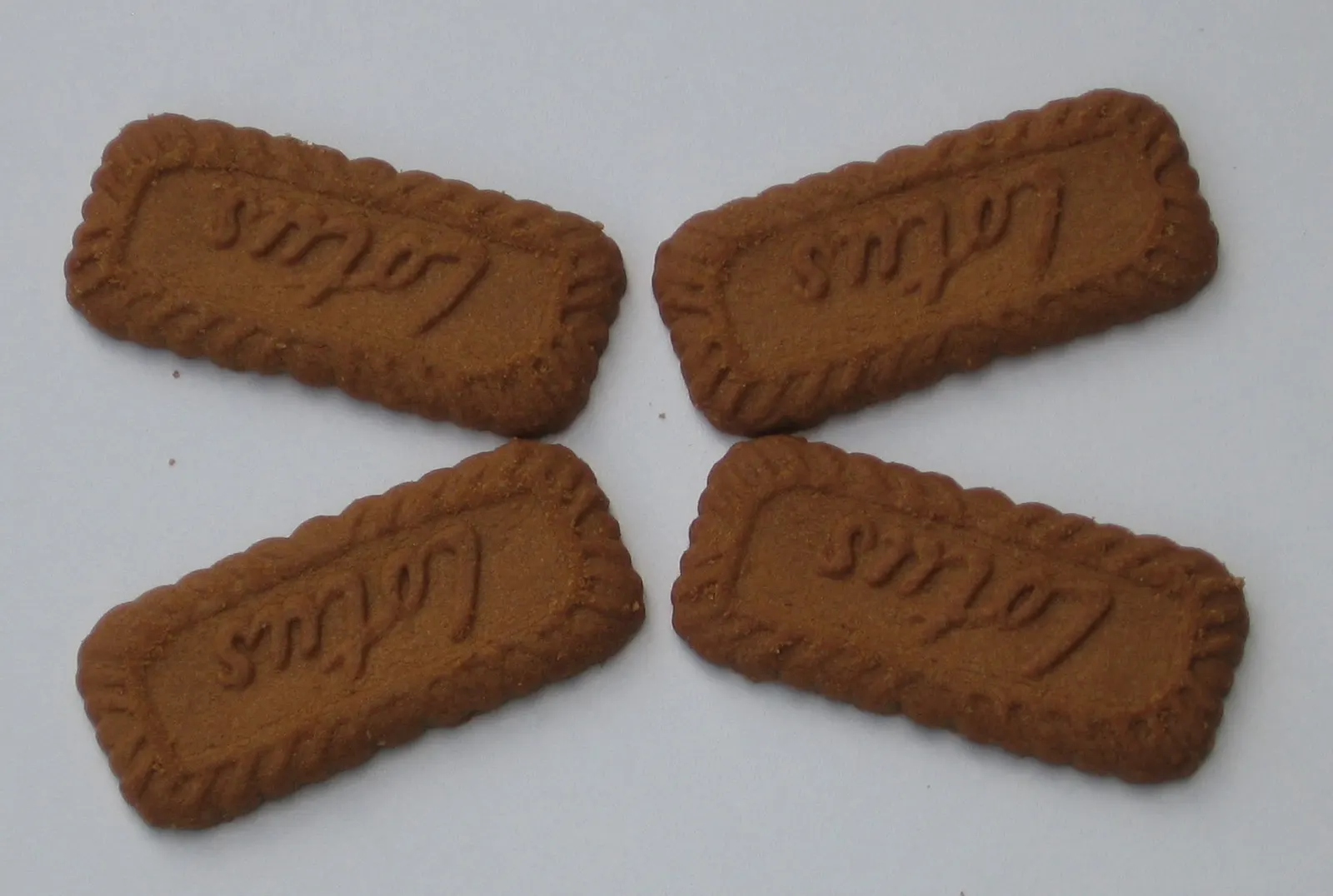
Commercial Belgian speculoos show the slim, deeply browned model. The queued homemade cookies are hand-cut and will not carry the pictured brand embossing.Photo by Hansmuller / Wikimedia Commons · CC BY-SA 4.0
Yield
36 cookies
Roll
1/4 inch
Bake
13–16 minutes
Oven
350°F / 175°C
The trick is not a jar of cookie butter. It is a spare butter-cookie dough carrying more cinnamon than the supporting spices, two sugars in a three-to-one balance, and no egg at all. Rolled flat and baked brown, it aims for the caramel-spice impression of the café biscuit through the oven rather than through a branded ingredient.
Gina Kleinworth’s queued 2015 card is compact enough to memorize and precise where it counts: one-quarter inch thick, one inch apart, 13–16 minutes. The cookie is still finishing when it leaves the heat. Wait for the rack to cool before asking for the clean snap that makes it so good beside coffee.
“Every bit as delicious as the original—only homemade!”
Butter, not oil
Cool, pliable butter can trap air with the sugars and still keep the cut dough controlled.
One exact plane
A true quarter-inch roll keeps the broad centers and narrow corners on one baking clock.
Cool for the snap
These leave the oven set but not fully crisp. The rack is the final stage of the bake.
Cinnamon gets a tablespoon; every other spice gets a quarter teaspoon. That hierarchy keeps the blend legible and the butter cookie in front.
01
Cinnamon
One full tablespoon makes cinnamon the unmistakable center of the blend rather than a background dusting.
Level the spoon cleanly; the four smaller spices are calibrated around this larger measure.02
Nutmeg + ginger
Two quarter-teaspoon measures pull the aroma in opposite directions: nutmeg round and woody, ginger bright and warm.
Use the source amounts before deciding whether a future batch needs a personal adjustment.03
Allspice + clove
Another two quarter-teaspoons deepen the finish without turning this into a dark molasses gingerbread.
Allspice is a single berry, not a premixed spice blend; measure it separately from clove.04
Two sugars
Granulated sugar keeps the cutout crisp while the smaller packed-brown-sugar measure supplies a restrained caramel note.
Pack only the brown sugar. Keep the flour light in its cups so the egg-free dough remains rollable.
The cutout clockCream add roll cut bake cool
Thirty-six active minutes to the rack
The source’s clock excludes its conditional chill. Use that pause only when the butter has made the dough too soft to move cleanly.
0:00
Set the oven
Heat to 350°F and line the trays before the butter dough occupies the work surface.
0:04
Cream on low
Bring cool room-temperature butter and both sugars to an even, slightly lightened paste without warming it greasy.
0:08
Build the spice dough
Add vanilla, then bring in flour, five spices, salt, and baking soda slowly; stop when no dry pockets remain.
0:13
Roll one-quarter inch
Work on a smooth surface. If the dough smears or sticks, cover and chill it for the source’s optional 30–60 minutes.
0:20
Cut and space
Lift shapes with a thin spatula and leave roughly one inch around each piece.
0:33
Read the edges
At 13–16 minutes, look for set surfaces, deeper brown edges, and the first fine fissures.
Cool
Wait for the crisp
Move firm cookies to a rack and let them cool completely before deciding whether the snap is right.
Coffee + cinnamonThe snap and its leading note
A biscuit built for the cup beside it
The source cookie is built for a crisp finish rather than a soft center. Let the cutouts cool completely before judging the snap.Photo by The Marmot / Wikimedia Commons · CC BY 2.0
Shape is not the formula
Use the cutter you own. Hold the quarter-inch thickness, then let the size of the shape decide whether the batch yields thirty-six.
Heat the oven to 350°F / 175°C. Line baking sheets with parchment paper or reusable baking mats.
In the mixer bowl, beat the room-temperature butter, granulated sugar, and firmly packed brown sugar together on low speed until evenly combined and slightly lightened. The butter should accept a fingertip indent but still feel cool, not greasy.
Add the vanilla extract and mix just until it disappears into the butter mixture.
With the mixer on low, slowly add the flour, cinnamon, nutmeg, ginger, allspice, cloves, salt, and baking soda. Stop as soon as the dough is evenly combined; scrape the bowl as needed rather than continuing to beat.
Turn the dough onto a smooth work surface and roll it to an even 1/4-inch thickness. If the dough is too soft or sticky to roll cleanly, cover and refrigerate it for 30–60 minutes, as the source directs, then continue.
Cut the dough into the desired shapes. Slide a thin spatula underneath each piece and transfer it to the prepared baking sheets, leaving about 1 inch between cookies.
Bake for 13–16 minutes, until the surfaces look set, the edges show a deeper brown, and fine fissures begin to appear. Different cutter sizes can finish at different moments, so test the smallest pieces first.
Let the cookies stand on the pan only until firm enough to lift, then transfer them to a wire rack. Cool completely: the intended crisp texture develops as the butter cookies set.
Source and technique references: Gina Kleinworth’s May 6, 2015 My Recipe Magic card for the exact legacy ID, title, author, date, 36-cookie yield, twelve ingredients, condensed method, and nutrition panel; the maintained Kleinworth & Co recipe for the complete 350°F method, 13–16 minute bake, optional 30–60 minute chill, cutter-dependent yield, cooling cue, and current clocks; King Arthur Baking on flour measurement and butter temperature and rolling then chilling cutout dough for the separated handling guidance; and Lotus Bakeries’ history for the Belgian biscuit’s 1932 origin, caramelized identity, crisp texture, and association with coffee. The ingredient formula and legacy yield are unchanged; measurement, handling, doneness, and storage cues are editorial clarification.