Central Utah cookoutSoy · soda · smoke

Six lines · two-hour soak

Grilled Manti Chicken

Chicken soaked in Manti, Utah’s sweet-savory 7-Up, soy, oil, horseradish, and garlic marinade, then grilled to 165°F.

Marinate the chicken
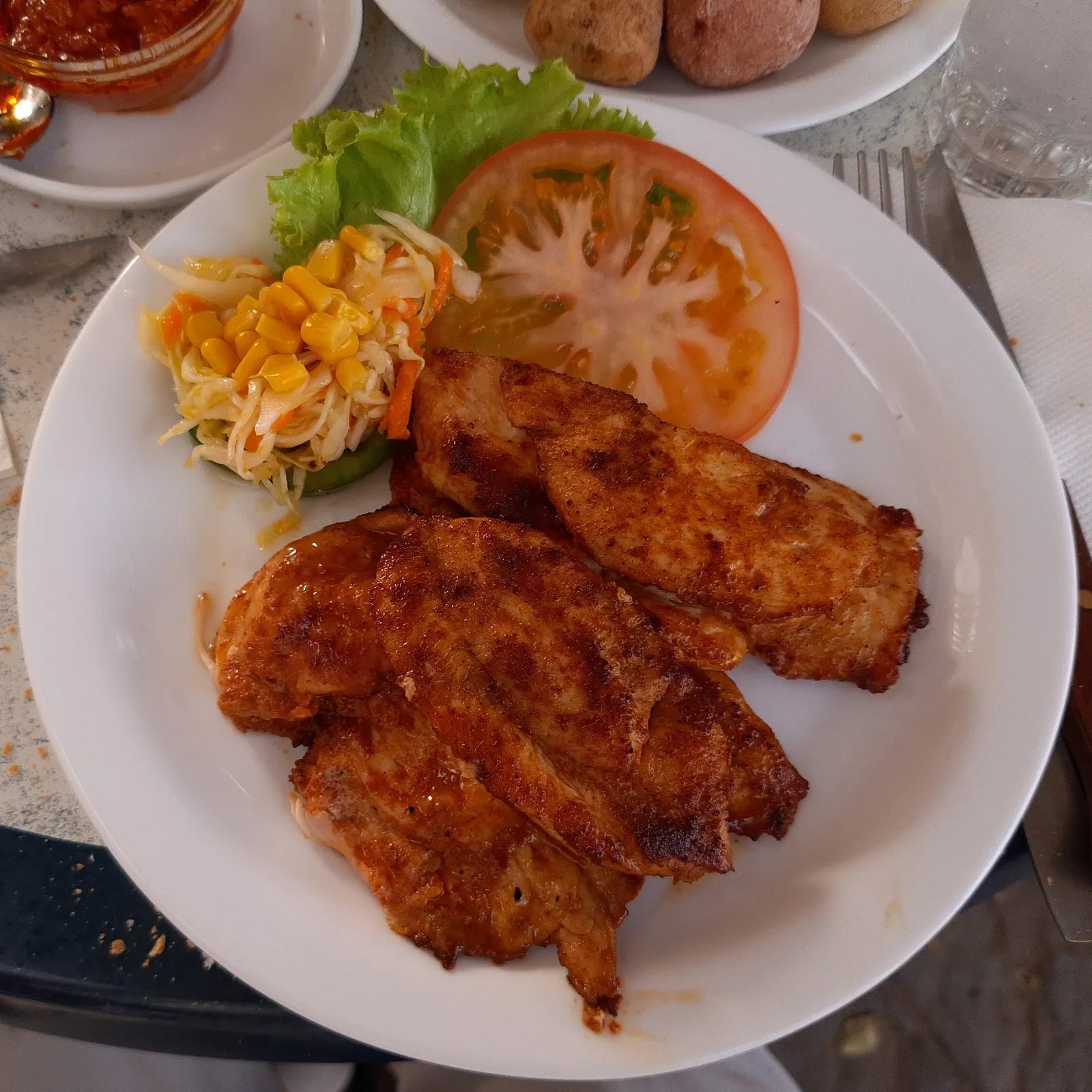
Grilled chicken breast fillets on a white plate with salad and potatoes.
This plated chicken is illustrative: the salad, potatoes, and visible red seasoning are not part of the six-line Manti marinade. The useful cue is the even browning on thin breast pieces.Photo by Gerda Arendt · CC0 1.0
Makes
8 servings
Marinate
2 hr minimum
Grill
Medium-high
Done
165°F

The surprise is not that 7-Up works beside soy sauce. It is how quietly the rest of the formula behaves: neutral oil, a half-teaspoon of prepared horseradish, and only a quarter-teaspoon of garlic season three full pounds of poultry. Nothing chases barbecue-sauce intensity. The marinade is built for a community grill, a cooler, and a generous platter.

Lyle Cooper traced the combination to turkey country around Manti, Utah, then watched his daughter Katie use chicken when turkey was not on hand. That substitution became the title, but the source keeps both birds welcome. The modern edit preserves every ratio and concentrates on the decisions the original leaves to the cook: even thickness, cold holding, clean tools, two heat zones, and an actual thermometer reading.

“Around Manti, Utah, a simple turkey marinade became cookout tradition; when Katie Cooper had chicken instead, the same formula proved just as compelling.”

Manti means Utah

This is the central-Utah turkey-country marinade, not a reference to Turkish dumplings.

Level the thickness

Butterfly or lightly pound only the thick pieces so the whole batch can reach 165°F without sacrificing its thin edges.

The thermometer closes the loop

Different source-approved cuts cook at different speeds; probe the thickest part of several pieces from the side.

The marinade mapFizz salt carry spark

Six source lines, four jobs in the bag

The formula does not need a garnish list or a pantry expansion. Its identity lives in the exact ratio and the regional choice of soda.

01

7-Up

One full cup gives the marinade its soft lemon-lime sweetness and separates this regional formula from an ordinary soy bath.

Pour it in after whisking the oil, soy, horseradish, and garlic; stir gently rather than chasing the fizz.
02

Soy sauce + vegetable oil

Equal half-cup measures carry salt and surface browning across three pounds of poultry while keeping the mixture fluid enough to coat.

Turn the sealed bag until every piece is glossy, then keep the whole package cold in a shallow dish.
03

Prepared horseradish

Half a teaspoon adds a background nasal heat—far less than a horseradish sauce and small enough to support rather than dominate.

Use prepared horseradish as written. Fresh grated root would not be a measure-for-measure preservation of the source.
04

Chicken—or the original turkey

Cooper welcomes breasts, tenders, or boneless thighs and points back to sliced turkey breast or tenders as the Manti starting point.

Choose one cut per batch when possible; a mixed bag makes the grill and temperature checks needlessly uneven.

Cookout rhythmBag zone turn probe

Mix, level, chill, then work the fire

The long stage happens safely in the refrigerator. Once the chicken reaches the grate, spatial control matters more than a universal minute count.

  1. MIX

    Whisk four, then add the fizz

    Combine soy, oil, prepared horseradish, and garlic powder before gently stirring in the 7-Up.

  2. LEVEL

    Make thick breasts grillable

    Butterfly or gently pound only the thick pieces until the batch is reasonably even.

  3. 2 HR+

    Marinate under refrigeration

    Seal the coated chicken in a shallow dish and keep it cold for at least the source’s two hours.

  4. HEAT

    Build two grill zones

    Use medium-high heat with a cooler neighboring area for pieces that color before their centers are ready.

  5. TURN

    Wait for browning and release

    Give every piece grate contact and turn with clean tongs once the first side releases without tearing.

  6. 165°F

    Probe several thick spots

    Move finished pieces to a clean platter and hold the others over gentler heat until safe.

Fire + rootThe loud scene and the quiet measure

A busy grill, a half-teaspoon of edge

Many split chickens browning over a smoky open charcoal grill.
An illustrative street-grill scene, not the source’s boneless cutlets. It does show the rhythm that matters: clear hot and cooler zones, long tongs, and space to move poultry away from flare-ups.Photo by Rwebogora · CC BY-SA 4.0
Manti is a place

The name points to Utah’s turkey sheds and pageant cookouts. The dumpling association belongs to a different culinary map.

Fresh horseradish roots stacked in a supermarket produce display.
The ledger calls for prepared horseradish, not whole root. Just half a teaspoon sharpens three pounds of poultry without turning the marinade into horseradish sauce.Photo by San906 · CC0 1.0

At the grateLag flare stagger sauce

Four corrections that keep the batch on course

The marinade is fixed; grill position, clean handling, and individual temperature checks are the controls that remain.

If thick centers lag

Move, do not scorch

Shift those pieces to the cooler zone, close the lid, and keep checking the thickest part.

If the grill flares

Escape the flame

Move the chicken sideways and let the flare subside; direct flame can blacken the soda-soy surface before the center cooks.

If pieces finish at different times

Pull them individually

A tender, thigh, and breast cutlet need not leave together. Transfer each only after its own 165°F reading.

If you want sauce

Make it separately

Do not brush with the bag liquid. Mix a clean second batch or reserve clean marinade before raw poultry touches it.

Pack + keepMarinate cooler rest chill

A cookout recipe still needs a cold chain

The sealed bag travels well only when it stays at refrigerator temperature. After the grill, the same two-hour clock applies to leftovers.

Start after lunch

The source’s two-hour minimum easily fits a same-day cookout. Turn the sealed bag once if convenient, always keeping it refrigerated.

Camp with a real cold chain

Cooper packs the sealed bag for outdoor cooking; transport it in a cooler held at 40°F or below, never loose in a warm car.

Rest five minutes

The original does not prescribe a rest. This short researched pause keeps serving orderly while the last pieces leave the grill.

Chill within two hours

Use shallow covered containers, refrigerate cooked chicken for 3–4 days, and reheat leftovers to 165°F.

Grilled Manti chicken

Chicken in the Manti, Utah marinade of 7-Up, soy sauce, vegetable oil, prepared horseradish, and garlic powder, grilled to 165°F.

ChickenGrillingManti Utah7-Up MarinadeCookoutMake-Ahead

Ingredients

Manti marinade and poultry

  • 1/2 cup soy sauce
  • 1/2 cup vegetable oil
  • 1/2 teaspoon prepared horseradish
  • 1/4 teaspoon garlic powder
  • 1 cup 7-Up
  • 3 pounds chicken breasts, tenders, or boneless thighs (the source also allows sliced turkey breast or turkey tenders)

Directions

  1. Whisk the soy sauce, vegetable oil, prepared horseradish, and garlic powder in a large food-safe zip-top bag or covered nonreactive container. Pour in the 7-Up and stir gently until the mixture is even.
  2. If using thick chicken breasts, butterfly them horizontally into thinner cutlets. If any piece is much thicker than the others, place it between sheets of parchment or inside a clean bag and pound only until the thickness is reasonably even. Tenders and uniformly thin boneless thighs can stay whole.
  3. Add the poultry to the marinade, press excess air from the bag if using one, seal, and set it in a shallow dish. Turn until every piece is coated, then refrigerate for at least 2 hours. USDA permits poultry to marinate under refrigeration for up to 2 days; the original gives no upper limit beyond “or more,” so do not leave it on the counter.
  4. Heat the grill to medium-high as the source directs. Clean the grate and arrange a cooler area beside the main cooking zone so pieces that color quickly can be moved away from flare-ups.
  5. Lift the chicken from the bag with clean tongs and let excess marinade drip away. Discard every drop of marinade that touched raw poultry and move the raw-chicken tools away from the clean platter.
  6. Lay the chicken on the hot grate with space between pieces. Grill until browned and the meat releases without tearing, then turn. Cooking time depends on the cut and thickness; Weber’s guide places typical boneless, skinless breasts at about 8 to 12 minutes over direct medium heat, but the thermometer—not that range—decides doneness here.
  7. Probe the thickest part of several pieces from the side, avoiding the grate. Transfer each piece to the clean platter only when it reaches 165°F (74°C). Move fast-browning chicken to the cooler zone while its center finishes instead of letting the soda and soy scorch.
  8. Rest the grilled chicken for 5 minutes, then serve whole or slice across the grain. Refrigerate leftovers in a shallow covered container within 2 hours and use them within 3 to 4 days.

Source and research references: the queued August 26, 2018 My Recipe Magic card for legacy ID 2501998513, the eight-serving yield, exact six-line formula, and linked author account; Lyle Cooper’s original August 11, 2015 Three Guys Outside post for the Manti turkey context, Katie’s chicken substitution, at-least-two-hour marinade, breast-thinning note, medium-high grill, 165°F finish, and camp-cooler idea; a Utah account of the Manti Miracle Pageant turkey-or-chicken marinade and Dairy Keen’s local turkey version for independent regional and formula corroboration; USDA FSIS guidance on refrigerated poultry marinating, used marinade, 165°F, and 3–4 day leftovers; and Weber’s grilling guide for the explicitly nonbinding 8–12 minute reference range for typical boneless, skinless breasts over direct medium heat. No source proportion was changed.

Image credits

Photography is used under open licenses with attribution: Gerda Arendt, Rwebogora, and San906.