The bright winter loafCranberry · orange · buttermilk

Jessica · November 2016

Glazed Cranberry Orange Bread

Jessica’s one-bowl cranberry orange loaf folds two cups of halved fresh berries into a tender buttermilk crumb, then finishes the fully cooled bread with a loose orange glaze.

Bake the loaf
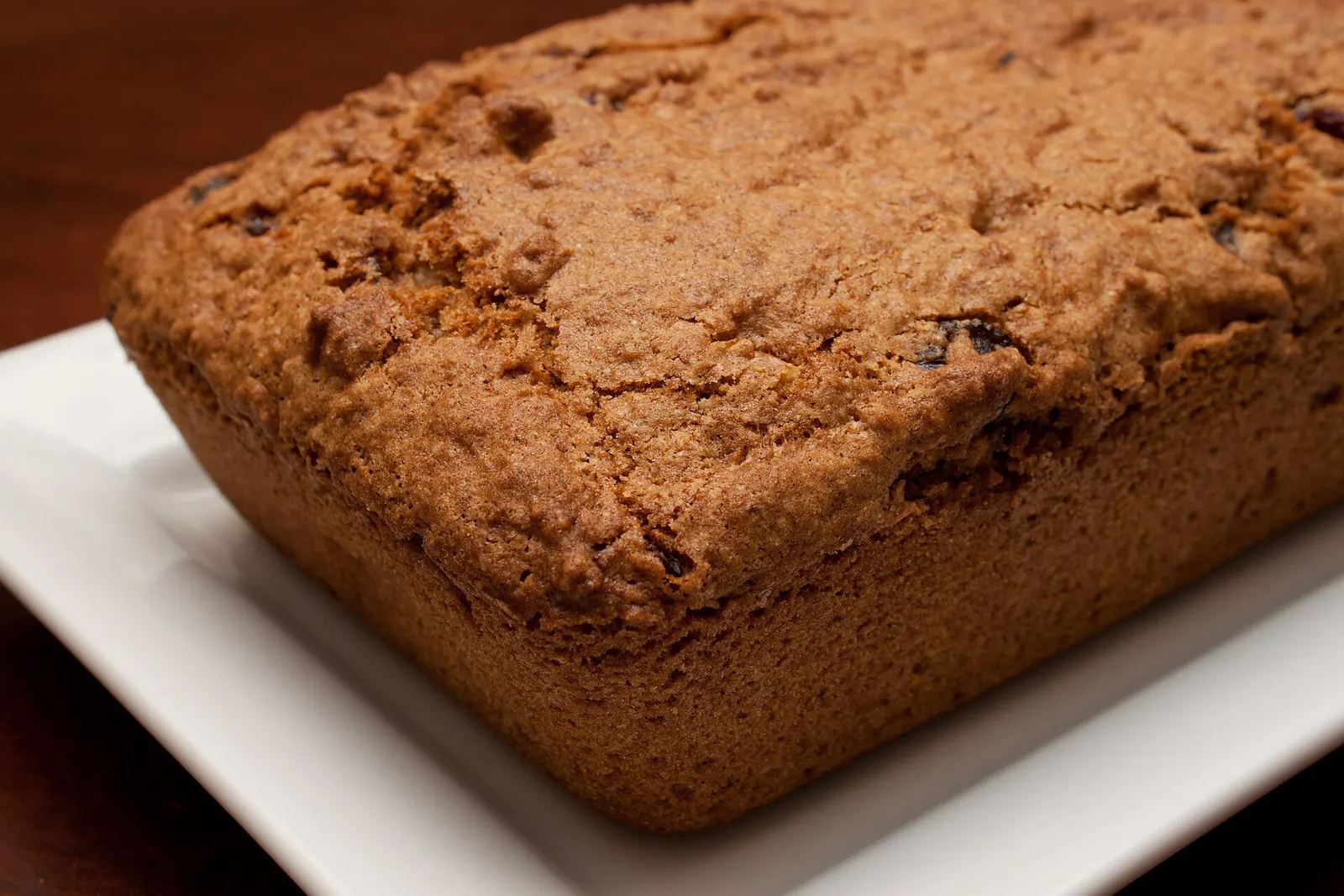
A close view of a deep golden cranberry orange nut bread loaf on a white platter.
This illustrative cranberry-orange loaf includes nuts and is shown without glaze. Jessica’s source loaf contains no nuts and receives its orange glaze only after cooling.Photo by Joey Doll / Wikimedia Commons · CC BY 2.0
Prep
10 min
Bake
1 hr
Pan
9 × 5 in
Makes
1 loaf

This loaf refuses to treat cranberry as decoration. Two full cups of fresh berries run through one 9-by-5-inch bread, each cut open and dusted with sugar before it meets the flour. Orange answers in three registers—fragrant zest, fresh juice, and a glaze that lands only after the crumb has cooled.

The method is almost spare enough to memorize. Whisk the dry ingredients, fold in the fruit, fill the center well with buttermilk, oil, egg, juice, and vanilla, then stir gently. The real work is judgment: let the deep center, not the browned crown, decide when the loaf leaves the oven; let the rack, not impatience, decide when it is ready for glaze.

“Super moist orange bread studded with juicy cranberries and topped with a sweet, fresh orange glaze.”

Halve every berry

The cut fruit takes up its reserved sugar and makes tart pockets more evenly than whole cranberries would.

Stir once, gently

Scrape until the last dry streak disappears, then stop. The batter needs full incorporation, not extended beating.

Read the deepest center

A set crown and a clean thin skewer matter more than surface color, especially with two cups of juicy fruit.

Glaze only when cool

The crumb finishes setting on the rack while the crown becomes a stable surface for a thick citrus ribbon.

The formulaBerry · zest · acid · oil

Tart fruit, cultured dairy, and orange at every turn

The source proportions stay intact. Their balance comes from enough cranberry to remain tart, enough orange to stay aromatic, and a moist oil-and-buttermilk crumb that supports both.

01

Two cups fresh cranberries

They make this a berry-led loaf rather than an orange cake with a few red accents. Halving keeps their tartness distributed through every slice.

Cut on a board with a shallow rim; the berries roll easily and can release juice as they are halved.
02

Orange in three forms

Zest perfumes the crumb, juice sharpens both batter and glaze, and the glaze returns that fresh citrus note after the oven.

Zest before juicing. Stop at the orange surface so bitter white pith stays on the fruit.
03

Buttermilk + baking soda

The cultured dairy supplies moisture and acidity while one teaspoon soda lifts a batter weighted with fruit.

Measure both exactly and get the mixed batter into the heated oven without a long counter rest.
04

Oil, not creamed butter

One-third cup vegetable oil keeps the method in one-bowl quick-bread territory and protects tenderness after the loaf cools.

Use a neutral-flavored oil so the cranberry and fresh orange remain the loudest notes.

Crown + peelThe finish and its perfume

Glaze catches the light; zest carries the orange deeper

A round cranberry bread with a thin pale glaze centered on a gold plate.
An illustrative round cranberry bread makes the glaze visible. The source recipe is a rectangular 9-by-5-inch loaf with a smoother orange, butter, and vanilla finish.Photo by WhatamIdoing / Wikimedia Commons · CC BY 4.0
Start with two tablespoons

Orange juice loosens powdered sugar quickly. Hold half back, then add it drop by drop until the glaze falls in a thick ribbon.

A hand zester cutting fine orange peel over a wooden board.
Zest carries aromatic orange oil into the batter; take only the bright outer peel and leave the bitter white pith behind.Photo by Dvortygirl / Wikimedia Commons · CC BY-SA 3.0

The loaf clockCut whisk fold level test cool

Ten active minutes, one careful hour in the oven

The source total ends at 1 hour 10 minutes. The rack cool and glaze set are essential passive finishing time beyond that published clock.

  1. 0:00

    Heat and coat

    Bring the oven to 350°F; grease and flour every corner of the 9-by-5-inch loaf pan.

  2. +3

    Split the berries

    Halve 2 cups cranberries and toss them with the reserved 2 tablespoons sugar.

  3. +6

    Whisk the dry map

    Disperse flour, the remaining sugar, soda, salt, and zest before the fruit is folded in.

  4. +8

    Fill the well

    Add buttermilk, orange juice, oil, egg, and vanilla; stir gently until no dry patch remains.

  5. +10

    Level and bake

    Transfer to the pan and begin the source’s 50–60-minute window.

  6. 1:00

    Test the center

    Look for a set crown and a skewer without wet batter; cover loosely only if color runs ahead of the middle.

  7. 1:10

    Release and wait

    Loosen the edge, rest 10 minutes in the pan, then cool completely on a rack before glazing.

Four visual checksSugared · moist · set · cool

Read the berry, the batter, the crown, then the ribbon

A fruit-heavy quick bread is steadier when every timer mark is paired with a visible and tactile cue.

01

Sugared berry halves

The cranberries look lightly frosted rather than wet; their cut faces are ready to distribute through the flour.

02

Thick, fully moistened batter

No flour pocket remains at the bottom, but the mixture has not been beaten smooth or aerated like a butter cake.

03

Set crown, clean center

The top is deeply golden and springs lightly while a thin skewer shows crumbs at most, never a glossy stripe of batter.

04

Cool crumb, thick ribbon

The loaf no longer feels warm before glaze is poured; the icing falls slowly enough to sit on the crown and trail down the sides.

The keeping planCool set wrap freeze finish

Keep moisture in the crumb and out of the glaze

The source gives a six-day airtight counter window and a three-month freezer window; glazing after thawing gives the cleanest finish.

Today

Cool completely, glaze, and let the finish set before wrapping or cutting. Warm bread traps steam and drags the icing.

This week

Keep the glazed loaf airtight at room temperature for up to the source’s six-day window; slice only what you plan to serve.

For the freezer

Wrap the fully cooled unglazed loaf in plastic and foil, freeze airtight up to three months, thaw, then make the glaze fresh.

Glazed Cranberry Orange Bread

A 9-by-5-inch buttermilk quick bread with halved fresh cranberries, orange zest, and a fresh orange-butter glaze.

Quick BreadCranberryOrangeButtermilkHoliday BakingGlazed Loaf

Ingredients

Cranberry orange bread

  • 2 cups fresh cranberries, each cut in half
  • 1 cup plus 2 tablespoons granulated sugar, divided
  • 2 cups all-purpose flour
  • 1 teaspoon baking soda
  • 1/4 teaspoon fine salt
  • Zest of 1 orange, about 1 tablespoon
  • 3/4 cup buttermilk
  • 1/4 cup freshly squeezed orange juice
  • 1/3 cup vegetable oil
  • 1 large egg
  • 1 teaspoon vanilla extract

Orange glaze

  • 1 cup powdered sugar
  • 2 to 4 tablespoons freshly squeezed orange juice, as needed
  • 1 tablespoon unsalted butter, melted
  • 1/2 teaspoon vanilla extract

Directions

  1. Heat the oven to 350°F / 175°C. Grease and flour a 9-by-5-inch loaf pan thoroughly, tapping out the excess flour.
  2. Cut each cranberry in half. Toss the berries with the reserved 2 tablespoons granulated sugar and set them aside while the dry mixture is assembled.
  3. In a large bowl, whisk the flour, remaining 1 cup granulated sugar, baking soda, salt, and orange zest until the zest is dispersed and no pocket of leavener remains. Fold in the sugared cranberries.
  4. Make a well in the center. Add the buttermilk, orange juice, vegetable oil, egg, and vanilla. Stir gently, scraping the bottom and sides, just until the batter is evenly combined and no dry flour remains.
  5. Scrape the batter into the prepared pan and level the surface without compacting it. Wipe any batter from the exposed rim so it does not burn.
  6. Bake for 50 to 60 minutes. Begin checking at 50 minutes: a thin skewer inserted through the center should emerge without wet batter, the crown should look set, and the loaf should spring back lightly around the center. If the top darkens before the middle is ready, cover it loosely with foil for the final minutes.
  7. Run a butter knife around the loaf immediately after it leaves the oven. Cool in the pan for 10 minutes, then turn it onto a wire rack and let it cool completely before glazing or slicing.
  8. Whisk the powdered sugar, 2 tablespoons orange juice, melted butter, and vanilla until smooth. Add the remaining orange juice a little at a time only until the glaze falls in a thick ribbon, then pour it over the fully cooled loaf and let it set before cutting.

Image credits

Photography is used under open licenses with attribution: Joey Doll / Wikimedia Commons, WhatamIdoing / Wikimedia Commons, and Dvortygirl / Wikimedia Commons.