Apple-orchard fire

Twelve pieces · one cold marinade

Garbage Can Chicken

AnnMarie Irace’s apple-orchard clambake chicken pairs thighs and drumsticks with a salty vinegar-oil marinade, then cooks them safely from raw over a two-zone grill.

Grill the chicken
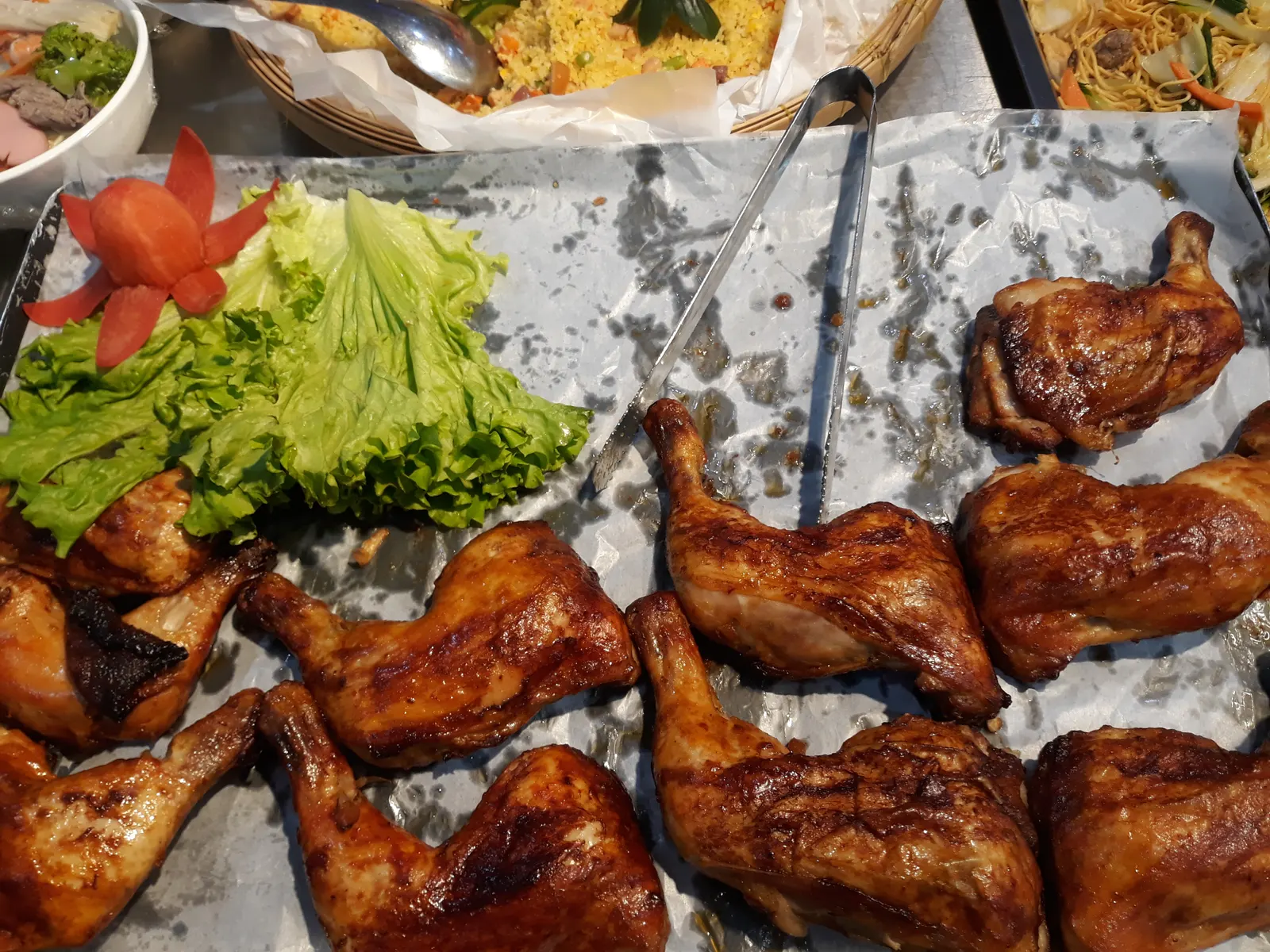
Deeply browned grilled chicken leg quarters arranged on a large serving tray.
A large tray of grilled leg quarters echoes the crowd-scale clambake that gave this recipe its name. This licensed photograph is illustrative; the source uses a mix of thighs and drumsticks.Photo by Baoothersks / Wikimedia Commons · CC BY-SA 4.0
Yield
12 pieces
Marinate
2–18 hr
Grill
35–45 min
Chicken
165°F

The garbage can belongs to the story, not the shopping list. AnnMarie Irace remembered an autumn clambake in a Lake Ontario apple orchard, where cooks needed vessels large enough to marinate chicken for a crowd before open-pit grilling. Her home version brings the batch down to twelve thighs and drumsticks.

The flavor remains emphatic: twice as much white vinegar as vegetable oil, a full measure of salt, poultry seasoning, pepper, and one egg whisked in to hold the mixture together. The modern correction is procedural. Raw chicken stays cold, then cooks in one uninterrupted pass over a two-zone fire.

“I first had this chicken at an Autumn clambake held in a clearing of an apple orchard along Lake Ontario, New York. Because of the amount of chicken needed, the cooks actually marinated the chicken in garbage cans and then grilled it on open fire grills. Fabulous! Do not let the amount of salt scare you away!”

Keep the name, change the vessel

The orchard cooks worked at crowd scale. At home, use only a clean food-safe container or bags.

Skip the source parboil

Raw chicken moves from a cold marinade to one continuous grill cook; it is never partially cooked and chilled.

Build two heat zones

Indirect heat cooks bone-in pieces through before a short direct finish crisps the skin.

The sharp setDark meat acid emulsion herbs

Four forces make the orchard marinade

Every source proportion stays intact. Ingredient handling and grill control do the safety and texture work.

01

Thighs + drumsticks

Twelve dark-meat pieces match the primary post and share a forgiving cooking window around the bone.

Keep breasts out of this batch unless they are monitored separately; the source itself warns that large bone-in breasts lag behind.
02

White vinegar

Two cups make this a pointed Upstate picnic marinade, cutting through dark meat and carrying poultry seasoning across every piece.

Use a nonreactive food-safe vessel and stop at eighteen hours; acid keeps changing the surface while the chicken sits.
03

Vegetable oil + egg

A cup of neutral oil and one egg whisk into the vinegar as a loose emulsion that clings instead of separating immediately.

Let heavy excess drip away before the grill, then discard the used mixture because it has touched raw poultry.
04

Salt + poultry seasoning

Four source tablespoons of salt and three teaspoons of the herb blend are the defining savory concentration.

The salt measure is intentionally preserved and labeled. Do not add a salty finishing sauce before tasting the cooked chicken.

Before the fireVessel zones tools thermometer

Draw a clean line from cold side to cooked side

Four deliberate preparations prevent the raw marinade and cooked chicken from crossing paths.

Field memory, fire finishOrchard rows · burnished skin

A crowd recipe becomes a backyard batch

Rows of apple trees heavy with fruit in a New York orchard.
The original memory begins in an apple orchard beside Lake Ontario. This Marlboro, New York orchard stands in for that Upstate field setting.Photo by Juliancolton / Wikimedia Commons · Public domain
The title is oral history

At home, scale the memory down without copying the container: glass, stainless steel, or food-safe bags only.

Plain grilled chicken pieces with dark grate marks arranged on a white plate.
The finish to seek is burnished and juicy rather than lacquered with sauce: the source marinade is discarded after raw-chicken contact.Photo by Marilyn Acosta / Wikimedia Commons · CC BY-SA 2.0

The grill rhythmWhisk chill turn probe crisp

Long cold soak, controlled fire, fast crisp

The marinade does its work unattended. The grill then moves from gentle covered heat to a brief direct finish.

  1. WHISK

    Make the cloudy emulsion

    Combine vinegar, oil, salt, poultry seasoning, egg, and pepper until no streaks of egg remain.

  2. 2–18 HR

    Marinate raw and refrigerated

    Coat all twelve pieces in a food-safe vessel, keep them cold, and turn them occasionally.

  3. 20 MIN

    Begin skin-side up

    Cook over indirect medium heat with the lid closed so the bone-in centers begin gently.

  4. 15–20

    Turn and keep the lid down

    Continue over indirect heat, rotating pieces between warm spots to even the pace.

  5. 165°F

    Probe more than one piece

    Check the thickest meat without touching bone; temperature, not the clock, releases each piece.

  6. CRISP

    Finish briefly over flame

    Mark and crisp the skin over direct heat, moving away immediately if dripping fat ignites.

Four finish cuesCloudy calm burnished verified

Read the emulsion, the flame, the skin, the center

No single visual cue can declare bone-in chicken done. The sequence ends with several thermometer checks.

01

The emulsion looks cloudy

Oil and vinegar will never become mayonnaise, but the whisked egg should leave the marinade evenly opaque with no visible strands.

02

The grill stays controlled

A few wisps of smoke are welcome. Persistent flames mean the chicken needs to move back to the indirect side.

03

The skin turns burnished

Look for crisp edges and dark grate marks only after the center is nearly done, not blackened skin over undercooked meat.

04

Several pieces read 165°F

Probe the thickest thighs and drumsticks from the side. Avoid bone, which can distort the reading.

The safe holding planReserve discard continue chill

Plan the cold time without carrying raw marinade forward

A one-day plan preserves the source’s long flavor window while keeping every raw-poultry boundary visible.

Make the marinade one day ahead

Whisk it in a clean jar and refrigerate separately, then add it to raw chicken no more than eighteen hours before grilling.

Never save the used marinade cold

Once it touches raw chicken, discard it. If a separate finishing sauce is wanted, reserve some before contact.

Cook in one continuous pass

The source parboil is omitted. Do not partially cook chicken, chill it, then return later to finish on the grill.

Chill cooked chicken promptly

Refrigerate within two hours—one hour above 90°F—use within 3–4 days, and reheat leftovers to 165°F.

Garbage Can Chicken

AnnMarie Irace’s vinegar-forward thighs and drumsticks, refrigerated in their original marinade and grilled safely over two heat zones.

ChickenGrillingMarinadeSummer DinnerPicnicLake Ontario

Ingredients

Chicken and vinegar marinade

  • 12 bone-in chicken pieces, preferably thighs and drumsticks
  • 1 cup vegetable oil
  • 2 cups white vinegar
  • 4 tablespoons salt (the source measure; see note)
  • 3 teaspoons poultry seasoning
  • 1 large egg
  • 1/2 teaspoon black pepper

Directions

  1. Put the chicken in a large food-safe nonreactive container or divide it between two large resealable bags. Do not parboil or otherwise partially cook it before this refrigerated marinade.
  2. Whisk the vegetable oil, white vinegar, salt, poultry seasoning, egg, and pepper until the egg disappears into a loose, cloudy emulsion. Pour it over the chicken, turn every piece to coat, cover or seal, and refrigerate for 2–18 hours. Turn the pieces once or twice if practical. Keep the chicken cold for the entire marinade.
  3. Prepare a two-zone grill for medium heat, roughly 350–400°F at the lid: bank the coals to one side, or leave one burner off. Clean the grate. Set a clean platter and clean tongs aside for the cooked chicken.
  4. Lift the chicken from the marinade and let the heavy excess drip back into the container. Discard all used marinade; do not brush it onto cooked chicken. Arrange the pieces skin-side up over indirect heat, close the lid, and cook for 20 minutes.
  5. Turn the chicken skin-side down, close the lid, and continue over indirect heat for 15–20 minutes. Rotate pieces between hotter and cooler positions as needed so thighs and drumsticks cook evenly without flare-ups.
  6. Check several of the thickest pieces with a thin-tip thermometer, avoiding bone. When each reaches at least 165°F (74°C), move it briefly over direct heat, turning as needed, just until the skin is crisp and marked. If flare-ups begin, return the piece to indirect heat. Total grill time is usually about 35–45 minutes, but temperature decides.
  7. Transfer the chicken with clean tongs to the clean platter and rest for 5 minutes before serving. Do not return cooked pieces to the container or tools that held raw chicken.

Source and technique references: AnnMarie Irace’s April 11, 2013 Musings of a Vintage Junkie post for the Lake Ontario orchard story, twelve-piece dark-meat batch, exact marinade, and original crisp-skin finish; the exact My Recipe Magic card for legacy ID 2500762044, author identity, four-serving yield, description, and syndicated ingredient record; Illinois Extension for refrigerated marinating, food-safe nonreactive containers, and separation of marinade before raw-meat contact; Utah State University Extension for the 2–24-hour chicken range, cold holding, occasional turning, and 165°F thermometer guidance; and USDA FSIS on avoiding partial cooking before refrigerated holding, safe chicken temperature, prompt chilling, and 3–4-day storage. The six source marinade proportions are unchanged; the unsafe parboil-before-marinating sequence is not retained.

Image credits

Photography is used under open licenses with attribution: Baoothersks / Wikimedia Commons, Juliancolton / Wikimedia Commons, and Marilyn Acosta / Wikimedia Commons.