Gambas a la gabardinaSmall-batch pan frying

Gambas a la gabardina: beer-battered shrimp

A saffron-scented batter, a shallow pan of oil and small batches—not a deep fryer. The important check is the shrimp inside the coating.

Jump to recipe
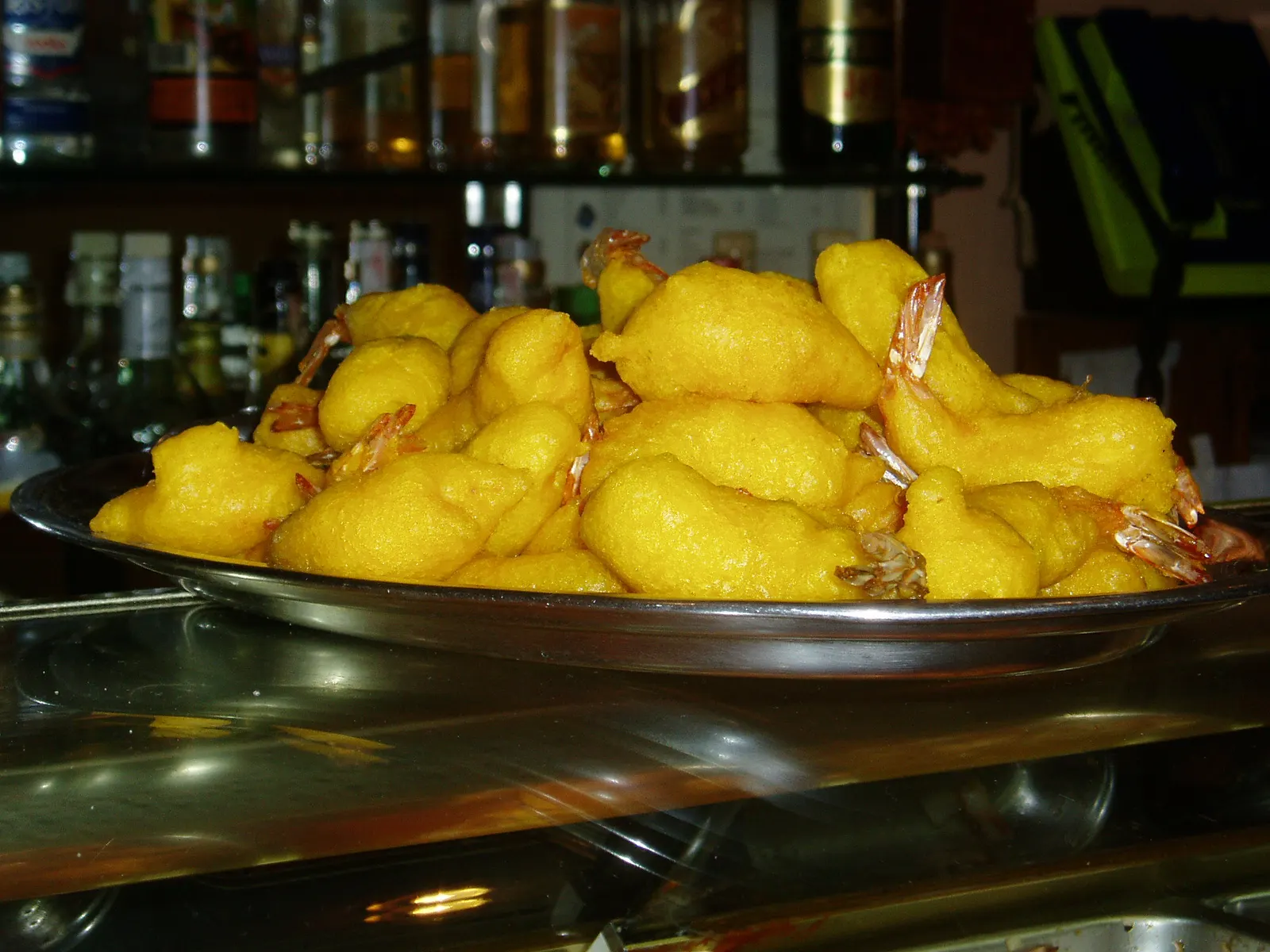
Golden battered shrimp with exposed tails piled on a metal platter.

Tail-on gambas a la gabardina.Photo by SABET Sabet (uayebt) via “Pintxo de gambas” / Flickr · CC BY 2.0. Changes: cropped.

Makes
15 shrimp, about 4 appetizer portions
Prep · thawed shrimp
about 10 min
Cook · heat + batches
about 25 min
Total · thawing extra
about 35 min

A golden crust tells you about the batter, not necessarily the shrimp underneath it. That is the useful distinction in gambas a la gabardina: raw shrimp go into a flour-and-egg batter, then cook in oil until both the coating and the center are ready.

This version follows Albert Bevia's Spain on a Fork recipe. Beer and saffron flavor the batter; a frying pan does the cooking. The work is mostly preparation and attention: dry the shrimp, let excess batter drip back into the bowl, and leave space between pieces rather than trying to finish everything in one crowded pan.

Before the panPreparation checklist

Start with raw, thawed shrimp

At the stoveCoating is not doneness

Keep the coating light, and the batches small

  1. Coating

    Let the excess drip

    The source's pan method turns the shrimp so both sides of the batter meet the oil. It does not call for submerging them in a deep pot. A thick tail of batter can brown on the outside while adding unnecessary bulk, which is why letting the excess drip back into the bowl matters.

  2. Batches

    Leave space between pieces

    Crowding makes the batch harder to turn and the heat less predictable. A little patience between batches is more useful than treating the quoted frying time as a stopwatch. Check an actual shrimp from the first batch before carrying the same timing through the rest.

  3. Doneness

    Check the center, then serve

    Lift a shrimp out of the oil to check it. The center should reach 145°F; the flesh should be firm, pearly and opaque, not translucent. A brown coating alone is not the check. Return any undercooked shrimp to the pan and adjust the heat if the batter is darkening too quickly. Drain cooked shrimp on the lined plate, allow the oil to recover its heat, and repeat with the remaining batches. Finish with parsley if using and serve promptly.

Gambas a la gabardina: beer-battered shrimp

A saffron-scented batter, a shallow pan of oil and small batches—not a deep fryer. The important check is the shrimp inside the coating. Measures: US cups and spoons; the flour weight is supplied by the original recipe.

15 shrimp, about 4 appetizer portionsPrep: about 10 minCook: about 25 minTotal: about 35 min; thawing additional

Ingredients

Shrimp and batter

  • 15 raw jumbo shrimp, peeled and deveined, tail shells removed, thawed if frozen
  • Sea salt and black pepper, for seasoning the shrimp
  • 3/4 cup beer, at room temperature
  • 1/4 teaspoon saffron threads
  • 1 cup all-purpose flour (125 grams)
  • 1 teaspoon baking powder
  • 1/4 teaspoon sea salt, for the batter
  • 1 large egg
  • 1/2 cup extra-virgin olive oil, for frying
  • Chopped parsley, to finish, optional

Directions

  1. Prepare the shrimp. Check that the tail shells have been removed, then pat the thawed shrimp dry with paper towels and season lightly with salt and pepper. Have the lined plate and clean serving utensils ready before heating the oil.
  2. Flavor the beer. Add the saffron threads to the room-temperature beer and set aside while you measure the dry ingredients.
  3. Mix the batter. Whisk the flour, baking powder and 1/4 teaspoon salt together in a bowl. Add the egg and saffron beer, then mix until the batter is creamy and no dry flour remains. Do not taste the raw batter.
  4. Heat the pan. Put the olive oil in the frying pan over medium heat. The source allows about 5 minutes for heating, but use the oil's behavior rather than a timer alone: a small drop of batter should sizzle promptly. The oil should not smoke. If it does, turn off the heat and let it cool; never use water to cool hot oil.
  5. Fry small batches. Coat a few shrimp in the batter. Lift each over the bowl and let excess batter drip off, then lower it carefully into the oil, away from you. Arrange a single layer with space between pieces. Start with about 5 shrimp if the pan comfortably holds them; use fewer if they touch. Fry until the underside is golden, then turn, using the source's roughly 2 1/2–3 minutes per side as a guide rather than a guarantee.
  6. Check the center, then serve. Lift a shrimp out of the oil to check it. The center should reach 145°F; the flesh should be firm, pearly and opaque, not translucent. A brown coating alone is not the check. Return any undercooked shrimp to the pan and adjust the heat if the batter is darkening too quickly. Drain cooked shrimp on the lined plate, allow the oil to recover its heat, and repeat with the remaining batches. Finish with parsley if using and serve promptly.

Before and after frying

Prepare ahead, serve freshly fried

You can measure the dry ingredients in advance and thaw the shrimp safely in the refrigerator. Keep raw seafood cold until needed and separate its utensils and plate from those used for cooked food. Mix and use the batter when you are ready to fry; discard batter that has been in contact with raw shrimp.

These are best served straight from the pan rather than held for a long party buffet. Never leave cooked seafood unrefrigerated for more than 2 hours, or more than 1 hour above 90°F. Refrigerate leftovers promptly in shallow containers, use within 3–4 days at 40°F or below, and reheat to 165°F. Those are safety limits, not a promise that reheated batter will have the freshly fried texture.

Keep hot oil attended and away from water. After cooking, turn off the heat and let the pan cool before handling the oil. Never use water on an oil fire.

Sources and recipe note

Adapted from Albert Bevia, Spain on a Fork, “Spanish Trench Coat Shrimp | Gambas a la Gabardina Recipe,” March 5, 2021.

The original quantities and pan-frying approach are retained. Doneness, safe thawing, raw-batter handling and practical heat guidance are clarified here using FDA seafood guidance, USDA frying guidance, USDA leftover guidance and CDC raw-flour guidance. This adaptation has not been physically tested by sophisticated.kitchen; its times are estimates, not measured results.

Image credits

Photography credits: SABET Sabet (uayebt), “Pintxo de gambas” / Flickr, and CC BY 2.0.