
The savory shellCut · roll · freeze · fill

Five ingredients · no long rest

Flaky Quiche Crust from Scratch

A buttery five-ingredient quiche crust made in the food processor, rolled straight away, and frozen briefly before filling.

Make the crust
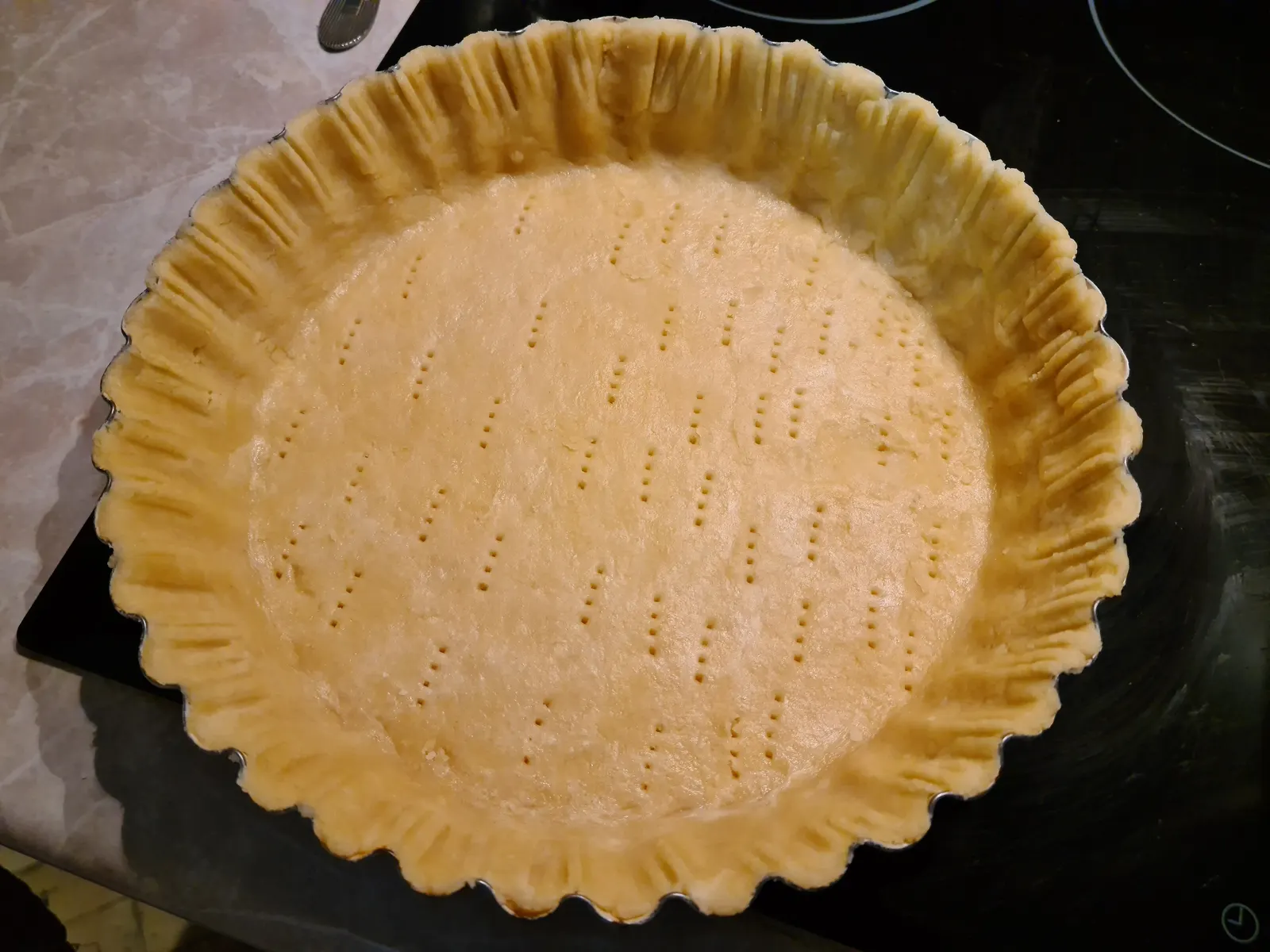
An unbaked pastry shell pressed into a fluted metal tart pan.
A cold, fitted shell is the destination: smooth across the base, settled into the corners, and ready for its filling.Photo by Roman Riabenko · CC0 1.0
Active
10 min
Freeze
20–25 min
Yield
1 crust
Ingredients
5

This crust moves on a short clock, but every minute has a purpose. Denay DeGuzman’s five-part dough goes from cold butter to a fitted shell in ten active minutes, then borrows its patience from the freezer. The egg gives the pastry enough structure to leave a removable-bottom pan cleanly; the butter and light handling keep that structure tender.

The formula remains intact: one egg, ice water, flour, sea salt, and ten tablespoons of butter. The useful upgrade is precision around the transitions—stop at coarse meal, pulse only until the dough gathers, ease rather than stretch it into the corners, and give the shaped shell its full cold reset before any filling arrives.

“Making a buttery, flaky quiche crust from scratch is easy peasy.”

Stop at coarse meal

Small butter pieces should remain visible in the flour before the egg mixture goes in; paste means the processor has run too long.

Roll, then chill

Denay’s shortcut shapes the dough first and firms the whole fitted shell in the freezer, saving a long pre-roll rest.

Follow the filling

This is a component recipe. Once cold, the shell takes its final time and temperature from the quiche that will fill it.

Cold miseButter water pan freezer

Set the cold chain before pressing start

The processor makes this fast enough that the setup matters more than speed. Start cold and clear the shell’s landing place before the first pulse.

Pastry clockCut bind roll set

Ten active minutes, then a firming pause

The dough is handled in one brief run. Its only real wait happens after shaping, when the entire pan goes cold together.

  1. 0–2 min

    Cut in

    Pulse flour and salt, add the cold butter, and stop at coarse meal with visible pieces.

  2. 2–4 min

    Bind lightly

    Add the whisked egg and ice water, then use only enough pulses for the crumbs to gather.

  3. 4–10 min

    Roll and fit

    Roll on a lightly floured surface, ease the round into the pan without stretching, and trim.

  4. 20–25 min

    Firm the shell

    Freeze the fitted crust until it feels cold and rigid, then fill and bake as the quiche directs.

Crumb + sliceThe checkpoint and the promise

Read the dough before it becomes a shell

A close view of pale shortcrust crumbs in a mixing bowl.
This illustrative shortcrust mixture shows the useful checkpoint before the liquid: coarse crumbs with visible pieces of fat, not a paste.Photo by Roman Riabenko · CC0 1.0
Do less

Coarse meal is a stop sign. Once the butter has become a uniform cream with the flour, the layers the oven needs are already gone.

A slice of mushroom quiche beside dressed salad leaves on a white plate.
An illustrative filled quiche shows the crust’s final job: a crisp, freestanding edge sturdy enough to carry a generous custard slice.Photo by James Harris · CC0 1.0

Texture stackMeal gather drape set

Four textures, one disciplined stop at each

A short ingredient list leaves nowhere for technique to hide. These visual and tactile cues matter more than an extra spin of the blade.

01

Meal

Flour coats irregular pieces of butter; the mixture is loose and pebbled, not homogeneous.

02

Gather

The egg-water addition turns crumbs into a dough that holds together without looking polished.

03

Drape

A supple round settles into the pan under its own weight instead of being pulled tight.

04

Set

The freezer returns the butter and shaped rim to a firm state before warm filling and oven heat arrive.

Pastry planToday overnight freezer filling

Keep the dough cold, covered, and ready

The quick method is built for same-day quiche, but the unrolled disk also holds well when it is protected from drying and thawed gently.

Use today

Roll, fit, freeze for 20–25 minutes, then fill the shell while it is still firm.

Overnight

Wrap the dough disk airtight in the refrigerator; let it relax only until rollable the next day.

Up to 3 months

Wrap the disk closely, seal it in a freezer bag, and thaw overnight in the refrigerator.

After filling

Let the quiche recipe—not the crust alone—set the baking temperature, doneness cue, cooling, and leftover window.

Flaky quiche crust from scratch

A five-ingredient, food-processor quiche crust rolled immediately and firmed in the freezer before filling.

Quiche CrustSavory PastryFood ProcessorFive IngredientsMake AheadBrunch

Ingredients

Five-ingredient crust

  • 1 large egg, cold
  • 2 1/2 tablespoons ice water
  • 1 1/2 cups all-purpose flour, plus a little for the work surface
  • 1/2 teaspoon sea salt
  • 10 tablespoons (about 5 ounces / 142 grams) unsalted butter, cold and cut into small cubes

Directions

  1. Whisk the cold egg and ice water together in a small bowl. Keep the mixture cold while the dry ingredients are started.
  2. Put the flour and sea salt in a food processor and pulse briefly to combine. Add the cold butter cubes and pulse in short bursts until the mixture resembles coarse meal, with small distinct butter pieces still visible.
  3. Pour in the egg-and-water mixture. Pulse only until the crumbs begin to gather into a cohesive dough; stop before the processor works it into a warm, smooth paste.
  4. Turn the dough onto a lightly floured work surface and roll it immediately into a round wide enough for the chosen pan. Lift and rotate as needed to prevent sticking, adding only a light dusting of flour.
  5. Drape the dough into the quiche, tart, or pie pan. Ease it into the bottom corners without pulling or stretching, press it gently against the sides, and trim the excess level with the rim using a paring knife.
  6. Freeze the fitted shell for 20–25 minutes, until the dough feels firm and holds its shape under light pressure. It is now ready to fill and bake for the time and temperature specified by the chosen quiche recipe.
  7. Optional blind-bake method from the source: heat the oven to 350°F (175°C), line the cold shell with foil, fill with pie weights or dry beans, and bake for 7–8 minutes. Remove it from the oven, lift out the foil and weights carefully, then fill and continue baking according to the quiche recipe.

Source and technique references: Denay DeGuzman’s Confetti & Bliss primary recipe for the five-ingredient formula, one-crust yield, 10-minute prep, 20–25 minute freezer method, egg-as-binder explanation, and optional 350°F blind bake; the queued legacy path for ID 2645726082 and its exact title identity; the King Arthur Baking School pie guide for cold-temperature control, restrained water, fat-piece texture, and shaped-shell chilling; The Culinary Institute of America pie-dough method for rough cohesion, cold water, light flouring, and paper-assisted rolling; and the FDA for safe handling of raw flour, dough, and eggs.

Image credits

Photography is used under open licenses with attribution: Roman Riabenko, Roman Riabenko, and James Harris.