No-boil comfortRotini · chicken · Alfredo

One dish · six servings

Dump-and-Bake Chicken Alfredo Casserole

Uncooked rotini, Alfredo sauce, chicken stock, cooked chicken, garlic, and mozzarella become a creamy pasta casserole in one baking dish.

Bake the casserole
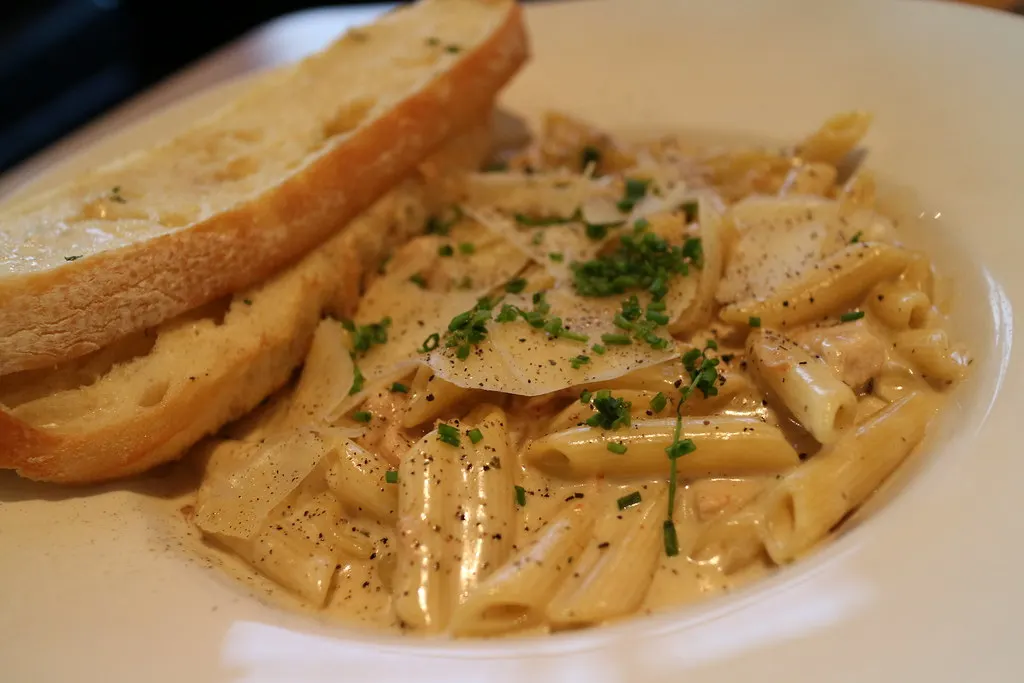
Creamy penne Alfredo with pieces of chicken, shaved Parmesan, black pepper, chives, and garlic bread.
An illustrative restaurant plate shows the creamy chicken-and-short-pasta finish; Blair Lonergan’s casserole uses rotini, mozzarella, and no bread or added chives unless chosen as garnish.Photo by elsie.hui · CC BY 2.0
Prep
10 min
Covered
30 min
Oven
425°F
Serves
6

The clever part is not the word “dump.” It is the controlled steam. Blair Lonergan’s 2016 casserole gives a full pound of dry rotini enough sauce and stock to cook in place, then holds that moisture under foil until the pasta is nearly tender.

That means the shortcuts have boundaries. The chicken is already cooked, the Alfredo jar is a full 22 ounces, and exposed spirals are pressed beneath the liquid. At the 30-minute mark, stir before deciding: a loose-looking sauce is expected, while a chalky pasta center simply asks for another short covered interval.

“A quick-prep, cheesy comfort-food dinner for busy nights, built so the pasta cooks without a separate boiling step.”

Liquid is the pasta pot

Three cups of stock and a full 22-ounce jar of sauce hydrate the dry rotini inside the dish.

Foil is the lid

A tight seal traps the steam that cooks the exposed edges as well as the pasta beneath the surface.

Cheese comes last

Mozzarella joins only after the rotini is almost tender, so the top melts without spending the whole bake under foil.

Ingredient editHydrate season carry melt

Six measured ingredients, each doing two jobs

The formula stays short because the sauce, stock, cooked chicken, and cheese each bring both flavor and structure.

01

Rotini

A full 16-ounce package cooks directly in the sauce-and-stock bath, making the casserole both the cooking vessel and serving dish.

Keep the source shape or choose only a short pasta with a similar package cook time; a very different shape changes the hydration clock.
02

Alfredo + stock

The 22-ounce jar supplies creamy body while three cups of stock provide the free liquid dry pasta needs to soften.

The current primary recipe cautions against shrinking the sauce to a single 15-ounce jar. This no-boil ratio needs the full amount.
03

Cooked chicken + garlic

Two cups of already-cooked chicken turn the pasta into dinner; two teaspoons of minced garlic sharpen the jarred sauce.

Rotisserie chicken is the source shortcut. Remove bones and large pieces of skin, then dice for even distribution.
04

Mozzarella

Two cups form the final melted layer after the rotini has absorbed most of its cooking liquid.

Spread the shreds edge to edge only after stirring at the first doneness check.

Before the bakeDish jar chicken foil

Ten minutes to make the oven dependable

The no-boil method becomes predictable when the vessel, liquid quantity, cooked chicken, and seal are settled first.

Twist + shardThe shape and the finish

Rotini catches the sauce; Parmesan stays optional

Two pieces of uncooked yellow rotini pasta enlarged against a cool blue background.
Rotini is the source shape: its compact twists fit the baking dish, take in the stock and sauce, and give the melted cheese plenty of edges to hold.Photo by Stilfehler · CC BY-SA 3.0
The source line matters

Mozzarella is the measured topping. Parmesan and chopped herbs are optional garnishes, so add them at the table rather than rewriting the casserole underneath.

A wedge of aged Parmigiano-Reggiano with several thin shards on a dark plate.
Parmesan is an optional finish in the 2016 card, not part of the measured casserole formula; grate it over individual servings only if wanted.Photo by Jon Sullivan · Public domain

Casserole clockMix seal bake stir top

Fifty minutes, with one honest checkpoint

The source gives 30 minutes covered and 10 minutes uncovered. The checkpoint between them protects against the real variation among ovens, dishes, and pasta brands.

  1. 0:00

    Heat the oven

    Set 425°F and place the baking dish, foil, spoon, and measured ingredients within reach.

  2. 0:04

    Build in the dish

    Stir dry rotini with Alfredo sauce, stock, cooked chicken, and garlic until evenly combined.

  3. 0:08

    Submerge and seal

    Press exposed spirals under the liquid, crimp the foil tightly, and put the dish in the oven.

  4. 0:38

    Open and stir

    Vent the steam away from you, scrape through the center and corners, then taste one piece of pasta.

  5. 0:40

    Adjust the clock

    If the rotini is still hard, reseal and bake 5–10 minutes more. If it is almost al dente, move on.

  6. 0:50

    Melt the finish

    Top with mozzarella and bake uncovered until melted, bubbling, tender, and 165°F at the center.

Doneness cuesSubmerged saucy firm creamy

Read the spiral before reading the clock

The useful evidence changes as the dish moves from dry pasta to trapped steam to a bubbling cheese finish.

01

Before baking: every spiral is glossy

A dry pale ridge above the liquid is a likely hard spot later. Press it down before the foil goes on.

02

At 30 minutes: liquid still moves

Do not mistake a saucy center for failure. Stir first; the pasta and final uncovered bake still have absorbing to do.

03

Before cheese: almost al dente

The rotini should have a firm bite without a chalky raw core. Fully soft pasta can turn mushy during the finish.

04

At the table: creamy, not soupy

The cheese is melted, bubbles reach the middle, and the sauce clings to the twists. A short rest thickens it further.

Serve + storeContrast cool cover reheat

Comfort food with a short, safe second life

The casserole is at its creamiest from the oven, but deliberate cooling and a little added moisture make leftovers practical.

Serve with something crisp

A bitter green salad or plainly steamed broccoli gives the rich casserole contrast without changing the source recipe.

Cool within two hours

Move leftovers into shallow covered containers rather than leaving the deep baking dish on the counter.

Keep three to four days

Use the USDA refrigerator window for cooked casseroles and store at 40°F or below.

Reheat to 165°F

Warm individual portions thoroughly; add a small splash of stock or milk if the chilled pasta has tightened the sauce.

Dump-and-bake chicken Alfredo casserole

Dry rotini baked under foil with Alfredo sauce, chicken stock, cooked chicken, and garlic, then finished with melted mozzarella.

ChickenPastaCasseroleAlfredo SauceMozzarellaOne-Dish Dinner

Ingredients

Casserole

  • 1 (16-ounce) package uncooked rotini pasta
  • 1 (22-ounce) jar Alfredo sauce, preferably roasted garlic Parmesan Alfredo as in the source
  • 3 cups chicken stock
  • 2 cups diced rotisserie chicken or other diced cooked chicken
  • 2 teaspoons minced garlic
  • 2 cups shredded mozzarella or Italian-blend cheese

Optional finish

  • Freshly grated Parmesan cheese
  • Fresh chopped basil, oregano, or parsley

Directions

  1. Heat the oven to 425°F (220°C). Set out a 4-quart or 9-by-13-inch baking dish and a sheet of foil large enough to seal it tightly.
  2. Add the uncooked rotini, Alfredo sauce, chicken stock, diced cooked chicken, and minced garlic directly to the baking dish. Stir until the sauce and stock are evenly blended and the chicken is distributed throughout.
  3. Press any exposed rotini beneath the liquid with the back of the spoon. Cover the dish tightly with foil so the steam stays inside.
  4. Bake covered for 30 minutes. Remove the foil carefully, keeping your face and hands clear of the escaping steam, and stir from the edges through the center.
  5. Taste a piece of pasta. It should be almost al dente—firm, but nearly cooked. If it is still distinctly hard, seal the dish again and bake for 5 to 10 minutes more, then check again; the source notes that some ovens may need up to 15 additional minutes.
  6. When the rotini is almost tender, stir once more and spread the shredded mozzarella or Italian-blend cheese evenly over the top. Return the dish to the oven uncovered for about 10 minutes.
  7. Remove the casserole when the cheese is melted, the sauce is bubbling through the center, the pasta is tender without becoming mushy, and the middle reaches 165°F (74°C). Garnish with Parmesan or fresh herbs only if desired, then serve hot.

Source and technique references: the February 2016 syndicated recipe card, Blair Lonergan’s current primary recipe and testing notes, Budget Bytes’ test-kitchen chicken Alfredo bake, and the USDA FSIS leftovers and reheating guide.

Image credits

Photography is used under open licenses with attribution: elsie.hui, Stilfehler, and Jon Sullivan.