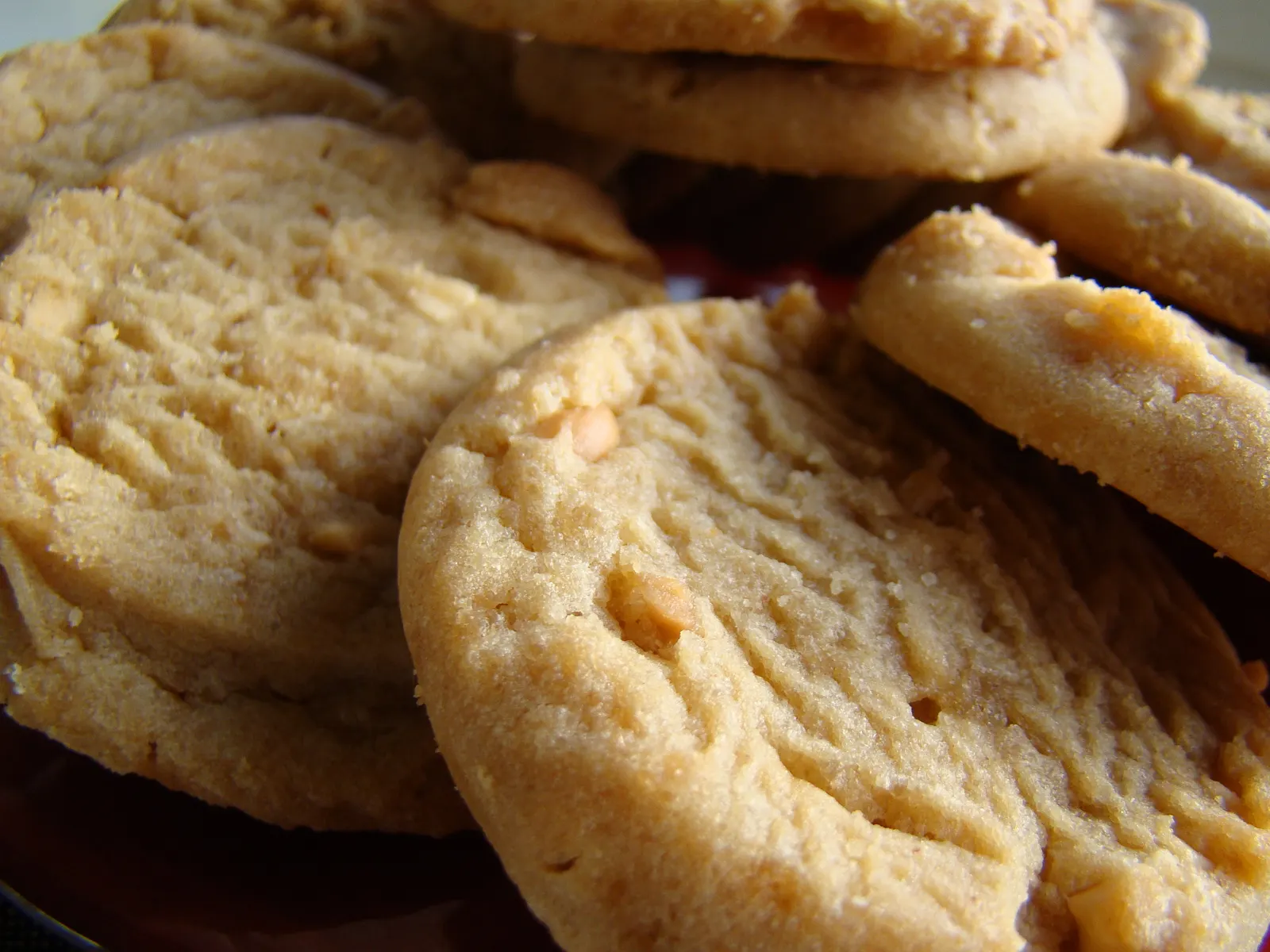
An illustrative batch shows the pale golden color and embedded chips to look for. Six Sisters’ soft-cookie method uses a gentle press rather than the pronounced fork marks pictured here.Photo by Janet Hudson · CC BY 2.0
Prep
15 min
Bake
7–9 min per batch
Makes
48 cookies
Rest
5 min on sheet
The fork never touches this peanut butter cookie. Six Sisters’ 2016 bakery-inspired copycat chases a thick, soft center instead: the dough is rolled broad, covered in sugar, pressed just enough to start it spreading, and removed before the top develops much color.
Peanut flavor arrives twice—creamy peanut butter worked into the fat and peanut butter chips folded through at the end. Sugar also has two jobs. White and brown sugars sweeten the dough, while a separate shallow bowl builds the crystalline coat that makes each pale cookie catch the light.
“One of my favorite places to visit is the bakery at Disneyland. Their cookies are seriously to die for and they are thick, chewy, and so, so soft”
The source shape
A 1 1/2-inch ball is sugar-coated, then gently pressed to 1/2 inch; fork marks make a flatter, crisper cookie.
The source color
These cookies leave the oven pale. Set edges and a center that has lost its wet shine are more useful than brown color.
The source finish
Five untouched minutes on the hot sheet let the very soft center become movable without baking away its chew.
The double-peanut setCreamy · crystalline · chipped
Three ingredients set the bakery profile
The legacy proportions stay exactly where they were. Better handling, not substitution, protects their thick and chewy intention.
01
Creamy peanut butter
A full cup flavors and structures the dough, while a second peanut note arrives in discrete melting chips.
Choose a smooth, well-emulsified jar for predictable spread; separated natural styles can change the balance.02
Two sugars
Granulated sugar keeps the edge neat and crystalline; packed brown sugar supports the soft, chewy center.
Keep the separate 1/4 cup granulated sugar out of the mixer—it belongs on the exterior.03
Peanut butter chips
They make the cookie double-peanut and create small soft pockets inside an otherwise uniform crumb.
Fold them in only after the flour disappears so the final mixing stays brief.
The preflight checkCool · light · separate · lined
Control the temperature before the mixer starts
A large butter-rich batch rewards four small checks before any dough reaches a pan.
Inside the doughSmooth base · measured shape
Creamy peanut butter begins it; a careful press defines it
Creamy peanut butter is part of the cookie’s structure as well as its flavor. A smooth conventional style gives the most predictable spread.Photo by NIAID · CC BY 2.0
The separate quarter cup
Hold it back. That final sugar never enters the dough; it belongs on every shaped surface just before the pan.
This illustrative tray makes portioning and flattening visible. For the bakery-soft source cookie, use parchment, leave space, and press each sugar-coated ball to about 1/2 inch without a fork.Photo by Mark Fickett · CC BY-SA 2.5
The bakery rhythmCream add fold shape bake rest
Six moves protect a seven-minute bake
The short oven window works only when the dough is evenly mixed, consistently shaped, and allowed to finish on the sheet.
Cream
Build the double-fat base
Blend softened butter and creamy peanut butter with both dough sugars until even and lighter in texture.
Add
Bring in eggs one by one
Mix in vanilla, then add each egg separately and scrape the bowl so the base stays cohesive.
Fold
Stop when the flour disappears
Whisk flour, soda, and salt first; mix them in gently, then fold through the peanut butter chips.
Shape
Roll, coat, and press
Make 1 1/2-inch balls, coat every surface with sugar, and press to about 1/2 inch thick.
7–9
Pull the pan while pale
Look for set edges and a matte center, not brown tops. Bake one cool sheet at a time.
+5
Let the sheet finish the cookie
The cookies are intentionally fragile at first; move them to a rack only after the short carryover rest.
The four texture readsPliable cohesive sparkling matte
Read pale as a positive signal
A brown cookie is already past the source target. Temperature, dough feel, shape, and surface sheen are the reliable sequence.
Heat the oven to 375°F (190°C). Line cool baking sheets with parchment paper or silicone baking mats.
In a large bowl, cream the softened butter, creamy peanut butter, 1 cup granulated sugar, and brown sugar until evenly blended and lighter in texture. The butter should remain cool and pliable, not greasy.
Mix in the vanilla. Add the eggs one at a time, mixing well and scraping the bowl after each addition.
In a separate bowl, whisk the flour, baking soda, and salt. Add the dry ingredients to the peanut butter mixture in a few additions, mixing on low only until no flour pockets remain. Fold in the peanut butter chips.
Roll the dough into 1 1/2-inch balls. Put the remaining 1/4 cup granulated sugar in a shallow bowl and roll each ball until fully coated.
Arrange the balls several inches apart on a prepared cool sheet. Gently press each one to about 1/2 inch thick; do not make fork marks if the soft, puffy source texture is the goal.
Bake one sheet at a time for 7 to 9 minutes. Remove the cookies while they are still pale, the edges look set, and the centers no longer look wet; do not wait for them to brown.
Leave the very soft cookies on the baking sheet for 5 minutes, then transfer them to a wire rack to cool completely. Cool the sheet before loading another batch.