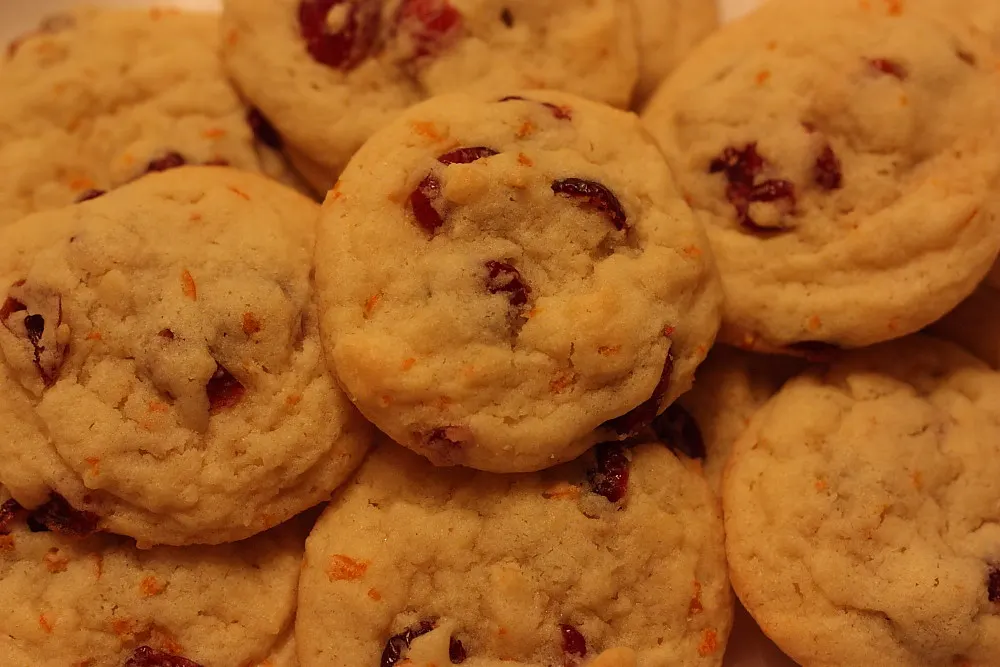
J.l.p.’s cranberry-orange cookies are an open-license visual analogue for the flavor pairing. Trish Rosenquist’s source batch is cut into thinner quarter-inch shortbread rounds.Photo by j.l.p. / Flickr · CC BY 2.0
Makes
30 cookies
Chill
2 hours
Slice
1/4 inch
Bake
10–12 min
This is shortbread built like a winter parcel. The dough is spare and butter-forward, but every small addition announces itself: cranberry catches the teeth, orange rises first in the aroma, almond rounds the fruit, and an optional coat of sugar makes the outside glint.
Trish Rosenquist’s 2015 method takes the opposite route from creamed cookies. Cold butter is cut into flour and sugar until fine, then the bowl is persuaded—briefly, by hand—into a single dough. Two quiet hours in the refrigerator do the rest of the shaping work. Once firm, the log is already portioned in principle; the knife simply reveals thirty rounds.
“A delightfully easy cookie recipe that yields sensational results, built around three small decisions for tender shortbread.”
Cold butter, not creamed butter
It is cut into flour and sugar to fine crumbs, keeping the shortbread compact rather than aerated.
Two different sugar jobs
Three-quarters cup belongs inside the dough; a separate optional bowl gives each slice its crystalline edge.
Pale is the signal
The rounds leave the oven when set, before deep color can trade tenderness for dryness.
Inside the logTart bright rich fragrant
Six dough ingredients, each with a structural job
The outside sugar is optional; the compact cold-butter dough beneath it stays exactly as the archived 2015 source recorded it.
01
Dried cranberries
Half a cup brings tart chew and the red flecks that identify every quarter-inch slice.
Pulse them with one-quarter cup of the measured sugar so they chop cleanly without clinging to the processor blade.02
One orange’s zest
The peel carries concentrated citrus aroma without adding the water that would push shortbread toward another texture.
Take only the orange surface. Stop when the white pith appears, and keep juice out of this preserved 2015 formula.03
Cold butter
One cup is cut through the dry ingredients until the bowl looks like fine, evenly coated crumbs.
Cube it before mixing and keep working patiently; warmth from the final brief hand-knead is what brings the crumbs together.04
Almond extract
One teaspoon bridges tart cranberry, floral orange zest, and rich butter without adding another visible ingredient.
Check the label for allergy needs. The flavoring source varies by brand even when the front simply says almond extract.
Two hours twentyPulse cut knead chill slice set
The long step is the one where nothing moves
Active work is brief. Fine crumbs, a tightly wrapped log, and a full chill make the ten-minute bake dependable.
PULSE
Break down the fruit
Cranberries and one-quarter cup sugar become small, distinct pieces—not a sticky paste.
CUT IN
Make a field of fine crumbs
Cold butter disappears through flour and the remaining measured sugar without being creamed.
KNEAD
Wait for cohesion
Extract, zest, and fruit enter; a short hand-knead turns the sandy bowl into one ball.
2 HR
Firm the wrapped log
A tight two-inch cylinder chills until the butter is solid and the knife can make clean rounds.
1/4 IN
Slice, turn, and sugar
Rotate the log as you cut; mend the occasional cranberry crack and coat only if desired.
10–12
Bake just to set
The tops lose their raw sheen, the edges stay pale, and the tray rest finishes the structure.
Ruby + orange peelSmall pieces, clean slices
The fruit brings the chew; the zest carries the air
The maintained recipe later offered orange juice as a binder. This queued version relies on butter, pressure, and patience, preserving the drier shortbread structure.
Zest only the fragrant orange surface, stopping before the bitter white pith. The 2015 formula uses the zest of one orange and no juice.Photo by Dvortygirl / Wikimedia Commons · CC BY-SA 3.0
Read the bowl and trayPiece crumb log set
Four looks keep a spare dough on course
The recipe’s language is visual because shortbread asks for restraint: stop processing, mixing, and baking before each stage goes too far.
01
Fruit in pieces, not paste
The processor should leave small red bits visible. A jammy mass will streak the dough and resist even distribution.
02
Crumbs as fine as coarse sand
Large butter cubes create weak pockets; an overworked warm bowl loses the source’s cold-butter logic.
03
A firm, compact two-inch log
The cylinder should feel solid after chilling and keep its round profile when the first slice comes away.
04
Pale tops that look dry and set
Do not wait for cookie-wide browning. The rounds are fragile when hot and finish firming during the pan rest.
Before the trayWrap chill portion cool freeze
A cookie designed for the crowded week
The dough can wait for seventy-two hours, and the finished cookies can move from rack to tin or freezer once completely cool.
Mix up to three days ahead
Wrap the shaped log tightly and refrigerate for the source’s maximum 72 hours before slicing.
Bake only the tray you need
A cold log is naturally portionable; return the unused wrapped portion to the refrigerator promptly.
Cool before the tin
Residual warmth creates condensation and softens the sugar coat. Stack only when every round is completely cool.
Freeze for up to three months
The 2015 source explicitly allows freezing. Pack baked cookies airtight with parchment between layers and thaw wrapped.
Cranberry orange shortbread cookies
Thirty pale, sugar-crusted slice-and-bake cookies with dried cranberry, fresh orange zest, almond extract, and a tender cold-butter crumb.
2 1/2 cups all-purpose flour, spooned into the cup and leveled
3/4 cup granulated sugar, divided
1 cup butter, cold and cubed
1 teaspoon almond extract
Zest of 1 orange
1/2 cup dried cranberries
Optional sugar finish
About 1/2 cup additional granulated sugar, for coating the slices
Directions
Heat the oven to 325°F and line a baking sheet with parchment paper. If baking later, prepare the pan while the chilled log rests briefly on the counter.
Put the dried cranberries and 1/4 cup of the measured sugar in a food processor. Pulse only until the fruit breaks into smaller pieces; stop before it becomes a sticky paste. Set the mixture aside.
Combine the flour with the remaining 1/2 cup measured sugar in a large bowl. Add the cold cubed butter and cut it in with a pastry blender or two forks until the mixture resembles very fine crumbs.
Stir in the almond extract, cranberry-sugar mixture, and zest of one orange until the red and orange flecks are evenly distributed.
Use your hands to knead the crumbly mixture gently in the bowl just until it comes together as a ball. The 2015 formula contains no added juice; give the butter time to bind the crumbs before deciding the dough is too dry.
Shape the dough into a compact log about 2 inches in diameter. Wrap it tightly in plastic and refrigerate for 2 hours or up to 72 hours, until firm enough to slice cleanly.
Unwrap the log and cut it into 1/4-inch rounds with a sharp knife, rotating the log a quarter turn every few slices to help it stay round. If a slice cracks at a cranberry piece, press it gently back together.
For the source’s sparkling finish, put about 1/2 cup additional sugar in a shallow bowl and coat each slice lightly. Arrange the cookies on the parchment-lined baking sheet with a little room between them.
Bake at 325°F for 10–12 minutes, just until the surfaces look set. Keep the cookies pale and remove them before the edges take on significant color; overbaking turns tender shortbread dry.
Cool the cookies on the baking sheet for several minutes so the fragile hot rounds can firm, then move them to a wire rack and cool completely before stacking or storing.
Source and technique references: the saved My Recipe Magic card for legacy ID 2501862766, its Trish Rosenquist byline, recipe 81290 identity, 30-serving yield, formula, and Mom On Timeout attribution; Trish’s November 16, 2015 primary snapshot for the original no-juice formula, full method, 2-hour chill, 10–12-minute bake, storage, and publication record; the maintained author page for its later optional-juice revision and clarified spoon-and-level flour direction; King Arthur Baking’s cold-butter technique discussion for reverse-creaming, limited aeration, and shape retention, its slice-and-bake guide for firm dough, parchment, rotation during cutting, and spread control, and the University of Minnesota Extension’s raw-flour safety guidance. The queued proportions, no-juice identity, 30-cookie yield, and cold-butter method are unchanged.