Pantry dip, bright finishChickpea · sesame · lemon · heat

Eight scoops, one long blend

Copycat Trader Joe’s Mediterranean Hummus

Canned chickpeas, tahini, lemon, garlic, cumin, olive oil, and red pepper blended with hot water until loose and creamy.

Blend the hummus
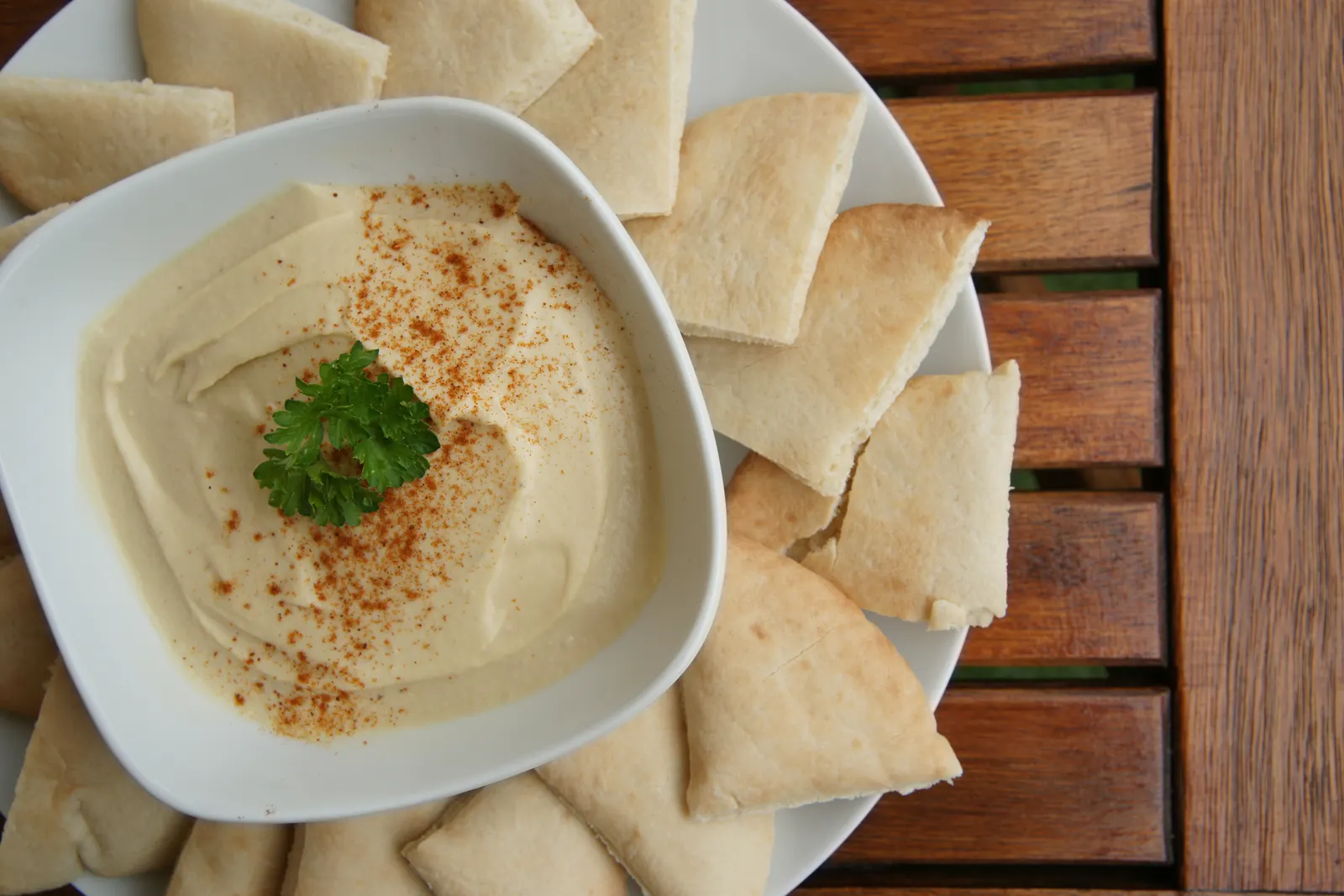
A bowl of smooth hummus dusted with paprika and parsley, surrounded by pieces of pita bread.
An illustrative bowl shows the smooth, scoopable finish this long food-processor blend is aiming for; pita turns it into an immediate snack.Photo by Popo le Chien · CC0 1.0
Makes
8 servings
Active
10 min
Cook
None
Blend
3–4 min

This copycat is built on abundance rather than austerity. Two cans of chickpeas meet a half cup of fresh lemon juice, six tablespoons olive oil, a spoonful of zest, and enough hot water to turn the food processor from chopper into whip. Cumin and red pepper sit low in the blend; the first clear impression is citrus.

Annalise Thomas published the formula in 2013 for cooks who could not make a Trader Joe’s run. The proportions stay intact here, including lemon where later copies sometimes say lime and the full hot-water measure. The useful editorial work is all in the cues: chop the garlic alone, pour while the blade moves, scrape once, and give the machine the complete three to four minutes.

“Annalise Thomas called this 2013 recipe a close second for cooks who could not get to Trader Joe’s whenever they wanted.”

Chop the garlic first

A few empty-bowl pulses keep one raw clove from surviving as a sharp fragment in the finished dip.

Pour water through motion

The full half cup enters after 30 seconds, while the blade is already dispersing lemon, tahini, oil, and chickpea starch.

Stay for the long blend

Three to four continuous minutes takes the mixture from grainy paste to a pale, spoon-set ribbon.

Inside the blendBean fat acid water

Four decisions make the bowl

The ingredient list is short, but each measure has a clear structural job in the final spoonful.

01

Canned chickpeas

Two drained 12-ounce cans make the body of the recipe and keep it genuinely pantry-fast.

Drain well before measuring anything else; retained can liquid would change the source’s deliberate half-cup water addition.
02

Tahini + olive oil

Two tablespoons sesame paste bring nutty depth while six tablespoons olive oil give the copycat its rich, loose finish.

Stir the tahini in its jar first so separated sesame oil and solids enter the processor in the intended proportion.
03

Lemon, two ways

A half cup juice supplies decisive acidity; a tablespoon zest keeps fresh citrus aroma above the chickpeas and cumin.

Zest before squeezing and avoid the bitter white pith. The 2013 source uses lemon even though later copies sometimes print lime.
04

Hot water

One half cup loosens tahini, hydrates the puree, and lets the blade make a softer, more flowing hummus.

Stream it through the feed tube after 30 seconds. Adding it under motion prevents a watery layer from pooling below the paste.

The processor clockDrain pulse blend pour scrape read

Ten active minutes, four of them under the blade

Set every measure beside the machine first; once the blade starts, the recipe should move without a pause.

  1. 0:00

    Drain, zest, juice, measure

    Ready every ingredient and put the hot water in a safe pouring cup.

  2. 0:04

    Pulse the garlic alone

    Break down the single clove before chickpeas can cushion it away from the blade.

  3. 0:05

    Start the full blend

    Add every hummus ingredient except hot water and run the processor continuously.

  4. 0:05½

    Stream in hot water

    Pour the measured half cup through the feed tube in a slow, controlled ribbon.

  5. 0:07

    Scrape once

    Return the thicker band from the bowl wall and lid to the path of the blade.

  6. 0:09

    Stop at pale and glossy

    The puree should settle from a spoon in a thick ribbon, without visible chickpea grit.

The serving languageSweep oil spice crunch

A creamy field with room for contrast

Restaurant hummus with olive oil, chickpeas, lemon, and pieces of flatbread on a wooden table.
A restaurant plate offers the same useful cues: a broad creamy sweep, a gleam of olive oil, and enough structure to hold chickpeas and spice.Photo by T.Tseng · CC BY 2.0
The topping stays optional

Pine nuts and parsley recall the packaged dip, but the preserved 2013 blend ends before either one enters.

Shelled pine nuts scattered across a pale work surface.
Toasted pine nuts are an optional serving echo of the packaged hummus, not an ingredient in Annalise Thomas’s preserved 2013 formula.Photo by Paul Goyette · CC BY-SA 2.0

Processor cuesChopped moving pale relaxed

Read smoothness instead of the stopwatch alone

The three-to-four-minute range matters; these four visible checks decide exactly where to stop.

01

No garlic shard after the first pulses

The clove should be finely chopped before the heavier ingredients enter; one large raw piece can dominate an otherwise even bowl.

02

A loose vortex after the water

The puree should begin circulating instead of riding rigidly around the bowl. Scrape once if a dry ring clings above the blade.

03

A pale, uninterrupted surface

The finished hummus should look lighter than the starting paste and show no coarse flecks of chickpea when dragged with a spoon.

04

A ribbon that relaxes

Lift a spoonful: it should fall heavily, then soften into the bowl. A stiff peak means the long blend has not done all its work.

Serve + keepShallow separate covered dated

A cold bowl with a short calendar

Hummus is ready as soon as it is blended, but clean storage and visible toppings make the next serving better.

Serve it shallow

A broad bowl gives the olive oil and optional garnish room without burying the hummus under toppings.

Keep toppings separate

Add parsley and toasted pine nuts at the table so leftovers stay smooth and every eater can see the optional allergen.

Refrigerate within two hours

Move the puree to a clean airtight container promptly and keep it at 40°F or below.

Use within 3–4 days

That conservative window follows Food Network Kitchen’s homemade-hummus guidance; discard sooner if spoilage appears.

Copycat Trader Joe’s Mediterranean Hummus

A lemon-forward canned-chickpea hummus with tahini, olive oil, cumin, red pepper, and a silky hot-water blend.

HummusChickpeasTahiniLemonGarlicFood ProcessorNo CookVegan

Ingredients

Hummus

  • 2 (12-ounce) cans garbanzo beans, drained
  • 1 garlic clove
  • 6 tablespoons extra-virgin olive oil
  • 2 tablespoons well-stirred tahini
  • 1 1/4 teaspoons fine salt
  • 1 tablespoon finely grated lemon zest
  • 1/2 cup freshly squeezed lemon juice
  • 1/4 teaspoon ground cumin
  • 1/2 teaspoon red pepper flakes
  • 1/2 cup hot water

Optional finish, not part of the source formula

  • Toasted pine nuts, chopped parsley, extra-virgin olive oil, and red pepper flakes, as desired

Directions

  1. Drain the garbanzo beans. Stir the tahini in its jar until uniform, finely grate 1 tablespoon lemon zest, squeeze 1/2 cup lemon juice, and measure 1/2 cup hot water into a heatproof cup.
  2. Fit the food processor with its metal blade. Add the garlic clove and pulse several times, until finely chopped and no large piece rides above the blade.
  3. Add the drained garbanzo beans, olive oil, tahini, salt, lemon zest, lemon juice, cumin, and red pepper flakes. Cover and run the processor continuously.
  4. After the first 30 seconds, pour the hot water through the feed tube in a slow, steady stream while the processor keeps running. Stop once to scrape the bowl and the underside of the lid, then continue processing for 3 to 4 minutes total.
  5. Stop when the hummus looks pale, glossy, and evenly smooth. It should fall from a spoon in a thick ribbon and settle softly rather than hold a stiff mound. If the processor bowl feels hot, pause briefly instead of warming the hummus further.
  6. Spoon into a shallow bowl. Serve as written, or finish with a small drizzle of olive oil, red pepper flakes, chopped parsley, and toasted pine nuts. For storage, transfer promptly to an airtight container and refrigerate.

Source and research references: Annalise Thomas’s queued 2013 My Recipe Magic card for the author, date, eight-serving yield, exact lemon-based formula, hot-water stream, and 3–4 minute processing method; Food Network Kitchen’s homemade hummus for a corroborating five-minute puree, serving texture, and 3–4 day refrigeration window; Michael Solomonov’s Zahav hummus method for the value of extended processing and pausing if the machine warms; Trader Joe’s hummus podcast transcript for the product family’s chickpea, tahini, oil, and spice framework; and the FDA guide to major allergens and label reading for sesame and optional pine-nut disclosure.

Image credits

Photography is used under open licenses with attribution: Popo le Chien, T.Tseng, and Paul Goyette.