One-pot comfortShell · beef · tomato

Fourteen pantry lines · one Dutch oven

Conchitas con Carne

Ground sirloin and shell pasta simmer together with tomato sauce, bell pepper, onion, bouillon, cumin, chile, and paprika.

Cook the conchitas
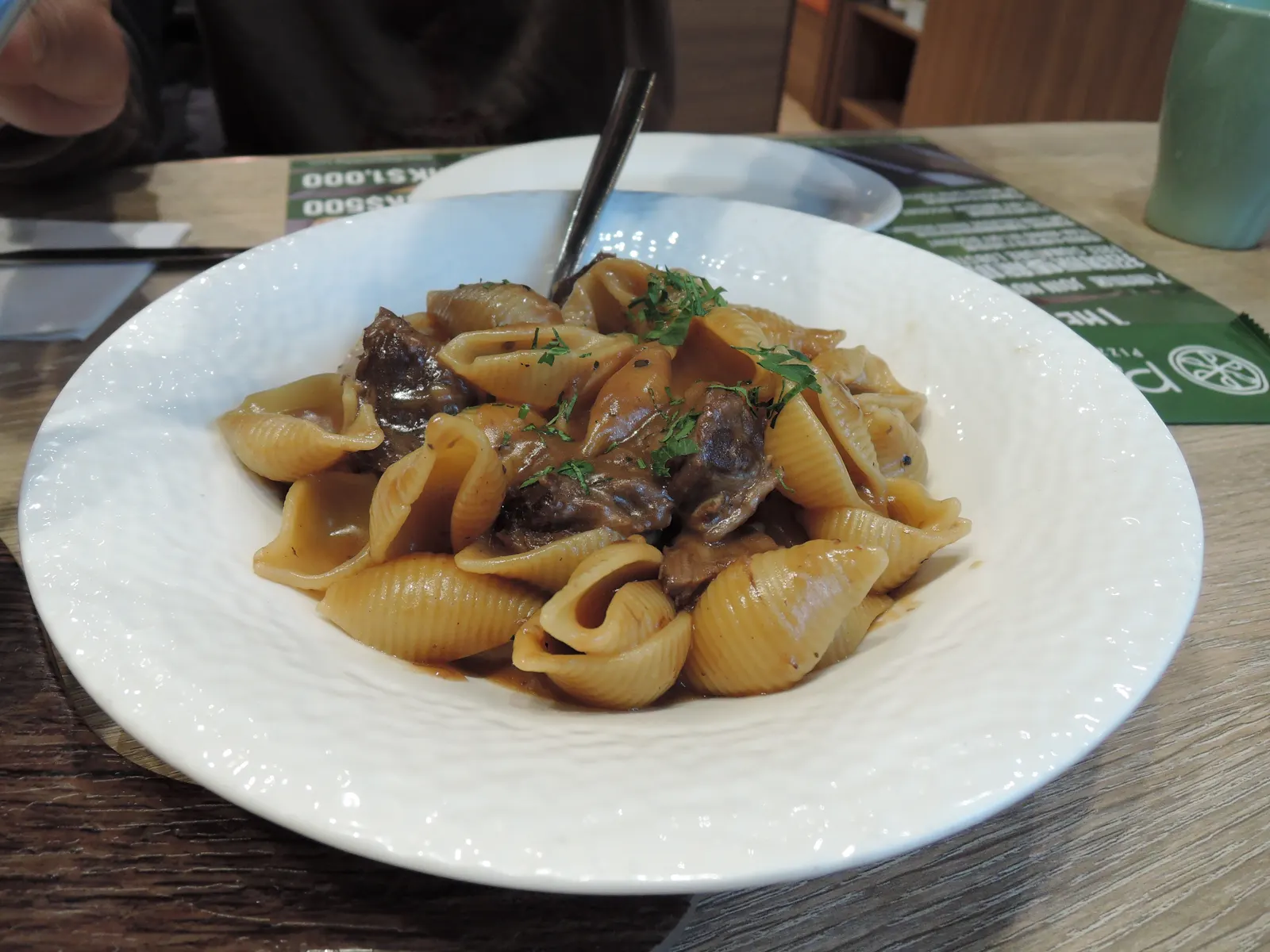
Large shell pasta with chunks of beef in a brown sauce on a white plate.
An illustrative beef-and-shell pasta, not the source dish: its large shells, beef chunks, brown sauce, and herb garnish differ. The queued recipe uses small shells, crumbled sirloin, tomato sauce, bell pepper, and warm ground spices.Photo by Geoffreyrabbit · CC BY-SA 4.0
Makes
4–6 servings
Shells
2 cups, dry
Simmer
5 + 10 min
Beef
160°F

The name promises shells and meat; the pot delivers more than their sum. Dry conchitas pass through the browned sirloin before any water arrives, picking up fat and toast on their ridges. Tomato sauce colors the broth, a bouillon cube gives it reach, and cumin, chili powder, paprika, and garlic turn a short ingredient list into a warm weeknight stew.

Sylli-Designs published the recipe in a single compact paragraph in 2013. Its economy is part of the appeal, but it leaves the cook to judge three crucial transitions: when the beef is safe, how far to toast the shells, and how much of the water range the pot actually needs. This edit keeps every source proportion and makes those decisions visible.

“A plainspoken Dutch-oven supper: brown the beef, toast the shells in the drippings, add tomato and spice, then simmer everything together until the pasta is tender.”

Shells cook in the pot

Do not pre-boil them. Their starch gives the tomato-bouillon liquid its light stew body.

Toast before the water

A short turn through the beef and drippings gives the dry ridges a few golden spots without taking them past pale amber.

Keep the finish loose

The author calls this a stew. Stop when the shells are tender and broth still gathers around them, not when the pot looks dry.

The one-pot mapBeef pocket broth warmth

Four anchors inside every little shell

Nothing here is garnish. Each source measure either gives the stew body, carries seasoning, or sets the texture of the finished bowl.

01

Ground sirloin

One lean pound makes this a full supper while leaving the tomato, pepper, and spices visible rather than submerged in fat.

Break it into small crumbles and verify 160°F before the pot fills with shells and broth.
02

Small shell pasta

Two dry cups provide both the recipe’s name and its texture: ridges outside, a pocket for seasoned broth and beef inside.

Stir from the bottom after water goes in and separate any shells that nest together.
03

Tomato sauce + bouillon

Four ounces of tomato tint a much larger volume of beef broth; this is a ruddy stew, not a thick red pasta sauce.

Crumble the cube before adding water so no salty fragment survives in one bowl.
04

Cumin, chile, paprika, garlic

Equal one-teaspoon measures create the warm pantry profile, with cayenne left optional and salt deliberately modest.

Mix the powders through the beef and shells before adding liquid so they disperse without dry clumps.

Dutch-oven rhythm160 toast cover tender

Brown, toast, season, then simmer in two acts

The source’s clock begins only after browning. Treat the transitions—not a guessed total time—as the reliable sequence.

  1. BROWN

    Cook and crumble the sirloin

    Work over medium heat until no raw meat remains, verify 160°F, then drain excess fat.

  2. 1–3 MIN

    Toast the shells briefly

    Stir the dry pasta through the beef until glossy with only pale golden edges.

  3. SEASON

    Build the pantry base

    Add onion, pepper, every spice, crumbled bouillon, and finally the tomato sauce.

  4. COVER

    Add water only to the line

    Use enough from the 4–5 cups to cover the mixture and bring the pot to a steady simmer.

  5. 5 MIN

    Simmer with the lid off

    Start the pasta uncovered, then stir from the bottom before closing the pot.

  6. 10 MIN

    Cover until tender and loose

    Stir once or twice and add a splash of reserved water only if the shells need it.

Curve + greenThe pocket and the small accent

A shell to catch the broth, a pepper to lift it

Dry conchiglie shell pasta visible through a clear package.
The shell shape is the point: each hollow catches a little seasoned tomato broth and crumbled beef. The source calls only for two cups of uncooked shells, without naming a brand or exact size.Photo by MOs810 · CC BY-SA 3.0
Conchitas means little shells

The shape is not decorative shorthand. Its hollow center carries the loose tomato-beef broth that a straight noodle would leave behind.

Chopped green bell pepper spread across a patterned plate.
The original says one-quarter bell pepper, sliced. Green pepper is shown for its savory edge, but the source does not prescribe a color.Photo by KISUMAR123 · CC0 1.0

At the simmerDry thin catch salty

Four small corrections before the pot drifts

A water range and a covered pasta pot demand attention. These fixes preserve the source instead of adding new ingredients.

If the shells are hard and the pot is dry

Use the reserved water

Add a small splash, cover again, and keep the simmer gentle until the centers lose their chalky bite.

If the broth looks thin

Give it one quiet minute

Let the cooked pot stand off heat before changing anything; shell starch thickens the liquid as it settles.

If the bottom starts catching

Lower heat and stir deeply

Scrape with a flat wooden spoon, then keep the covered simmer low enough that bubbles remain steady rather than violent.

If the first taste seems undersalted

Taste after the cube dissolves

Bouillon salt and pasta absorption need time to register. Adjust only at the end, never by adding another cube automatically.

Serve + storeLadle cool loosen reheat

Keep the stew loose from supper to leftovers

Fresh conchitas are brothy; chilled conchitas are absorbent. A shallow container and a splash of water protect both safety and texture.

Serve it as a stew

Ladle while the broth still moves around the shells. The source does not call for cheese, herbs, tortillas, or rice.

Expect tomorrow’s bowl to tighten

Pasta keeps absorbing liquid in the refrigerator. Reheat gently with a splash of water rather than accepting a dry mass.

Cool it promptly

Move leftovers into shallow covered containers within two hours so the beef-and-pasta mixture chills quickly.

Keep 3–4 days

Refrigerate at 40°F or below and reheat leftovers to 165°F, stirring so the center heats evenly.

Conchitas con carne

Ground sirloin and dry shell pasta cooked together in a tomato-beef broth with bell pepper, onion, cumin, chile, paprika, and garlic.

Ground BeefPastaOne-PotMexican AmericanComfort FoodWeeknight Dinner

Ingredients

Beef, shells, tomato, and seasoning

  • 1 pound ground sirloin
  • 2 cups uncooked shell pasta
  • 4 ounces tomato sauce
  • 1/4 small onion, chopped
  • 1/4 bell pepper, sliced
  • 4–5 cups water, enough to cover the mixture
  • 1 beef bouillon cube
  • 1 teaspoon ground cumin
  • 1 teaspoon chili powder
  • 1 teaspoon paprika
  • 1/4 teaspoon cayenne pepper, optional
  • 1 teaspoon garlic powder
  • 1/4 teaspoon salt
  • 1/2 teaspoon black pepper

Directions

  1. Set a Dutch oven over medium heat. Add the ground sirloin and break it into small crumbles with a wooden spoon. Cook until no raw portion remains and the beef reaches 160°F (71°C), then drain or carefully blot away excess fat as the source directs.
  2. Return the pot to medium heat. Add the uncooked shell pasta to the beef and stir for 1–3 minutes, until the shells are glossy and a few edges begin to look lightly toasted. Keep them moving so the dry pasta does not scorch.
  3. Add the chopped onion, sliced bell pepper, cumin, chili powder, paprika, optional cayenne, garlic powder, salt, and black pepper. Crumble in the bouillon cube and stir until the seasonings are evenly distributed.
  4. Pour in the tomato sauce and stir, scraping the bottom of the pot so the bouillon and spices dissolve into the tomato.
  5. Add enough of the 4–5 cups water to cover the beef-and-shell mixture. Bring it to a lively simmer, then reduce the heat enough to keep the liquid bubbling steadily without boiling over.
  6. Simmer uncovered for 5 minutes. Stir once from the bottom, checking that shells are not nesting inside one another or sticking to the pot.
  7. Cover and simmer for about 10 minutes more, stirring once or twice, until the shells are tender and the liquid has become a loose tomato-beef broth. If the pot tightens before the pasta is tender, add a small splash from the remaining measured water.
  8. Taste only after the pasta is fully cooked. Adjust salt or pepper if needed, then ladle into bowls and serve hot. The source’s author describes the finished dish as a stew rather than a dry pasta.

Source and research references: Sylli-Designs’ January 15, 2013 primary post for the exact fourteen-line ingredient list, Dutch-oven method, shell-toasting step, two-part simmer, and author replies confirming that the pasta cooks in the stew; the queued October 20, 2018 My Recipe Magic card for legacy ID 2613730578, its 4–6 serving yield, and link back to the same source; Mely Martínez’s Mexican sopa de conchas guide for independent cultural and technique context around shell pasta toasted before simmering in tomato broth; and USDA FSIS guidance on 160°F ground beef, prompt chilling, 3–4 day refrigeration, and 165°F reheating. No source proportion was changed.

Image credits

Photography is used under open licenses with attribution: Geoffreyrabbit, MOs810, and KISUMAR123.