
Oven-crisp supperCoconut · crumb · butter

6 ingredients · 5 servings

Coconut Chicken

Chicken tenders dipped in egg and sweetened condensed milk, pressed into coconut crumbs, glossed with butter, and baked until crisp.

Bake the tenders
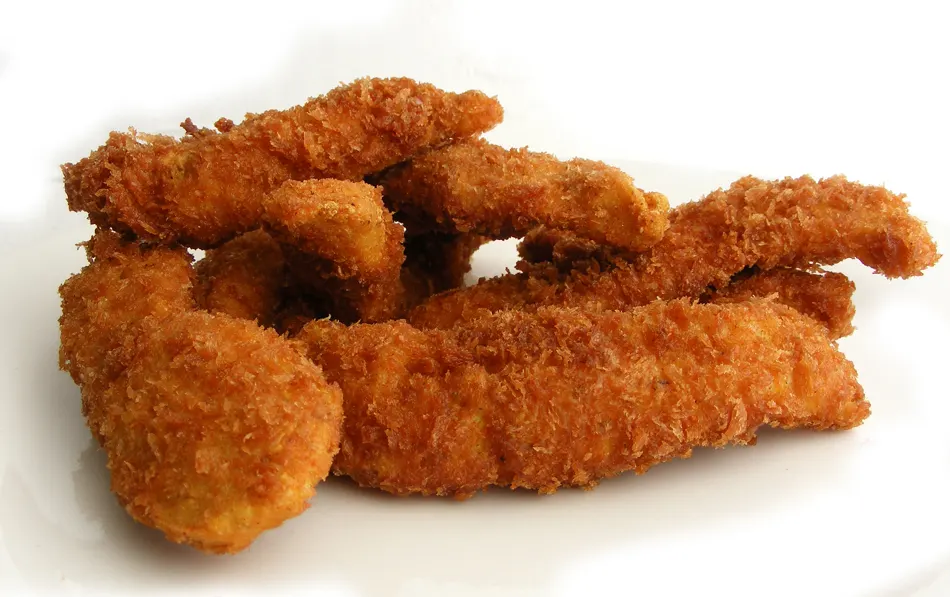
A pile of crisp breadcrumb-coated chicken strips on a white plate.
The visual cue is a deeply textured crumb coat; the source recipe reaches it in the oven rather than the fryer shown in this reference image.Photo by FotoosVanRobin · CC BY-SA 2.0
Oven
400°F
Bake
30–35 min
Makes
5 servings
Method
No frying

The clever move here is not coconut alone—it is the decision to skip the skillet. Caramel Potatoes dips chicken tenders in egg and sweetened condensed milk, presses on coconut and crumbs, then lets melted butter do the browning work in a hot oven.

The source formula is short and specific enough to leave alone. What it needs is a more readable coating rhythm and a precise finish: drain each dipped tender, keep the pieces apart, turn them once, and use 165°F rather than color to decide when the chicken is done. The optional broiler is only the last flash, never a substitute for the thermometer.

“Adults and kids will come together for dinner and can both enjoy Coconut Chicken. It is a kid friendly dinner, but the flavors are great.”

Let it drip

A thin wet coat holds crumbs; a heavy one puddles and loosens them.

Press, do not pack

Gentle pressure secures coconut and crumbs without making a dense shell.

Temperature wins

The crust may brown before the center is safe, so prove 165°F in the thickest tender.

Ingredient editCenter · glue · texture · gloss

Four layers build the crust

Each part carries one structural job, from the tender chicken inside to the butter that colors the surface.

01

Chicken tenders

Ten to twelve similarly sized pieces create the quick-cooking center of the five-serving meal.

If the pieces vary widely, begin checking the smallest at 30 minutes and keep larger ones in the oven until they reach 165°F.
02

Egg and condensed milk

The egg supplies structure while the thick milk carries sweetness and gives the dry coat something to grip.

Whisk until no streaks remain, then let each dipped tender drain for a moment before it reaches the crumbs.
03

Coconut and crumbs

Coconut brings chew and aroma; breadcrumbs or panko build the dry, crisp framework around it.

Stir the bowl again between pieces because coconut and crumbs can separate as the coating station is used.
04

Melted butter

Half a cup supplies the surface fat that frying would otherwise provide, helping the oven brown the crust.

Pour in a thin, even stream across all the tenders rather than saturating only the first few.

The dry bowlWhite flake meets golden crumb

Keep the coating loose enough to cling

Fresh white coconut flakes on a green plate beside a vegetable peeler.
The source simply says coconut, without specifying its cut or sweetness; choose a flake that will mix evenly through the crumbs.Photo by Miansari66 · CC0 1.0
The source stays open

It names “coconut” and “bread crumbs or panko” without prescribing flake size or sweetness. Choose, record, and keep the ratio unchanged.

Small pieces of bread in a clear bowl on a wooden work surface.
Breadcrumbs bring the dry structure. Panko is the source-authorized alternative when a more open, jagged crust is wanted.Photo by Alabama Extension / Janet Guynn · CC0 1.0

Oven rhythmLine whisk dip press turn test

One turn between wet coat and crisp finish

The thirty-five-minute ceiling comes from the source; the thermometer decides whether each piece actually needs it.

  1. 0:00

    Heat and line

    Bring the oven to 400°F and cover a rimmed sheet with parchment.

  2. MIX

    Build two shallow stations

    Whisk egg with condensed milk; stir coconut with breadcrumbs or panko.

  3. COAT

    Dip, drain, press

    Wet each tender, let the excess fall away, then cover both sides with the dry mixture.

  4. 0:15

    Turn the pieces

    After the first 15 minutes, flip every tender with clean tongs for more even browning.

  5. 0:30

    Begin checking 165°F

    Probe the center of the thickest pieces and continue baking up to 5 minutes as needed.

  6. +1–2

    Broil only if wanted

    Once safely cooked, use a watched broil for extra color, then serve at once.

Doneness cuesCraggy dry golden 165°F

Look for separation, color, and a clean release

The crust gives useful visual signals, but only the center temperature confirms the chicken is ready.

01

Crumbs distinct, not pasted

The coating should show separate flecks of coconut and crumbs rather than a smooth wet batter.

02

Dry edge after the turn

At 15 minutes, the underside should release from the parchment and look set enough to flip cleanly.

03

Golden ridges

The high points color first. Pale valleys are fine when the crust is dry and the chicken has reached temperature.

04

165°F at the center

The safe finish is a thermometer reading in the thickest tender, not the color of the meat or coating.

Keeping planServe cool cover reheat

The crust favors now, the leftovers favor dry heat

Steam softens breading, so store safely and choose a dry reheating method when texture matters.

Best straight from the oven

The buttered coconut crust is crispest before steam from the hot chicken migrates outward.

Cool and cover promptly

Move leftovers into a shallow covered container and refrigerate within two hours.

Keep 3–4 days

FoodSafety.gov gives cooked poultry this refrigerator window at 40°F or below.

Reheat to 165°F

Use an oven or air fryer when possible for a drier crust; confirm the chicken is hot at its center.

Coconut Chicken

Sweetened-condensed-milk chicken tenders coated in coconut crumbs, buttered, turned once, and baked crisp.

Chicken TendersCoconutBaked ChickenPankoFamily DinnerSix Ingredients

Ingredients

Coconut chicken

  • 1 1/2 pounds chicken tenders (10–12 tenders)
  • 1 large egg
  • 1/2 can sweetened condensed milk (can size not specified by source)
  • 1 1/4 cups coconut (type not specified by source)
  • 1 cup breadcrumbs or panko
  • 1/2 cup butter, melted

Directions

  1. Heat the oven to 400°F (204°C). Line a rimmed baking sheet with parchment paper. Keep raw-chicken tools and surfaces separate from anything that will touch the cooked tenders.
  2. In one shallow dish, whisk the egg with the sweetened condensed milk until smooth. In a second shallow dish, stir the coconut and breadcrumbs or panko together until evenly distributed.
  3. Working one at a time, dip each chicken tender in the egg-milk mixture and let the excess drip back into the dish. Set it in the coconut crumbs, turn it, and press gently so both sides carry an even coat.
  4. Arrange the coated tenders on the prepared sheet with a little space between them. Pour the melted butter evenly over the tops.
  5. Bake for 15 minutes. Turn every tender with clean tongs, then bake for another 15–20 minutes. Near the early end of that range, check the thickest pieces in their centers; all poultry must reach 165°F (74°C).
  6. For a crisper surface, broil only after the chicken reaches 165°F, watching continuously for a minute or two because coconut and condensed milk brown quickly. Serve immediately.

Source and technique references: Caramel Potatoes’ 2013 Coconut Chicken card, Jeff Mauro and Food Network Kitchen’s baked panko-coconut coating method, FoodSafety.gov on 165°F poultry doneness and 3–4 day cooked-poultry storage, and Utah State University Extension on prompt cooling and 165°F reheating.

Image credits

Photography is used under open licenses with attribution: FotoosVanRobin, Miansari66, and Alabama Extension / Janet Guynn.