Three-layer comfortChicken · sage · dumplings

Pour twice · stir neither

Chicken and Dumpling Casserole

Cooked chicken, sage, Bisquick batter, and creamy broth go into one 9-by-13-inch dish in three deliberate layers, then bake into a golden dumpling-topped casserole.

Bake the casserole
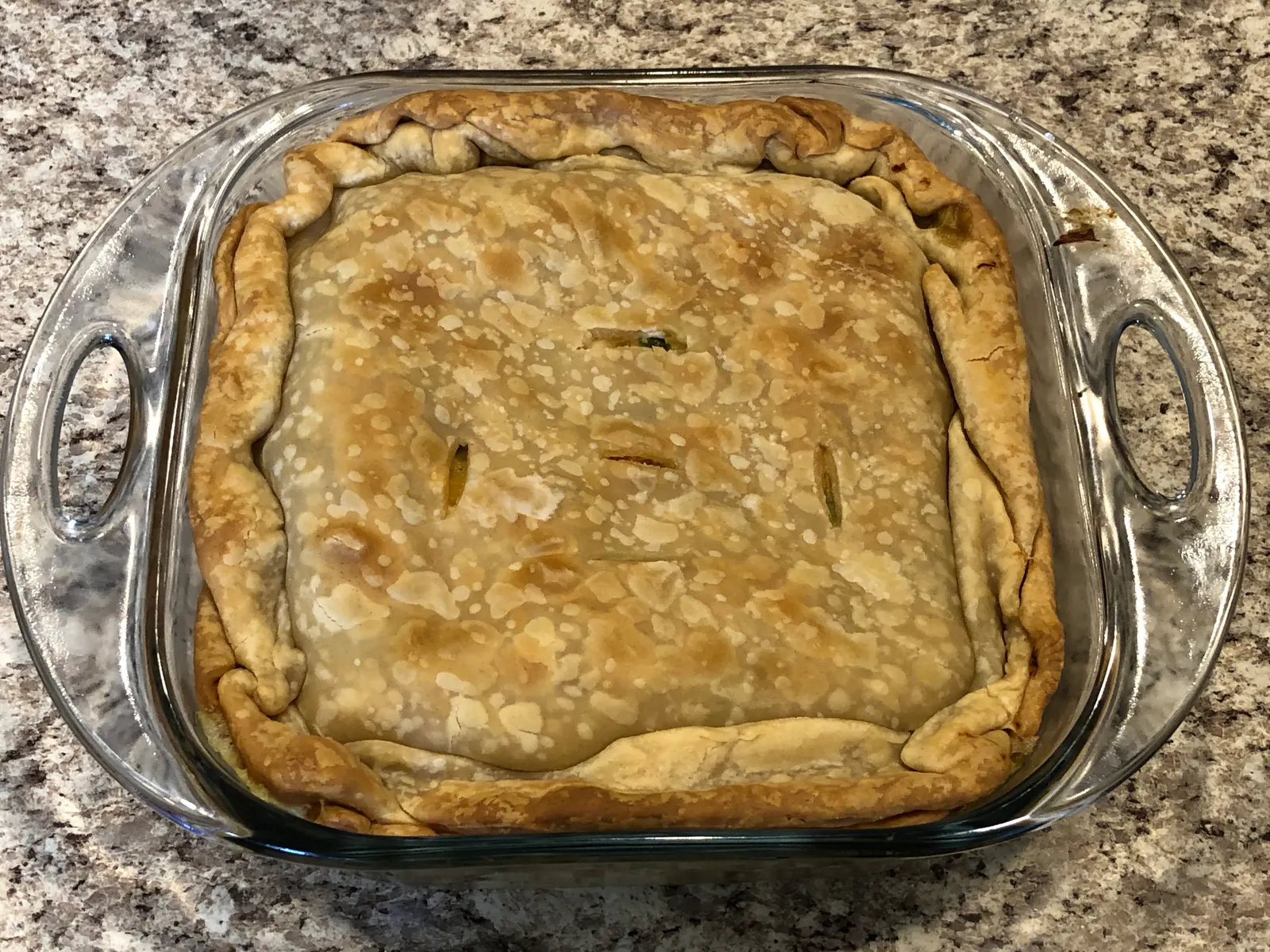
A large rectangular homemade chicken pot pie casserole baked until golden.
An illustrative chicken casserole offers the right scale and golden finish. Annette Daffin’s recipe is not pastry-covered: its top forms from poured Bisquick batter.Photo by Famartin · CC BY-SA 4.0
Bake
30–40 min
Serves
12 servings
Layers
3, never stirred
Dish
9 × 13 inch

The strange moment is also the important one: the pan looks far too loose just before it enters the oven. Chicken rests in sage-scented butter, pale batter covers it, and creamy broth floods the surface. The correct response is to put down the spoon.

Annette Daffin’s 2013 casserole is built on separation. Heat moves the gravy down and the leavened batter up, turning pantry ingredients into a spoonable chicken supper with a soft golden dumpling cap. Its economy is not about shortcuts alone; it is about refusing one familiar motion at exactly the right time.

“The secret of this is not to stir anything. That’s what makes your dumplings. When you dish it out, you have your dumplings on top.”

Layer one

Melted butter, shredded cooked chicken, black pepper, and dried sage make the savory floor.

Layer two

Bisquick and whole milk become a pourable batter that stays separate from the chicken.

Layer three

Broth, condensed soup, bouillon, and salt go on last; the oven resolves the loose-looking stack.

The casserole setChicken batter sage gravy

Four anchors hold the layers in place

Every ingredient stays in Daffin’s original proportion. The useful refinement is knowing which layer each one belongs to.

01

Cooked chicken

Two shredded breasts make the casserole a pantry supper; Daffin specifically permits rotisserie chicken.

Remove skin and bones, shred evenly, and spread the meat rather than packing it into clumps.
02

Bisquick

The baking mix supplies the flour, fat, salt, and leavening that become the dumpling layer.

Whisk with milk only until dry pockets disappear. King Arthur’s biscuit guidance supports restrained mixing for tenderness.
03

Sage

Half a teaspoon seasons the chicken layer directly, giving the casserole its roast-dinner center.

Scatter it evenly before any batter is poured; stirring it into the liquid would undo the source architecture.
04

Creamy broth

Condensed soup, broth, and bouillon form the gravy while the batter rises through and above it.

Taste before adding more salt: all three packaged ingredients can contribute sodium.

Mise for no-stir cookingCooked measured separate ready

Prepare both pours before the butter melts

Once chicken reaches the dish, assembly should move in one direction. Separate bowls make the source order unmistakable.

The forty-minute transformationMelt spread pour pour bake

Three layers become one supper in the oven

The clock starts the doneness check. Color, movement, edge bubbles, and center temperature finish it.

  1. 0:00

    Melt the butter

    Use the warming oven and remove the glass dish carefully as soon as the half stick liquefies.

  2. 0:03

    Build the chicken floor

    Spread shredded cooked chicken into the butter and season with pepper and sage. Do not stir.

  3. 0:06

    Pour the batter

    Whisk Bisquick with whole milk, pour slowly from edge to edge, and leave the chicken undisturbed.

  4. 0:09

    Pour the gravy

    Blend broth, soup, granules, and salt, then pour it across the batter without mixing.

  5. 0:39

    Start reading the center

    Look for gold and edge bubbles, then require a set center and 165°F in several places.

  6. +5 min

    Let the boil settle

    A short stand lets the gravy calm and gives the dumpling layer a cleaner spoonful.

Open the centerGolden above creamy below

The top sets while gravy gathers underneath

A serving of chicken casserole with creamy gravy and a browned top.
This illustrative pot-pie serving includes vegetables and pastry that are not in Daffin’s formula, but it makes the useful finish cues visible: hot gravy, tender chicken, and a fully baked top.Photo by Famartin · CC BY-SA 4.0
The structural rule

Pour slowly enough to cover the pan, then stop. A spoon would erase the three-layer method before heat has a chance to do its work.

A deeply browned whole chicken turning on a rotisserie spit.
Daffin explicitly welcomes store-bought rotisserie chicken. Remove the skin and bones, then shred the cooked meat before assembly.Photo by Joe Schneid · CC BY 3.0

The finish stackGold bubble set probe

Four readings decide when the pan is ready

No single cue is enough for a deep, creamy casserole. Read the surface and the center together.

01

Gold across the top

The surface should show an even biscuit-gold cast, not a pale wet lake or scorched rim.

02

Bubbles at the edge

Creamy gravy should be visibly hot around the perimeter, evidence that the lower layer has heated through.

03

No wet center

The middle can remain soft and dumpling-like, but it should not move like uncooked batter when the dish is nudged.

04

165°F in several places

FoodSafety.gov sets 165°F for poultry casseroles. Check the center without letting the probe touch glass.

The holding planPrep assemble cool reheat

Keep the convenience without soaking the batter

This supper welcomes cooked chicken and measured components, but the wet layers should meet only when the oven is ready.

Prep parts, not layers

Shred chicken and measure ingredients ahead, but keep batter and gravy separate until the oven is hot.

Serve after five minutes

The source is bubbling-hot at the finish; a brief stand makes the gravy easier to portion.

Cool shallow within two hours

Move leftovers out of the deep baking dish so they cool quickly and refrigerate promptly.

Keep three to four days

Reheat only what you need to 165°F. Use a moderate oven when preserving the top texture matters.

Chicken and dumpling casserole

Annette Daffin’s twelve-serving, three-layer chicken casserole with sage, Bisquick dumplings, and creamy broth.

ChickenCasseroleDumplingsBisquickComfort FoodOne-Dish Dinner

Ingredients

Chicken layer

  • 2 cooked chicken breasts, shredded (store-bought rotisserie chicken is welcome)
  • 1/2 stick (4 tablespoons) butter
  • 1/2 teaspoon dried sage
  • 1 teaspoon black pepper

Dumpling and gravy layers

  • 2 cups Bisquick baking mix
  • 2 cups whole milk
  • 2 cups chicken broth
  • 1 standard can condensed cream of chicken soup, preferably herbed if available
  • 3 teaspoons chicken bouillon granules
  • 1/2 teaspoon salt, or more to taste

Directions

  1. Heat the oven to 350°F (175°C). Put the butter in a 9-by-13-inch casserole dish and place it in the warming oven just until melted; remove the hot dish carefully.
  2. Spread the shredded cooked chicken evenly over the melted butter. Sprinkle the black pepper and dried sage across the chicken. Do not stir.
  3. In a small bowl, whisk the Bisquick and whole milk only until no dry pockets remain. Slowly pour the batter over the chicken from edge to edge. Do not stir or smooth it into the chicken.
  4. In a medium bowl, whisk the chicken broth, bouillon granules, condensed cream of chicken soup, and 1/2 teaspoon salt until blended. Taste the packaged broth and soup mixture before adding any extra salt.
  5. Slowly pour the creamy broth over the Bisquick layer. Do not stir. The loose, layered appearance is intentional.
  6. Bake uncovered for 30 to 40 minutes, until the top is golden brown, the center is set rather than wet, the gravy bubbles at the edges, and several readings in the center reach 165°F (74°C).
  7. Let the casserole stand for 5 minutes before serving so the bubbling gravy can settle around the dumpling layer.

Source and technique references: Annette Daffin’s April 30, 2013 My Recipe Magic card for legacy ID 2500645074, the exact title, byline, twelve-serving yield, ten-item formula, original description, and first layer; the LePick Kroeger 2020 community cookbook reproduction for the complete matching three-layer directions and 30–40-minute bake; King Arthur Baking’s biscuit guide for restrained mixing and tenderness; MedlinePlus / Food Hero’s tested casserole for independent golden-brown dumpling and two-hour refrigeration guidance; and FoodSafety.gov for the 165°F poultry-casserole and leftover temperatures and shallow-container, four-day leftover guidance. The ingredient formula and source bake remain unchanged; only a five-minute stand and explicit safety cues are added.

Image credits

Photography is used under open licenses with attribution: Famartin, Famartin, and Joe Schneid.