Sticky supper, two oven gearsHoney · soy · tomato · garlic

Six servings, one turn

Caramelized Honey-Soy Chicken Legs

Chicken legs baked in a six-ingredient honey, soy, ketchup, and garlic sauce, then turned into the heat until glossy and caramelized.

Bake the chicken
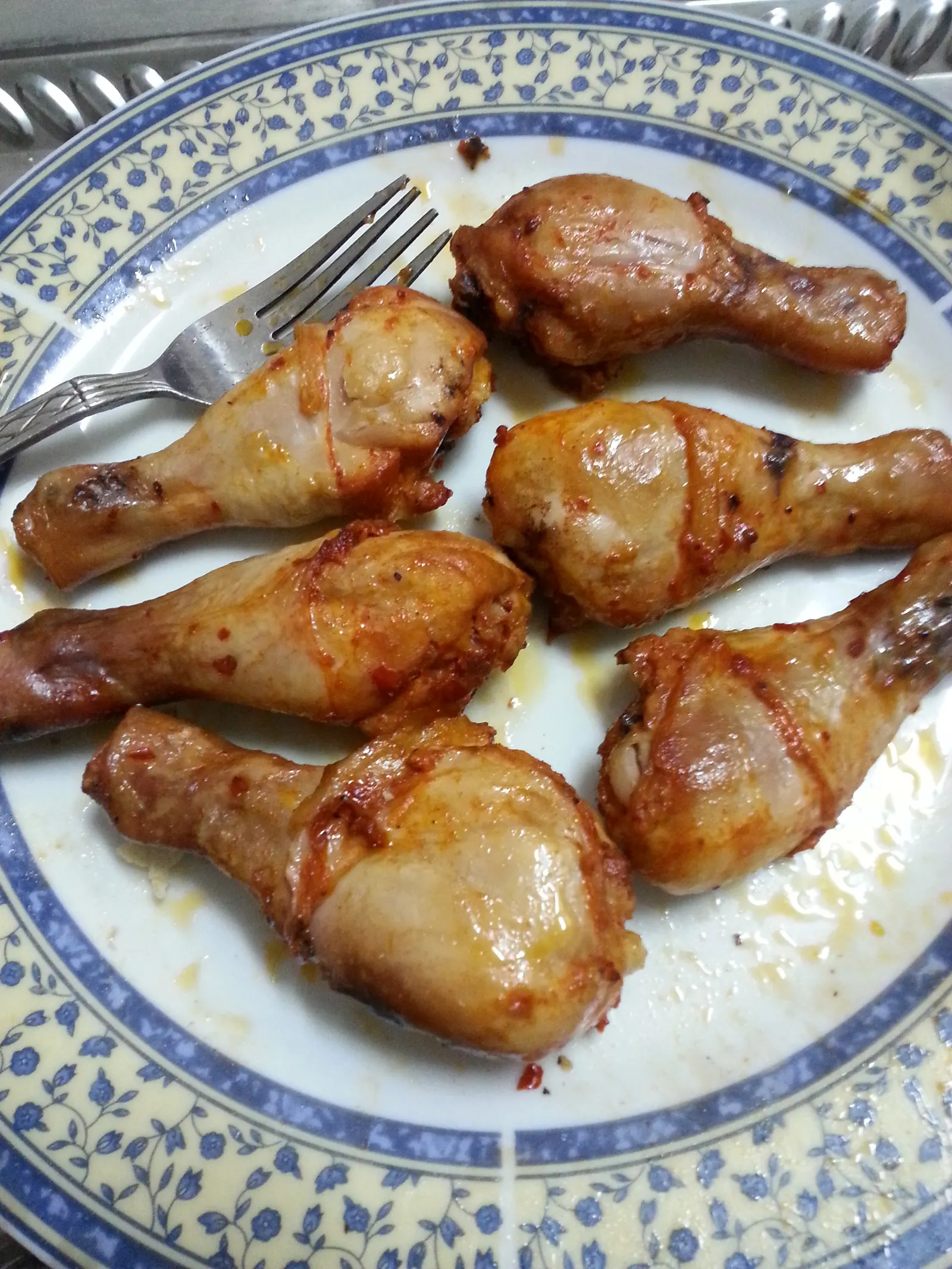
A platter filled with cooked chicken drumsticks, browned and glistening from the oven.
An illustrative platter shows the useful finish cues: browned skin, a moist sheen, and enough room between the drumsticks to see each piece clearly.Photo by Mousa Alhaddad · CC BY-SA 4.0
Serves
6 servings
Low bake
350°F · 45 min
Hot finish
425°F · 15 min
Rest
5 min

This recipe starts generous and ends precise. Honey, soy sauce, and ketchup make far more glaze than a light brush would require. For most of the bake, the chicken sits in that glossy pool at a moderate 350°F. Only after each leg is turned does the oven climb to 425°F and the sauce begin its fast change from loose to lacquered.

Julie Young’s 2014 formula remains deliberately short: chicken, salt, pepper, honey, soy, ketchup, and fresh garlic. The proportions and two temperatures stay intact here. What has been added is a clearer stopping language—bubbling edges, an amber rather than black glaze, and a thermometer reading of at least 165°F—so the last 15 minutes can be read instead of merely endured.

“Julie Young introduced these as inexpensive, uncomplicated chicken legs with a sweet garlic glaze and a sticky finish.”

First heat

Forty-five minutes at 350°F cooks the legs gently in the abundant honey-soy sauce.

The turn

The side that has been sitting lower in the sauce comes up before the oven temperature rises.

Final read

Bubbling, thickened edges and at least 165°F in the thickest meat decide when the dish is done.

Inside the lacquerDark meat sugar salt acid allium

Four forces in one high-sided dish

Every ingredient has a visible job; the recipe gets its depth from proportion and heat rather than a long spice list.

01

Chicken legs

Two and a half pounds give six main-dish portions and enough skin and dark meat to stay succulent through the two-stage bake.

Arrange one layer in a high-sided dish. Tight overlap hides surfaces from the glaze and makes the turn harder.
02

Raw honey

Three quarters of a cup makes sweetness and viscosity central rather than incidental.

If it will not blend smoothly, use the source’s single 30-second microwave burst, then stir before pouring.
03

Soy sauce + ketchup

A half cup soy brings salt and savor; a quarter cup ketchup adds acidity, tomato, and a second kind of sweetness.

Do not add extra salt to the sauce by reflex. Season the chicken lightly first and remember that soy sauce is already assertive.
04

Fresh garlic

Two or three cloves keep a clear aromatic line underneath a much larger volume of honey and soy.

Mince finely so the garlic disperses through the sauce instead of leaving pale pieces that can catch during the hot finish.

One-hour oven clockSeason pour bake turn caramelize rest

The turn is the hinge

The first temperature cooks; the second concentrates. Do not raise the heat until the sauce-soaked underside has been brought to the top.

  1. 0:00

    Season and arrange

    Set the chicken in one layer, seasoned on both sides, while the oven reaches 350°F.

  2. 0:06

    Mix the four-part glaze

    Stir honey, soy, ketchup, and minced garlic; warm only if the honey resists mixing.

  3. 0:08

    Pour and coat

    Cover the tops and sides, then leave the pieces in one layer in the high-sided dish.

  4. 0:10

    Begin the gentle bake

    Bake at 350°F for about 45 minutes while the sauce loosens and the meat cooks through.

  5. 0:55

    Turn and raise the heat

    Bring the lower side of every leg upward, then set the oven to 425°F.

  6. 1:10

    Read bubble, glaze, temperature

    Stop at caramelized edges and at least 165°F, then rest for 5 minutes.

The glaze pantryGold white amber

A sweet pour with a small garlic shadow

Golden honey dripping from a wooden spoon into a glass jar.
Three quarters of a cup makes honey the dominant glaze ingredient. Gentle warming is only a mixing aid, not a reduction step.Photo by Alabama Extension / Devontae Lindsey · CC0 1.0
Warm to combine, not to cook

The source’s 30-second microwave burst is a contingency for stiff honey. The sauce still does its real concentrating in the oven.

A broken head of garlic with several exposed cloves and loose papery skins.
Two or three finely minced cloves sit behind the honey and soy rather than turning the sauce into a garlic paste.Photo by Cesdeva · CC0 1.0

Caramelization cuesLoose turned bubbling glossy safe

Read the last fifteen minutes in amber

The timer gives a range; these visible and measured checks protect the glaze from stopping pale or going bitter.

01

Loose sauce at the first checkpoint

After 45 minutes the pan may still look saucy. That is expected; the turn and hotter oven create the final concentration.

02

A clean flip without tearing

Use long tongs and lift each piece free of the pan before turning. Skin left stuck to the foil cannot take the glaze with it.

03

Active bubbles around the edges

The sauce should move and thicken at the perimeter, with a glossy coat forming over the upward-facing chicken.

04

Amber, not black

Honey can travel from caramelized to scorched quickly at 425°F. Begin checking before the full 15 minutes if your dish has dark corners.

Serve + storeRest spoon cool cover reheat

Keep the gloss, respect the clock

The same sauce that makes dinner abundant needs prompt cooling and gentle reheating once the meal is over.

Rest five minutes

The source’s short pause lets the fierce bubbling settle and keeps the first spoonful of glaze on the chicken.

Serve the cooked pan glaze

Once the full bake is complete, spoon the thick sauce from the dish over rice, potatoes, or the chicken itself.

Cool in shallow containers

Refrigerate within two hours instead of leaving a deep, hot baking dish on the counter.

Use within 3–4 days

Reheat the portion you need to 165°F; loosen a refrigerator-tight glaze with a small spoonful of water.

Caramelized Honey-Soy Chicken Legs

Chicken legs baked in Julie Young’s preserved 2014 honey, soy, ketchup, and garlic glaze, finished hot until bubbling and amber.

Chicken LegsHoneySoy SauceGarlicOven-BakedFamily Dinner

Ingredients

Chicken and glaze

  • 2 1/2 pounds chicken legs (the source specifies fresh, free-range)
  • Fine salt, to taste
  • Freshly ground black pepper, to taste
  • 3/4 cup raw honey
  • 1/2 cup good-quality soy sauce (the primary source describes it as dark soy sauce)
  • 1/4 cup ketchup
  • 2–3 garlic cloves, finely minced

Directions

  1. Heat the oven to 350°F (175°C). If desired, line a high-sided baking dish with heavy-duty foil for easier cleanup. Choose a dish that holds the chicken in one layer without packing the pieces tightly.
  2. Set the chicken legs on a clean tray or board reserved for raw poultry. Season every piece on both sides with salt and black pepper, then arrange them in the baking dish.
  3. Measure the honey, soy sauce, and ketchup into a microwave-safe cup or bowl. Add the finely minced garlic and stir until evenly combined. If the honey remains too stiff to mix, microwave the sauce for 30 seconds on high, exactly as the source directs, then stir again.
  4. Pour the honey-soy mixture evenly over the chicken. Turn or tilt the pieces with clean tongs so the sauce reaches their sides, then leave the meat arranged in one layer.
  5. Bake at 350°F for about 45 minutes. Do not use the raw-chicken sauce as a table sauce during this stage; it must cook fully in the dish.
  6. Remove the dish carefully. With clean tongs, turn every chicken leg so the side that sat lower in the sauce now faces up. Increase the oven temperature to 425°F (220°C).
  7. Return the dish to the oven for about 15 minutes, watching closely near the end. Stop when the sauce is bubbling, visibly thicker at the edges, and beginning to caramelize over the chicken rather than blacken. The thickest part of each piece should register at least 165°F (74°C), with the thermometer tip clear of bone.
  8. Rest for 5 minutes before serving. Spoon only the fully cooked glaze from the hot baking dish over the chicken, and bring napkins to the table.

Source and research references: Julie Young’s earliest surviving 2014 Julie’s Cafe Bakery page for the exact six-ingredient formula, six-serving yield, 350°F bake, turn, 425°F finish, and five-minute rest; the archived My Recipe Magic card for queued authorship and source corroboration; Julie’s Cafe Bakery’s current rewritten drumstick recipe to identify—and deliberately avoid silently adopting—its changed ratios, seasoning, temperature, cover, and yield; Food Network Kitchen’s apple-honey drumsticks for an independent test-kitchen example of turning drumsticks and reducing a honey-soy sauce to a spoon-coating syrup; and USDA FSIS guidance for 165°F poultry doneness, cooked-marinade handling, and 3–4 day storage.

Image credits

Photography is used under open licenses with attribution: Mousa Alhaddad, Alabama Extension / Devontae Lindsey, and Cesdeva.