
Pack at homeFinish by fire

Yogurt · tomato · coconut

Campfire Butter Chicken

Yogurt-marinated chicken thighs, charred before the trip and finished over coals with peppers, fire-roasted tomatoes, coconut cream, and warm naan.

Cook the skillet
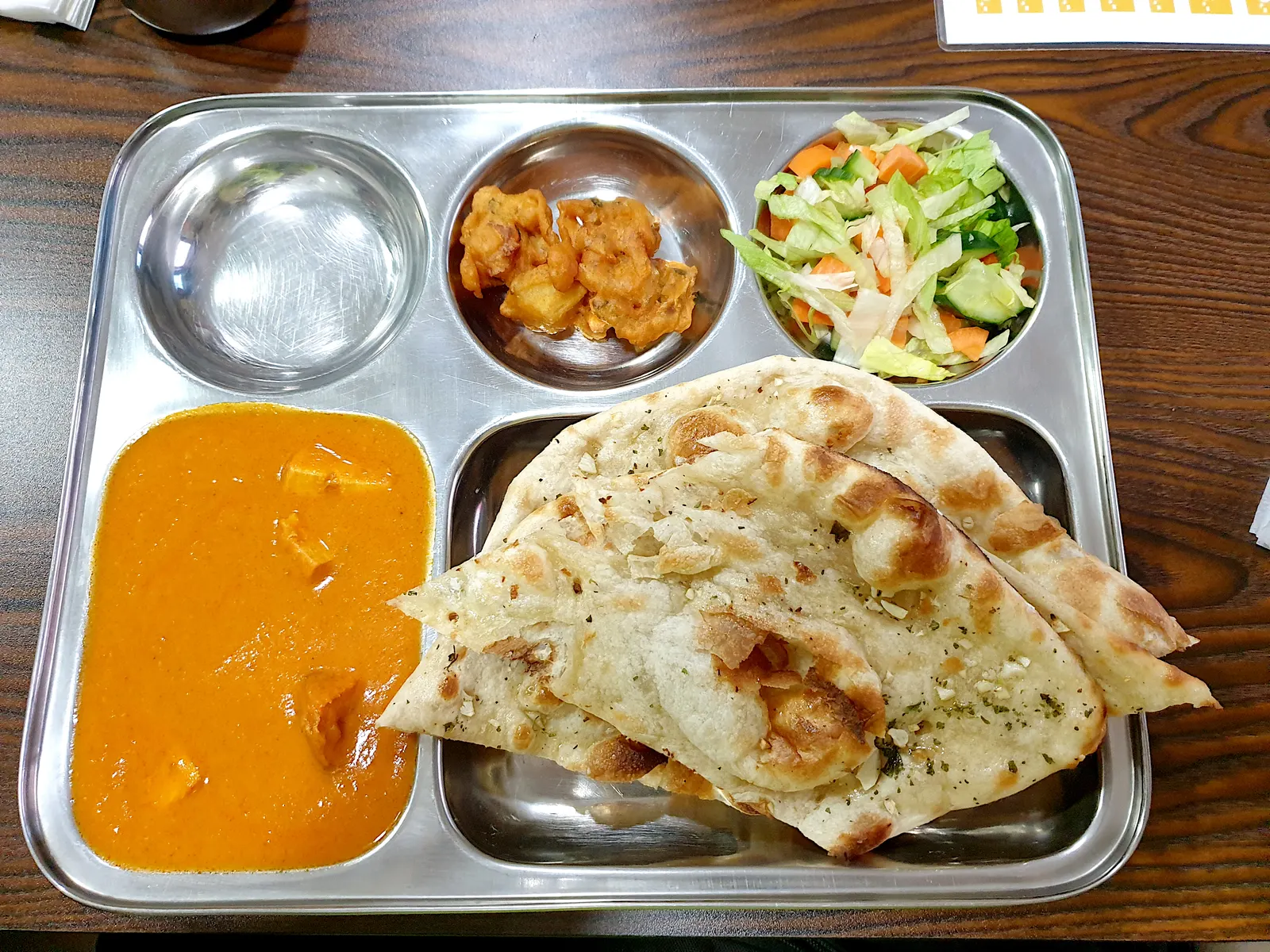
Butter chicken in a copper serving bowl beside rice and garlic naan.
The source takes butter chicken outdoors, pairing charred yogurt-marinated thighs with tomato, coconut cream, peppers, and naan.Photo by Jan Helebrant · CC0 1.0
Prep
20 min
Cook
20 min
Marinate
Overnight
Makes
1 skillet

The campfire is the second kitchen, not the first. Stonefire’s two-stage butter chicken starts with a deeply seasoned overnight marinade, then carries charred thighs, chopped vegetables, and grated aromatics to the fire ring. The skillet waits until camp to bring them together with smoky tomatoes and coconut cream.

That split is practical, but the handoff matters. The original card suggests partially grilling the chicken before chilling and freezing it. USDA poultry guidance explicitly advises against delayed partial cooking, so this version takes every thigh to 165°F at home, cools it promptly, and reheats it to 165°F in the finished sauce.

Marinate cold

Yogurt, lemon, and spices coat the thighs overnight in the refrigerator, never on the counter.

Cook once, reheat once

Take the chicken to 165°F at home, cool it promptly, then return it to 165°F in the camp skillet.

Taste the cream in

The source leaves the coconut-cream can size open, so add it gradually instead of flooding the sauce.

Pack planMarinate cook chill measure

Four checkpoints before the cooler closes

The elegant part of camp cooking happens before departure: separate containers, a complete first cook, and a cold route to the grate.

Heat + aromaThe outdoor pantry

Read the fire; carry the spice

A skillet and kettle resting on a grate above a small campfire.
A settled fire and stable grate make the heat easier to read than tall, shifting flames.Photo by U.S. National Park Service · Public domain (U.S. NPS)
Fire-ring rule

Cook only where fires are permitted, settle the grate before the skillet lands, and keep water within reach from first flame to cold ash.

Ginger, garlic, turmeric, cumin, chiles, cinnamon, cardamom, and other butter chicken spices arranged on a table.
Turmeric, cumin, garam masala, ginger, and garlic give the portable sauce its aromatic backbone.Photo by Zak Greant · CC BY 2.0

Field clockChill pack fire simmer

One night, two kitchens, one hot skillet

The source’s 40-minute card sits inside a longer practical timeline: overnight marinating, rapid cooling, a cold trip, and a fire that sets its own pace.

  1. Night −1

    Build the marinade

    Coat the thighs with yogurt, turmeric, garam masala, cumin, chile, lemon, and salt; refrigerate overnight.

  2. Home

    Char and cook through

    Grill until deeply marked and 165°F at the thickest point, then transfer to a clean shallow container.

  3. Cool

    Chill, freeze, pack

    Refrigerate promptly, freeze once cold, and transport below 40°F with the prepared vegetables.

  4. Fire

    Set a steady grate

    Let the fire settle, stabilize the grate, preheat cast iron, and keep water and heatproof gloves close.

  5. 0:00

    Soften the vegetables

    Melt ghee, then cook pepper, onion, and jalapeño until soft with a little campfire color.

  6. 0:08

    Simmer and finish

    Bloom ginger and garlic, add chicken and tomatoes, reheat to 165°F, then tune the sauce with coconut cream.

Doneness cuesChar soften bubble balance

Four cues no camp timer can replace

Wind and coals make minutes elastic. Watch the surface, move the skillet, and let temperature—not color—confirm the chicken.

01

Charred, not coated

Let thick yogurt drip away before the home grill so the thighs brown instead of steaming under excess marinade.

02

Soft edges on the vegetables

Pepper and onion should bend and glisten, with a few browned edges but no scorched garlic.

03

A steady tomato bubble

Move the skillet across the grate as the fire shifts. The sauce should simmer, not catch hard at the bottom.

04

Creamy by degrees

Coconut cream should round the heat while the tomato, chile, and warm spices remain distinct.

Cold chainCooked cold reheated promptly

Make ahead without a food-safety gamble

The make-ahead advantage stays intact when the chicken is fully cooked, rapidly chilled, frozen, and carried in a properly iced cooler.

Safest advance cook

Cook the chicken all the way through at home. Delayed partial cooking is not a safe make-ahead shortcut for poultry.

Cold-chain rule

Keep the cooked chicken and cut vegetables at or below 40°F. If the cooler loses its ice, discard questionable perishables.

After dinner

Return leftovers to a cold cooler within two hours—one hour above 90°F—and use refrigerated portions within three to four days.

Campfire butter chicken

Yogurt-spiced chicken thighs charred at home, then simmered over the fire with peppers, tomatoes, coconut cream, and naan.

ChickenCampfireCast IronCurryNaanMake AheadOutdoor Cooking

Ingredients

Overnight chicken marinade

  • 2 pounds boneless, skinless chicken thighs
  • 1 1/2 tablespoons ground turmeric
  • 2 (5.3-ounce) containers full-fat plain Greek yogurt (10.6 ounces total)
  • 1 tablespoon garam masala
  • 1 tablespoon ground cumin
  • 1/2 to 1 teaspoon chili powder
  • Juice of 1 lemon
  • 1 teaspoon salt

Camp skillet

  • 2 tablespoons ghee
  • 1 red bell pepper, chopped
  • 1/2 white onion, chopped
  • 1 jalapeño, diced
  • Salt and freshly ground black pepper, to taste
  • 1 tablespoon finely grated fresh ginger
  • 6 garlic cloves, finely grated
  • 1 (15-ounce) can fire-roasted diced tomatoes
  • 1 can coconut cream, added gradually to taste (source does not specify can size)
  • Fresh cilantro, for finishing
  • Original or garlic naan, for serving

Directions

  1. The night before cooking, combine the chicken, turmeric, yogurt, garam masala, cumin, chili powder, lemon juice, and 1 teaspoon salt. Coat every thigh, cover, and refrigerate overnight.
  2. At home, grate the ginger and garlic into one small sealed container. Pack the chopped bell pepper, onion, and jalapeño in a second container and refrigerate both.
  3. Heat a grill or broiler until very hot. Lift the thighs from the marinade, letting the heavy excess fall away, and cook until deeply marked and the thickest piece reaches 165°F (74°C). Unlike the source’s partial-cook direction, cook the chicken completely before cooling it for later use.
  4. Move the cooked chicken to a clean, shallow container and refrigerate promptly. Once cold, seal and freeze it. Transport the chicken and prepared vegetables in an insulated cooler at 40°F (4°C) or below.
  5. At camp, build the fire only where permitted, keep water close, and let the flames settle to a steady bed of heat. Set a stable grate over the fire and preheat the cast-iron skillet.
  6. Melt the ghee in the hot skillet. Add the bell pepper, onion, jalapeño, and a pinch each of salt and black pepper. Cook, stirring often and shifting the pan away from flare-ups as needed, until the vegetables soften and pick up a little color.
  7. Stir in the ginger and garlic for about 30 seconds, just until aromatic. Add the fully cooked chicken and fire-roasted tomatoes. Simmer for 10 to 20 minutes, depending on the fire, until the sauce is bubbling and the chicken reheats to 165°F (74°C).
  8. Add coconut cream a spoonful at a time, tasting after each addition, until the sauce is as mellow and creamy as you like. Warm the naan on the grate, finish the skillet with cilantro, and serve immediately.

Technique and safety references: Stonefire’s original recipe, chef Alfred Prasad’s murgh makhani method, USDA camping food-safety guidance, and the National Park Service campfire guide.

Image credits

Photography is used under open licenses with attribution: Jan Helebrant, U.S. National Park Service, and Zak Greant.