The square-pan classicTart · buttery · cinnamon

Six servings, one crisp top

Best Ever Apple Crisp

Lauren Allen’s 2014 apple crisp coats thin Granny Smith slices in a buttery cinnamon glaze, then bakes them beneath a compact oat crumb until golden and bubbling.

Bake the crisp
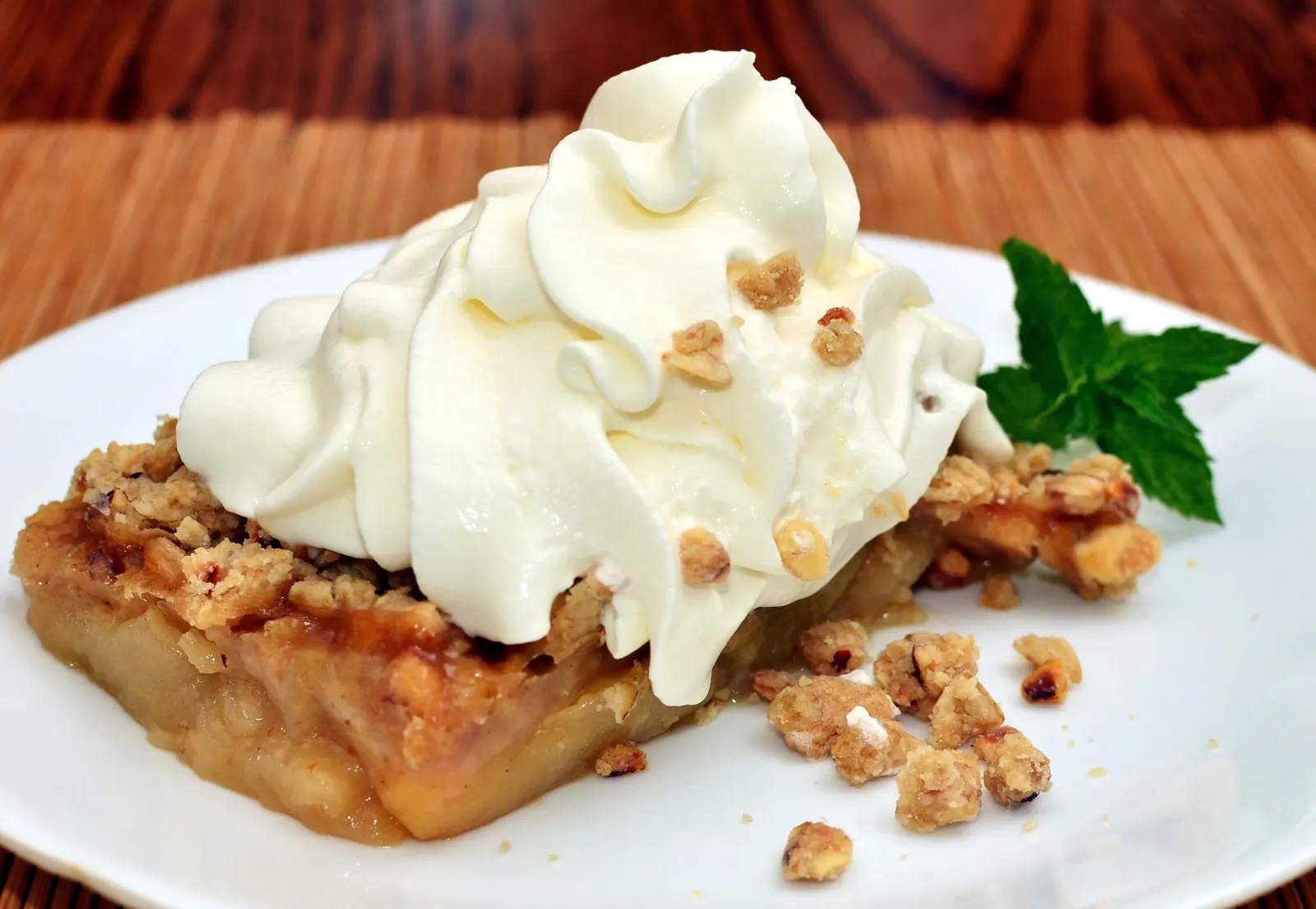
A square serving of apple crisp topped with a tall curl of whipped cream.
Warm fruit, browned oat crumb, and a cool dairy finish make the familiar contrast. Whipped cream is a serving suggestion, not part of Lauren Allen’s source formula.Photo by jeffreyw / Wikimedia Commons · CC BY 2.0
Yield
6 servings
Pan
8 × 8 in
Oven
375°F
Bake
30–35 min

The surprise is under the crumb. Lauren Allen’s early apple crisp does not simply toss fruit with dry sugar and spice. It makes a small butter-and-flour glaze, brightens it with lemon, loosens it with milk, then wraps every Granny Smith slice in brown sugar, cinnamon, and vanilla.

Above that satin filling sits a deliberately restrained oat topping: equal half-cups of flour, oats, and brown sugar, held in rough pieces with cold butter. The refrigerator protects those pieces while the apples are peeled and dressed. In the oven, one layer softens while the other dries and browns; ten quiet minutes on the rack let them meet without becoming one texture.

“Soft baked apples with the most delicious oat/crumb topping! What’s not to love?!”

Chill

Cut cold butter into the oat crumb, then refrigerate it while the fruit is prepared.

Slice

Thin, even Granny Smith slices reach tenderness together without dissolving into sauce.

Read

Golden crumb, bubbles at the edge, and a nearly resistance-free apple are the three finish cues.

The formula mapTart · coated · cold · craggy

Two layers built four ways

The ingredient list is familiar, but its temperatures and mixing order give the crisp its definition.

01

Granny Smith apples

Three to four large tart apples give the filling enough acidity to stand against two brown-sugar layers.

Slice thinly and evenly. The source names the variety and does not offer a sweeter substitution.
02

Old-fashioned oats

Half a cup keeps the topping visibly craggy and gives it a different chew from the soft fruit below.

This legacy formula uses half a cup. Do not silently import the maintained card’s later two-thirds cup.
03

Cold unsalted butter

One-third cup binds the dry topping in small pockets that melt into crisp, separated crumbs.

Dice first, work quickly, and return the finished bowl to the refrigerator.
04

Butter-flour glaze

Melted butter and flour carry lemon, milk, vanilla, brown sugar, cinnamon, and salt around every apple slice.

Mix it smooth before it meets the fruit so no dry flour pockets remain in the pan.

The five-minute setupCold bowl · clean fruit · thin tester

Set the pan before the peel

A little preparation keeps sliced apples from waiting while the butter warms.

Green + bronzeThe fruit and its browned roof

Tart structure below, toasted texture above

A freshly baked apple crisp in a rectangular metal pan with browned crumb and bubbling fruit at the edges.
Browning across the crumb and visible syrup at the edge are useful oven cues. This illustrative pan includes nuts, which are not in the source recipe.Photo by Douglas Perkins / Wikimedia Commons · CC BY 4.0
The edge tells half the story

Look for bubbling glaze, then test the fruit near the center. A brown perimeter alone cannot confirm that the apples are tender.

A whole Granny Smith apple beside a halved apple showing pale flesh, core, and seeds.
Granny Smith brings the source recipe its tartness and a crisp structure that tolerates baking. Peel, core, and slice the fruit thinly and evenly.Photo by Benjamint444 / Wikimedia Commons · CC BY-SA 3.0

The tactile proofPebbled · coated · golden · tender · settled

Five readings from bowl to spoon

The source gives a narrow clock. These visual and tactile checks make it portable across apples, pans, and ovens.

01

The crumb stays irregular

The butter is dispersed, but the bowl holds small pebbles rather than a smooth dough or dusty flour.

02

The glaze coats, not pools

Every apple slice carries a thin cinnamon-brown-sugar sheen before the fruit enters the dish.

03

The top sets golden

The oat layer has color and feels dry at the center while syrup begins to appear around the edges.

04

The apple yields cleanly

A thin tester slides through a representative center slice with little resistance but still finds fruit structure.

05

The spoonful holds after ten

A short rack rest calms the bubbling glaze and turns it from dangerously fluid to softly spoonable.

The crisp switchboardColor · tenderness · temperature · time

Four small corrections

Keep the original formula intact and adjust only to what the pan is showing you.

If the top is pale at 30 minutes

Stay inside the source range

Bake toward 35 minutes and watch the center crumb as well as the perimeter. Do not brown only the easy-to-see edge.

If the top is brown but apples resist

Shield lightly and continue

A loose foil tent protects the crumb while the fruit catches up. Recheck every few minutes rather than guessing by color.

If the crumb looks greasy before baking

Chill until firm

Warm butter has smeared through the flour. A longer cold pause can restore distinct pieces before they enter the oven.

If making it ahead

Bake, cool, and cover cold

The filling keeps well for 3–4 refrigerated days, though the crumb is crispest on the day it is baked.

Best Ever Apple Crisp

Lauren Allen’s exact 2014 six-serving formula: thin Granny Smith apples in a butter-flour cinnamon glaze under a refrigerated oat crumb.

Apple CrispGranny Smith ApplesOat CrumbleFruit DessertAutumn BakingCinnamon8×8 Baking

Ingredients

Oat crumb topping

  • 1/2 cup all-purpose flour
  • 1/2 cup old-fashioned oats
  • 1/2 cup packed brown sugar
  • 1/2 teaspoon baking powder
  • 1/4 teaspoon ground cinnamon
  • 1 dash salt
  • 1/3 cup unsalted butter, cold and diced into small pieces

Apple filling

  • 3–4 large Granny Smith apples, peeled, cored, and thinly sliced
  • 3 tablespoons butter, melted
  • 2 tablespoons all-purpose flour
  • 1 tablespoon lemon juice
  • 3 tablespoons milk
  • 1/2 teaspoon vanilla extract
  • 1/4 cup packed brown sugar
  • 1/2 teaspoon ground cinnamon
  • 1 dash salt

Directions

  1. Heat the oven to 375°F / 190°C. Set an 8-by-8-inch baking dish on a stable work surface.
  2. In a medium bowl, combine the flour, oats, brown sugar, baking powder, cinnamon, salt, and cold diced butter. Work with a fork or pastry blender until the mixture resembles small, irregular crumbs. Refrigerate the topping while preparing the fruit.
  3. Peel and core the Granny Smith apples, then slice them thinly and as evenly as practical so they soften on the same clock. Put the slices in a large bowl.
  4. In a small bowl, stir the melted butter and flour until smooth. Add the lemon juice, milk, and vanilla and stir again. Mix in the brown sugar, cinnamon, and salt until the glaze is evenly combined.
  5. Pour the glaze over the sliced apples and toss gently until every piece is coated. Transfer the apples and all of the glaze to the 8-by-8-inch dish, spreading them into an even layer without packing them down.
  6. Scatter the cold crumb topping evenly over the apples. Leave it loose and craggy rather than pressing it into a solid lid.
  7. Bake for 30–35 minutes, preserving the source range, until the topping is golden and set. Look for filling bubbling at the edges and check that a thin skewer or paring knife passes through an apple slice with little resistance.
  8. Set the dish on a wire rack and cool for at least 10 minutes before serving. The glaze will be extremely hot from the oven and will thicken slightly as it settles.

Source and technique references: Lauren Allen’s archived October 2014 Tastes Better From Scratch article for the original ingredients, 8-by-8-inch pan, cold crumb, 375°F oven, 30–35-minute bake, and 10-minute rest; the exact October 27, 2014 My Recipe Magic card for the six-serving syndication and archived nutrition; Allen’s maintained author page for the 15-minute prep clock and a clearly separated record of later formula changes; King Arthur Baking’s test kitchen for independent bubbling-fruit and browned-streusel finish cues; Penn State Extension for washing sound fruit and the tart, crisp character of Granny Smith; and USDA FSIS for covered refrigeration and the 3–4-day cooked-leftover window. No source ingredient amount or method was changed; slicing, doneness, cooling, and storage cues are separated editorial guidance.

Image credits

Photography is used under open licenses with attribution: jeffreyw / Wikimedia Commons, Douglas Perkins / Wikimedia Commons, and Benjamint444 / Wikimedia Commons.